티타티탄은 탄소강보다 더 강합니까?종합적인 엔지니어링 가이드
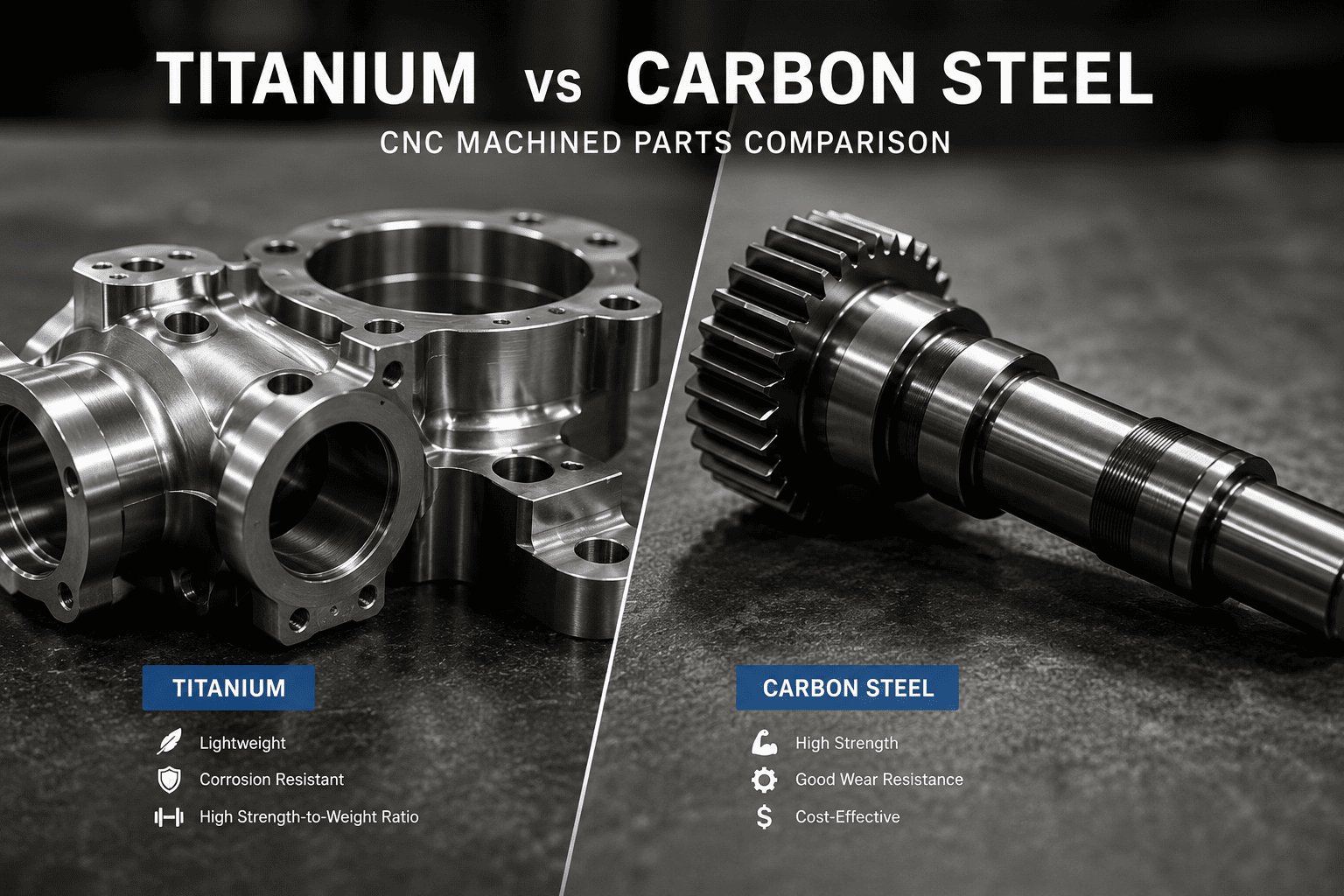
엔지니어와 제품 디자이너가 CNC 가공을 위해 금속을 비교할 때 가장 일반적인 질문 중 하나는 티타늄이 탄소 강보다 더 강합니까?
직접적인 대답은 항상 아니다.티타늄은 프리미엄, 고성능 재료로 널리 인정되지만, 그 경도는 전적으로 특정 티타늄 등급, 강철 등급 및 열처리 상태에 달려 있습니다.
정밀 CNC 가공에서 어떤 재료가 더 단단한지 물어보는 것이 충분하지 않습니다.더 나은 질문은: 어떤 재료가 부품의 기능, 포용력, 무게 요구 사항, 부식 환경 및 예산에 더 적합합합니까?세부사항을 살펴보자.
상업적으로 순수한 티타늄 vs. 중간 탄소 강철
상업적으로 순수한 티타상은 특별히 단단하지 않습니다.예를 들어, 등급 2 티타늄은 약 Rockwell B 80 (145 HV Vickers)에 따라 등급됩니다. ASM/MatWeb의 데이터.
반면에 AISI 1045와 같은 일반적인 중간 탄소 강은 특정 공급 조건에서 Rockwell B 84 (170 HV) 주변에 도달할 수 있습니다.이것은 일부 일반적인 처리되지 않은 탄소강이 실제로 상업적으로 순수한 티타늄보다 더 단단하다는 것을 의미합니다.
티타늄 합금 vs. 높은 탄소 &도구 강철
우리가 티타늄 합금을 보면 이야기가 변합니다. Ti-6Al-4V (Grade 5 titanium) is significantly harder than its commercially pure counterparts. Annealed Ti-6Al-4V has a hardness of about Rockwell C 36 (349 HV). This makes Grade 5 titanium harder than many untreated mild or medium-carbon steels.
However, steel is incredibly versatile. Hardened high-carbon steel and tool steel (which have been quenched and tempered) can easily exceed the hardness of even the toughest titanium alloys. Therefore, titanium is not automatically harder than carbon steel; it is entirely relative to the grades being compared. 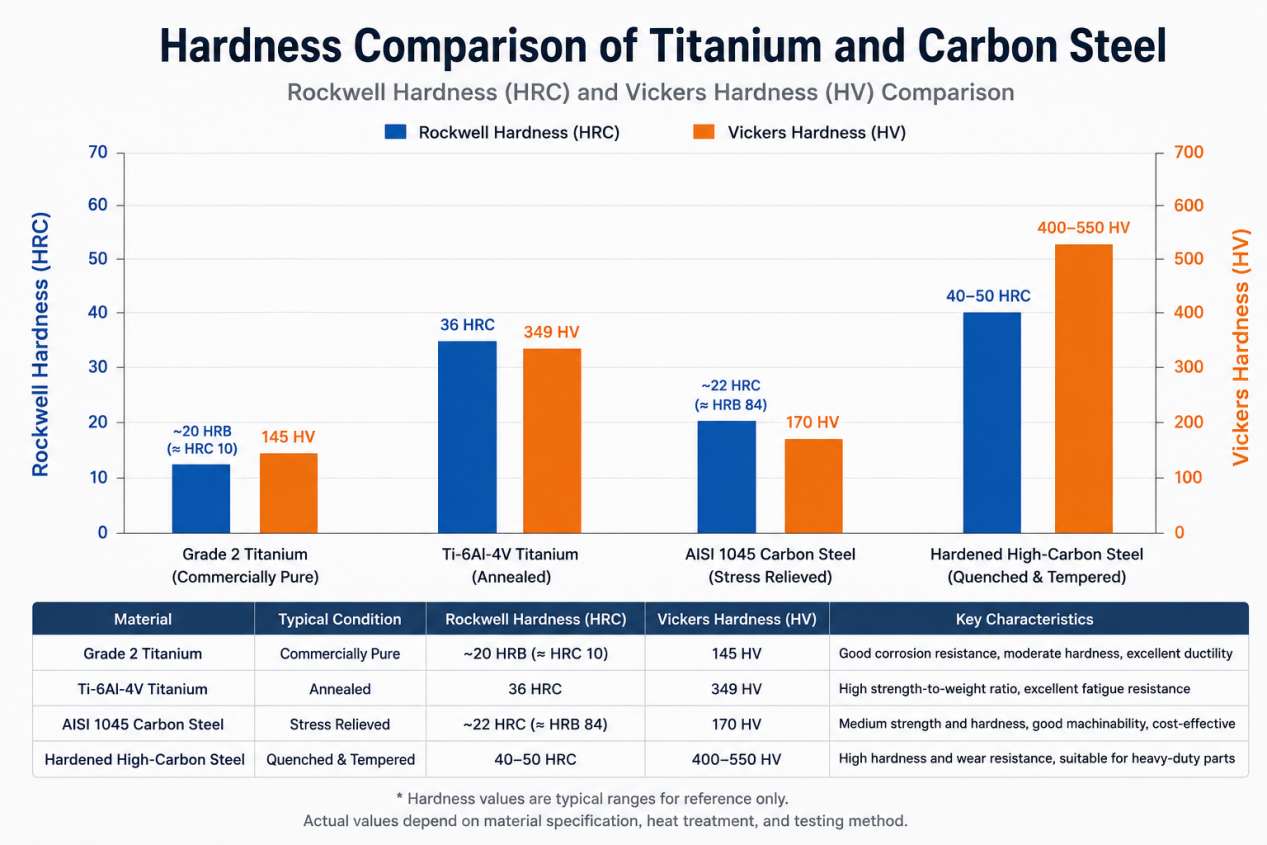
Titanium vs. Carbon Steel Hardness Comparison
재료 | Typical Condition | Approx. Hardness | Practical Meaning |
Grade 2 Titanium | Commercially pure | HRB 80 / 145 HV | Good corrosion resistance, moderate hardness |
Ti-6Al-4V (5급) | Annealed alloy | HRC 36 / 349 HV | High strength-to-weight ratio, harder to machine |
AISI 1045 Steel | Hot rolled / stress relieved | HRB 84 / 170 HV | Economical medium-carbon steel |
High-Carbon Steel | Quenched & tempered | Often > Ti-6Al-4V | Better for highly wear-resistant parts |
Tool Steel | Heat treated | Much higher | Used for dies, punches, molds, and tooling |
Why "Hardness" Isn't Everything in Material Selection
The reason "carbon steel" is a tricky category is due to its carbon content and heat treatment variability:
• Low-carbon (mild) steel: Soft, ductile, and highly machinable.
• Medium-carbon steel: Offers a great balance of strength, hardness, and cost.
• High-carbon steel: Can be heat-treated to achieve extreme hardness and wear resistance.
Titanium’s true value does not lie in being the "hardest" metal. Its distinct advantages are its incredible strength-to-weight ratio, excellent corrosion resistance, and biocompatibility. This is why titanium is the go-to choice for aerospace components, medical implants, robotics, marine equipment, and high-performance automotive parts. It provides robust mechanical performance while significantly reducing weight.
CNC 가공 Challenges: Why Titanium "Feels" Harder
In CNC machining, titanium can often feel much harder to machine than steel, even if its Rockwell hardness number is lower. Why?
Titanium has low thermal conductivity. This means that during machining, the cutting heat doesn't dissipate through the chip; instead, it stays concentrated near the cutting tool edge. This accelerates tool wear and creates challenges with surface finish, chatter, and dimensional stability.
How to Choose: Titanium or Carbon Steel?
Material selection should always be aligned with your engineering drawings and end-use application.
Choose Titanium when your project requires:
• Significant weight reduction without sacrificing strength.
• Extreme corrosion resistance (e.g., marine or chemical environments).
• Biocompatibility (medical devices).
• High performance in aerospace or robotic applications.
Choose Carbon Steel when your project requires:
• High hardness and wear resistance (achieved via heat treatment).
• Lower material and manufacturing costs.
• Strong structural performance where weight is not a strict limiting factor.
• Components like shafts, gears, fixtures, and general tooling. (Note: Carbon steel requires surface treatments like plating or black oxide to prevent rust). 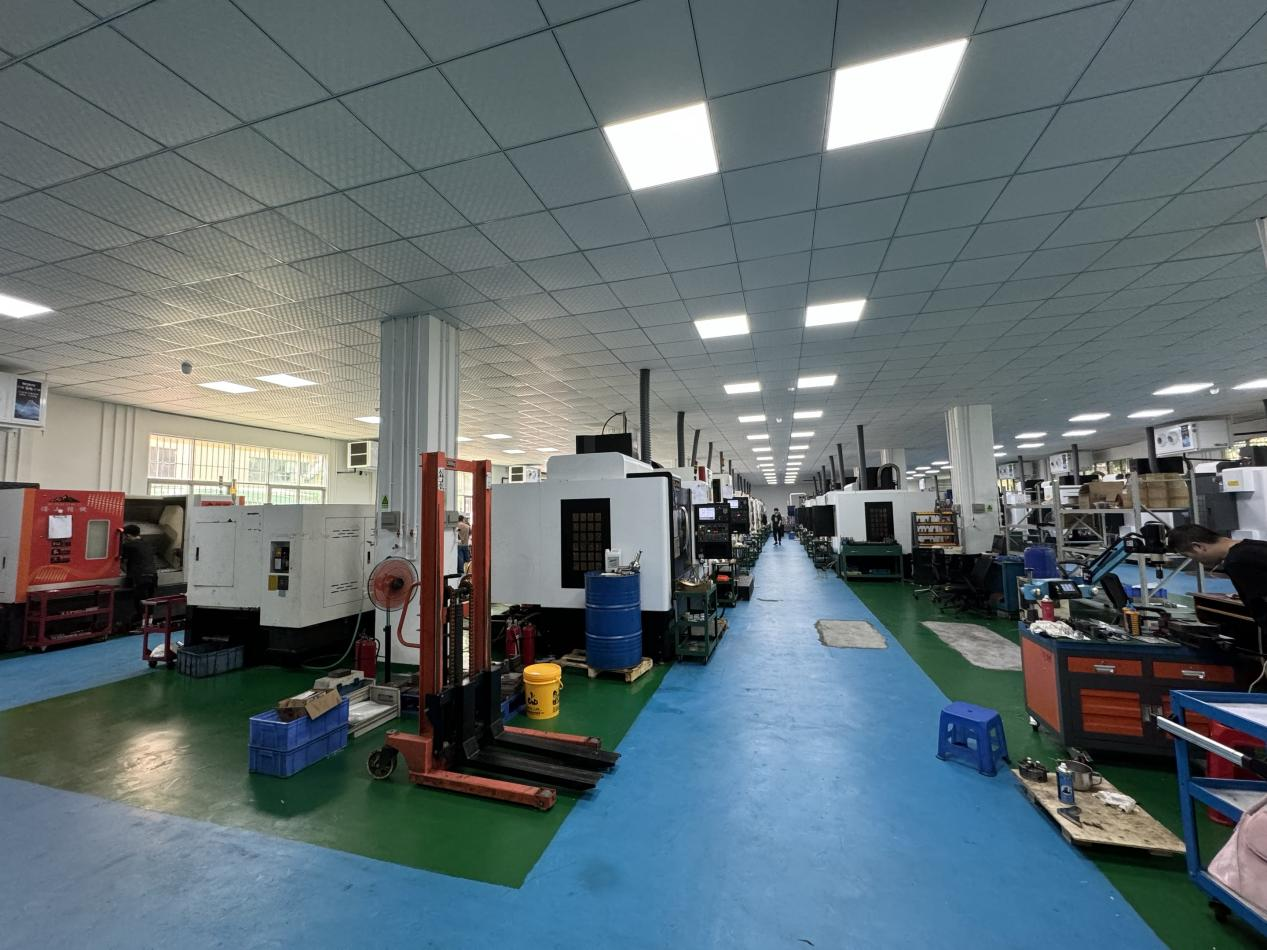
Professional CNC Machining Services at 빠른 모델
A simple statement like "titanium is harder than carbon steel" can be misleading if the grade, condition, and application are not defined. For successful CNC projects, details matter: material grade, tolerance, surface finish, and production volume.
At Rapid-Model, we help our global customers evaluate materials from a practical, manufacturing-first perspective. As a premier Shenzhen-based CNC machining supplier, we provide end-to-end manufacturing solutions. From custom CNC machining, titanium and steel machining, to sheet metal fabrication—we take your project from rapid prototype to large-scale production seamlessly.
Final Verdict
Is titanium harder than carbon steel? Sometimes, but not always. Commercially pure titanium is often softer than medium-carbon steel. Grade 5 Titanium is harder than untreated steel, but hardened tool steel remains superior in pure hardness. Ultimately, hardness is just one factor. The best material is the one that perfectly balances strength, weight, wear, corrosion, precision, and cost for your specific part.