PEEK CNC Machining China Shenzhen for Precision & Batch Manufacturing
Precision CNC machining of PEEK components for prototypes, low-volume production, and batch manufacturing. From engineering drawings and CAD files to finished PEEK machined parts, we support global OEMs with controlled manufacturing processes and consistent quality.
- Precision PEEK CNC Machining
- Prototype to Batch Production
- China Factory-Direct OEM Manufacturing
Accepted: STEP / STP / SLDPRT / IGES / X_T / STL / ZIP, 2D drawings and GD&T drawings.
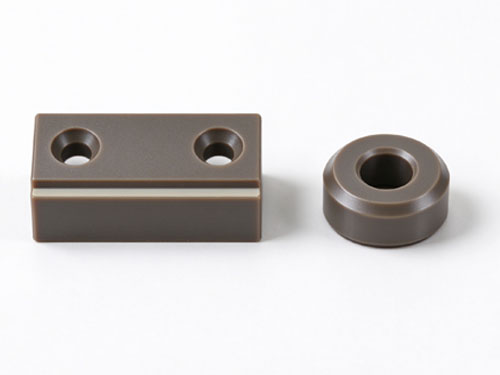
- Precision CNC Manufacturing
- Prototype to Batch Production
- PEEK Engineering Expertise
- OEM / ODM Manufacturing
- Quality-Controlled Production
- Shenzhen China Factory
What Is PEEK CNC Machining?
PEEK CNC machining is the process of removing material from PEEK engineering polymer stock using CNC milling, turning or other precision machining methods. Compared with metals, PEEK requires careful thermal management, tool selection, fixturing and chip control because excessive heat and mechanical loading can affect dimensional stability.
Polyether ether ketone (PEEK) is a semi-crystalline, high-performance thermoplastic. It machines well from rod, plate and tube stock, but it is not forgiving in the way a free-cutting aluminum alloy is. Low thermal conductivity means heat stays at the cutting edge and in the part; internal stress released during cutting can shift geometry after unclamping. In PEEK CNC machining process planning, we treat heat, clamping force and chip evacuation as design inputs rather than afterthoughts.
CNC milling suits prismatic parts, pockets, slots and contoured features. CNC turning suits bushings, sleeves, rings and shafts. Which route is right depends on geometry, tolerance scheme and batch size. See our PEEK machining guidelines and custom PEEK parts manufacturing pages for detail, or the PEEK CNC parts for industrial applications overview.
Engineering Expertise
PEEK machining requires more than simply programming a CNC machine. Tool geometry, heat management, workholding, material grade, tolerances and inspection strategy all influence final part performance.
Reviewed by: [Senior CNC Manufacturing Engineer] · [YEARS OF EXPERIENCE]
PEEK CNC Machining Services in China Shenzhen
We provide PEEK CNC machining services from a Shenzhen factory, covering milling, turning, prototypes, batch production and OEM programs, built around your drawings and production requirements.
Custom PEEK CNC Machining
Parts made to your drawing, grade and inspection requirements.
PEEK CNC Milling
3-axis, 4-axis and, where available, 5-axis milling for complex geometry.
PEEK CNC Turning
Bushings, sleeves, rings and shafts with controlled concentricity.
High Precision PEEK Machining
Tight-tolerance features verified against your GD&T scheme.
Prototype and Low Volume
Design validation runs before you commit to production tooling.
Batch / Mass Production
Repeatable processes for recurring OEM orders.
PEEK CNC Parts Manufacturing
End-to-end manufacture from stock to packed shipment.
PEEK OEM Manufacturing
Long-term supply for global OEM programs.
PEEK CNC Machining Process
A controlled PEEK process starts before cutting: drawing review, DFM feedback, grade confirmation and workholding planning decide whether tolerances can be held in production, not just on the first part.
- CAD / drawing review
- DFM engineering review
- Material and grade confirmation
- Tooling and workholding
- CNC milling / turning
- Deburring and finishing
- Dimensional inspection
- Final quality review
- Packing and shipment
| Technical challenge | What we plan for |
|---|---|
| Heat generation and thermal expansion | Sharp tooling, controlled cutting conditions, stable inspection temperature |
| Workholding deformation | Low-distortion clamping, support of thin sections, datum strategy |
| Burrs, chatter, tool wear | Tool selection and inspection intervals, finishing passes, deburring method |
| Thin walls, deep holes, threads | Sequenced roughing and finishing, chip evacuation, thread strategy per design |
| Dimensional drift in batches | First-piece approval and in-process checks |
Related: PEEK machining guidelines, PEEK CNC machining quality control, PEEK CNC machining surface finishing.
Upload CAD FilesPEEK CNC Machining Guidelines
Cutting parameters for PEEK are not universal. They should be validated for the PEEK grade, tool material, part geometry, machine rigidity, workholding, batch size and required surface finish. The table lists what to evaluate, not fixed values.
| Parameter | Engineering consideration | Why it matters |
|---|---|---|
| Tool geometry and sharpness | Positive rake, sharp edge, tool material suited to the grade | Dull tools rub and heat the surface, hurting finish and size |
| Cutting speed, feed, depth of cut | Validated per grade and geometry | Balances heat, chip formation and surface quality |
| Coolant / air cooling | Method compatible with the material and application cleanliness | Manages heat and chip removal; may affect part cleanliness |
| Chip evacuation | Clear paths in pockets and deep holes | Re-cut chips damage surfaces and raise temperature |
| Workholding | Even, moderate clamping; support for thin features | Over-clamping causes distortion that appears after release |
| Wall thickness, ribs, deep holes, threads | Review at DFM stage | Weak features deflect, warp or chatter |
| Flatness and thermal management | Stress-aware roughing and finishing sequence | Residual stress can relax after machining |
Cutting parameters, achievable tolerances, tool selection and machining tips are covered in the PEEK machining guidelines.
Custom PEEK Machined Parts
We manufacture custom PEEK machined parts from your drawings, including bushings, sleeves, rings, shafts, insulators, spacers, precision brackets, structural, semiconductor, automation, medical and aerospace components.
Not every PEEK part suits every application. Load, temperature, chemical exposure, cleanliness and regulatory requirements must be validated by the design team; we support that through DFM feedback and custom PEEK parts manufacturing planning. Seals and wear components are accepted where PEEK is appropriate for the duty.
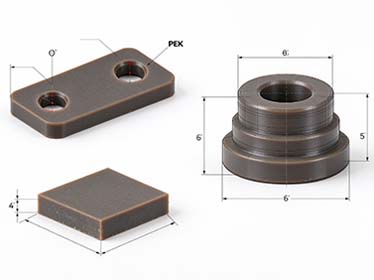
PEEK CNC Milling & Turning Services
Milling suits prismatic and contoured PEEK parts; turning suits rotational parts such as bushings and shafts. The right process follows geometry, tolerance scheme and volume.
| Application | Recommended CNC process | Typical engineering considerations |
|---|---|---|
| Pockets, slots, thin-wall housings | Precision PEEK CNC milling (3/4/5-axis where available) | Wall stiffness, chip evacuation, clamping distortion |
| Bushings, sleeves, rings | Precision PEEK turning | Concentricity, roundness, bore size control |
| Shafts and pins | CNC turning, with milled features as needed | Runout, slenderness, support during cutting |
| Complex parts with turned and milled features | Combined turning and milling | Datum consistency across setups |
Turned parts typically achieve rotational accuracy efficiently; milled parts allow more complex geometry but may need more setups and fixturing. Tolerances are confirmed from your drawing.
High Precision PEEK CNC Machining
PEEK CNC Machining Tolerances
Achievable PEEK tolerance depends on part dimensions, geometry, grade, machining process, thermal conditions, workholding and inspection method. We do not quote a blanket standard tolerance; we review each drawing against ISO or ASME GD&T principles and confirm what can be held and verified.
| Feature | Key risk | Control method |
|---|---|---|
| Hole diameter | Elastic recovery, thermal change | Finishing strategy and measurement after stabilization |
| Flatness, parallelism | Residual stress, clamping distortion | Stress-aware sequence, low-distortion fixturing |
| Concentricity, runout | Setup changes, part flex | Single-setup machining where possible, defined datums |
| Position, perpendicularity | Datum shift between operations | Consistent datum scheme, CMM verification |
| Surface finish (Ra) | Tool wear, heat smearing | Sharp tooling, finishing pass, inspection interval |
See PEEK CNC machining tolerances and PEEK surface finish and dimensional accuracy.
PEEK Material for CNC Machining
PEEK (polyether ether ketone) is a high-performance engineering thermoplastic known for heat resistance, chemical resistance, wear resistance and dimensional stability. Exact properties vary by grade and manufacturer, so confirm against the supplier datasheet. See what is PEEK material and PEEK material properties and grades.
| PEEK grade | General characteristics | Typical CNC applications | Engineering considerations |
|---|---|---|---|
| PEEK natural | Unfilled base grade | Insulators, bushings, general components | Reference grade for machining behavior |
| PEEK black | Pigmented grade | Visual or process-specific parts | Confirm properties with the supplier datasheet |
| Glass-filled PEEK | Filled for stiffness and dimensional stability | Structural and stable components | Filler can increase tool wear and change finish |
| Carbon-filled PEEK | Filled for stiffness and wear behavior | Wear and load-bearing parts | Machining behavior differs from unfilled |
| Reinforced PEEK | Grade-specific reinforcement | Application-specific | Validate per datasheet and application |
Learn more in PEEK material grades for CNC machining.
PEEK Machining Feasibility & DFM Self-Checker
Get an immediate preliminary assessment of your PEEK part design, recommended process, material grade and key DFM points — based on our Shenzhen factory machining standards.
PEEK CNC Machining Design Guidelines
Good PEEK part design limits unsupported walls, avoids sharp internal corners, defines clear datums and allows inspection access. Early design for CNC machining PEEK review reduces warping, cost and rework.
Walls and ribs
Avoid tall unsupported walls; thin sections deflect under the tool and warp after release.
Holes and threads
Limit hole depth-to-diameter where possible; specify thread type and check fit needs for a plastic thread.
Corners and radii
Use internal radii matched to standard tool sizes rather than sharp corners.
Clamping and datums
Design flat, stable clamping surfaces and datums that match your inspection plan.
Warping control
Balance material removal and avoid asymmetric geometry that releases stress unevenly.
Inspection access
Ensure critical features can be reached and measured.
PEEK CNC Machining Drawing Requirements
A complete RFQ package speeds up review: a 2D drawing, a 3D CAD file, material grade, tolerances, surface finish and critical features. See what should be included in a PEEK CNC drawing.
| Required information | Examples | Why it matters |
|---|---|---|
| 2D drawing and 3D CAD | PDF/DWG; STEP, STP, SLDPRT, IGES, X_T, STL | Drawing governs tolerances; CAD supports programming |
| Material specification and grade | PEEK natural, glass-filled, carbon-filled | Affects machining, cost and performance |
| Dimensions, GD&T, tolerances | Datums, flatness, position, runout | Defines inspection and process planning |
| Surface finish and critical features | Ra requirement, sealing faces | Focuses control where function needs it |
| Special inspection and revision number | CMM report, first article, Rev B | Prevents wrong-revision production |
From PEEK Prototype to Batch Manufacturing
A prototype confirms design; production needs a repeatable process. We support PEEK prototype and low volume machining and scale to PEEK CNC machining for mass production through process optimization and scheduling.
- Prototype
- Design validation
- Low volume
- Pilot production
- Batch production
- High volume
Learn more: PEEK prototypes and small batch parts and high volume PEEK manufacturing. Repeatability comes from fixed fixtures, documented programs and first-piece approval.
PEEK CNC Machining Cost
PEEK part cost depends on stock price, grade, complexity, machining time, tooling, setup, tolerance, finish, quantity, lead time, inspection and shipping. Batch quantities often lower unit cost by spreading setup and programming. We do not publish per-part prices without a drawing. See how much does PEEK CNC machining cost and PEEK machining cost factors.
Cost drivers (illustrative, not proportional)
Relative weighting varies by part. Bars show which factors to review, not real cost shares. Also see PEEK parts CNC machining price.
PEEK CNC Machining Applications
PEEK is used where heat, chemicals, wear or insulation matter. See PEEK CNC machining applications and PEEK parts for aerospace, medical and semiconductor applications. Regulated sectors may require added material traceability, cleanliness and qualification.
PEEK Medical CNC Machining
Precision components for medical equipment. We make no medical-grade, FDA or implant claim without documented evidence; see CNC machined PEEK medical components.
PEEK Aerospace CNC Machining
Lightweight, high-temperature parts. See PEEK components for aerospace applications.
PEEK Semiconductor CNC Machining
Chemical-resistant, vacuum-compatible parts where validated. Cleanroom status: [CERTIFICATIONS]. See PEEK parts for semiconductor equipment.
Electrical & Electronics
Insulating components: PEEK insulating components.
Industrial Equipment & Automation
Wear-resistant, low-friction bushings and machine parts: PEEK components for automation and machinery.
Machinery & Robotics
Precision spacers, bushings and structural parts for moving assemblies.
PEEK CNC Machining Supplier in Shenzhen, China
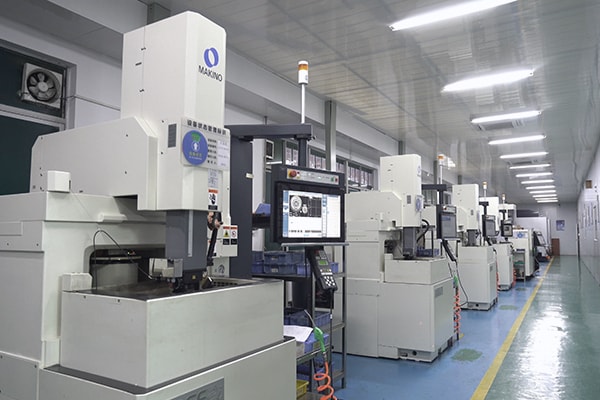
Shenzhen offers a dense manufacturing ecosystem: CNC machining, electronics and industrial supply chains, supporting processes and international logistics. As a PEEK CNC machining supplier in Shenzhen, [rapid-model] works factory-direct with global OEMs.
See PEEK CNC machining factory in China, PEEK CNC machining manufacturer in China and factory direct PEEK CNC machining. Factory details: [MACHINE CAPACITY], [MONTHLY CAPACITY], [INSPECTION EQUIPMENT], [CERTIFICATIONS].
Custom PEEK CNC Machining for OEMs
We work as a long-term manufacturing partner for OEM programs: engineering collaboration, prototypes, production planning, batch manufacturing, inspection, documentation, packaging and export logistics. See PEEK OEM machining services and custom PEEK CNC machining for OEMs.
Built for engineering teams, procurement departments and global OEM programs.
PEEK vs Other Engineering Plastics for CNC Machining
No plastic is universally best. Selection should follow temperature, chemical, wear, friction, stiffness and cost requirements. Qualitative comparison only; verify with datasheets. See the PEEK CNC machining material selection guide and PEEK and other CNC engineering plastics.
| Material | Where it is typically chosen | Compared with PEEK |
|---|---|---|
| PEEK vs PTFE | Chemical resistance, low friction, sealing | PTFE is softer and lower friction; PEEK is stiffer and stronger. Which to machine? |
| PEEK vs UHMW-PE | Wear and impact, low cost | UHMW-PE has a much lower temperature range. Compare |
| PEEK vs HDPE | General-purpose, chemical exposure | HDPE is economical with lower heat resistance. Compare |
| PEEK vs ULTEM / PEI | Stiff, high-temperature parts | Both are high-performance; chemical and wear needs differ. Compare |
| PEEK vs Delrin / POM | Precision parts, good machinability | POM is easier and cheaper; PEEK has higher temperature capability. Compare |
PEEK CNC Machining Near Me or in China?
Local and overseas suppliers each fit different projects. Compare engineering communication, logistics, volume, quality control and total landed cost. See PEEK CNC machining near me and how to choose a PEEK CNC machining supplier.
Local sourcing can suit urgent, low-volume or on-site needs. A Shenzhen supplier can suit recurring batch programs where drawings are stable and lead-time planning is possible.
Online PEEK CNC Machining Services
Our online PEEK CNC machining RFQ workflow is engineer-reviewed: upload CAD, receive DFM feedback and a quotation. See get a quote for custom PEEK parts. We do not offer automated instant pricing.
- Upload CAD
- Engineering review
- DFM feedback
- Quotation
- Production
- Inspection
- Delivery
PEEK CNC Machining Lead Time
Lead time depends on material availability, complexity, quantity, tooling, programming, inspection, finishing, scheduling and logistics. Prototype lead time is not batch lead time. Typical lead time: [LEAD TIME]. See how long does PEEK CNC machining take.
PEEK CNC Machining Quality Control
Quality control is a workflow, not one final check. We define inspection requirements per drawing: material verification, first-piece, in-process and final inspection, documentation and packaging checks. See PEEK CNC inspection and quality control.
- Incoming material verification
- First-piece inspection
- In-process inspection
- Final dimensional inspection
- Documentation review
- Packaging inspection
Available methods: CMM and dimensional inspection, GD&T verification, first article inspection and inspection reports, as specified: [INSPECTION EQUIPMENT], [CERTIFICATIONS].
Request Inspection RequirementsPEEK CNC Machining Surface Finishing
PEEK finishing is mostly deburring, edge finishing and machining-mark control, and polishing where applicable. Metal finishes such as anodizing do not apply to PEEK. Finishing can affect dimensions, so it is planned with tolerances. See PEEK surface finishing options.
PEEK CNC Machining FAQ
Answers to common PEEK CNC machining frequently asked questions.
What is PEEK CNC machining?
Removing material from PEEK stock with CNC milling or turning, with controlled heat, tooling, fixturing and chip evacuation.
Why is PEEK suitable for CNC machining?
It is a rigid engineering thermoplastic that holds shape and machines from rod, plate and tube, when heat and clamping stress are managed.
Can PEEK be CNC milled and turned?
Yes. Milling suits prismatic parts; turning suits bushings, shafts, rings and sleeves.
Can you machine glass-filled or carbon-filled PEEK?
Filled grades can be machined but behave differently, often with more tool wear. Confirm the grade and datasheet with us.
What tolerances are possible with CNC machined PEEK?
It depends on size, geometry, grade, thermal conditions, workholding and inspection method. We confirm against your drawing.
How much does PEEK CNC machining cost?
It depends on stock, complexity, time, tolerance, finish, quantity and inspection. Send a drawing and quantity for a quote.
How long does PEEK CNC machining take?
Prototype and batch lead times differ. Typical lead time: [LEAD TIME], confirmed per order.
How should PEEK parts be designed for CNC machining?
Avoid tall unsupported walls and sharp internal corners, define datums and allow inspection access.
What files are needed for a quote?
2D drawing, 3D CAD (STEP, STP, SLDPRT, IGES, X_T, STL, ZIP), grade, quantity, tolerances and finish.
Can you make prototypes, batches and OEM parts?
Yes: prototypes, low-volume, batch and OEM production, planned around your requirements.
How do I choose between PEEK, PTFE, UHMW, HDPE, PEI and Delrin?
Start from temperature, chemicals, wear, friction, stiffness and cost. See the comparison table above.