チタンは炭素鋼より硬いですか。総合工事ガイドライン
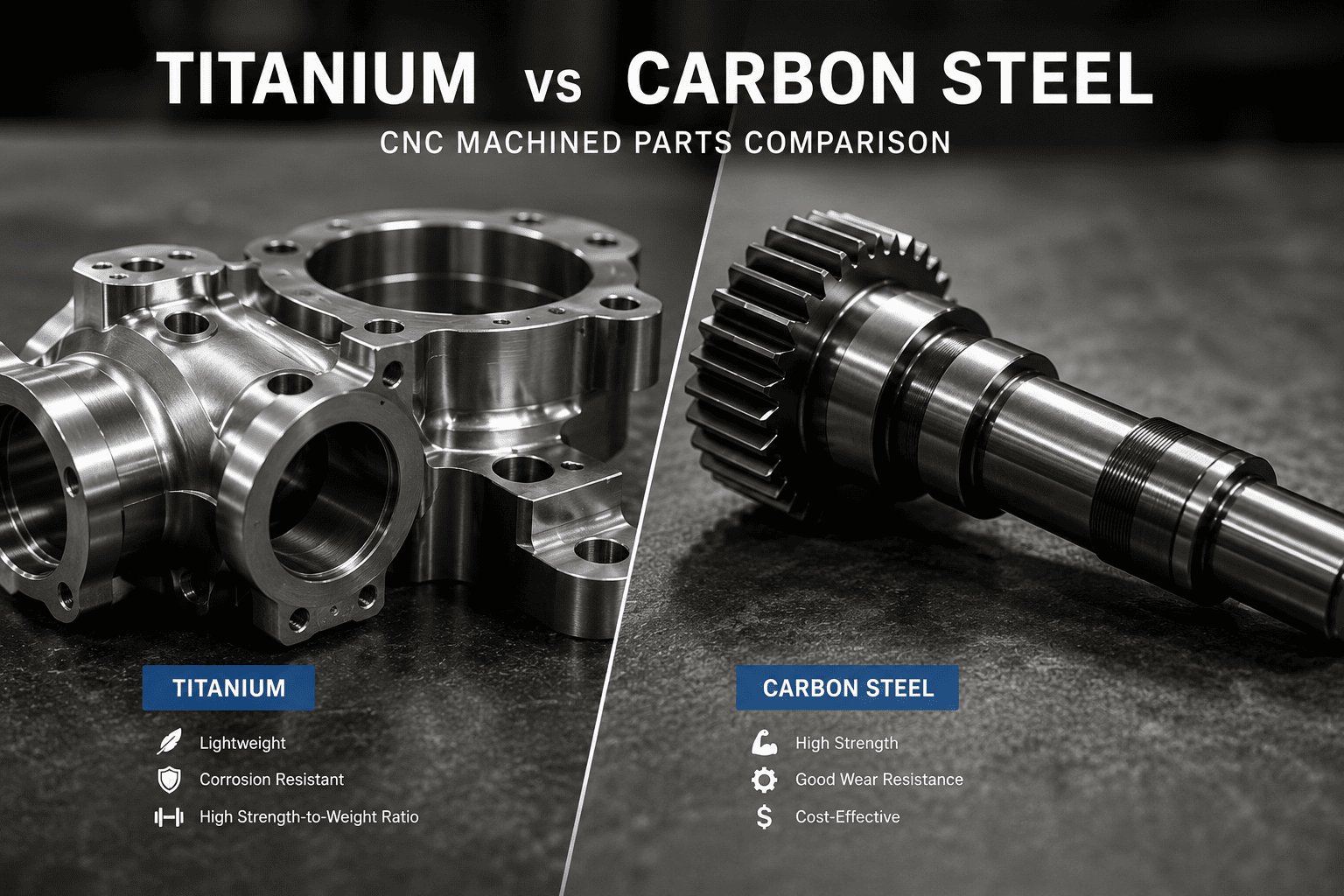
エンジニアと製品デザイナーがCNC加工の金属を比較する場合、最も一般的な問題の1つは:チタンは炭素鋼より硬いですか?
直接的な答えは、いつもそうではありません。チタンは良質な高性能材料として広く考えられているが、その硬度は特定のチタン等級、鋼等級、熱処理条件に完全に依存する。
より良い問題は、どの材料が部品の機能、公差、重量要件、腐食環境、予算に適していますか。詳細について深く検討してみましょう。
商用純チタンと中炭素鋼
商用純チタンは特に硬いわけではない。例えば、2級チタンのロックウェル硬度は、以下の基準に従って、B 80(145 HVビッカース硬度)程度である ASM/MatWeb データです。
一方、ある供給条件では、AISI 1045のような一般的な中炭素鋼はロックウェルB 84(170 HV)程度に達することができる。これは、一般的で未処理の炭素鋼のいくつかが、実際には商業純チタンよりも硬いことを意味している。
チタン合金と高炭素合金、工具鋼
The story changes when we look at titanium alloys. Ti-6Al-4V (Grade 5 titanium) is significantly harder than its commercially pure counterparts. Annealed Ti-6Al-4V has a hardness of about Rockwell C 36 (349 HV). This makes Grade 5 titanium harder than many untreated mild or medium-carbon steels.
However, steel is incredibly versatile. Hardened high-carbon steel and tool steel (which have been quenched and tempered) can easily exceed the hardness of even the toughest titanium alloys. Therefore, titanium is not automatically harder than carbon steel; it is entirely relative to the grades being compared. 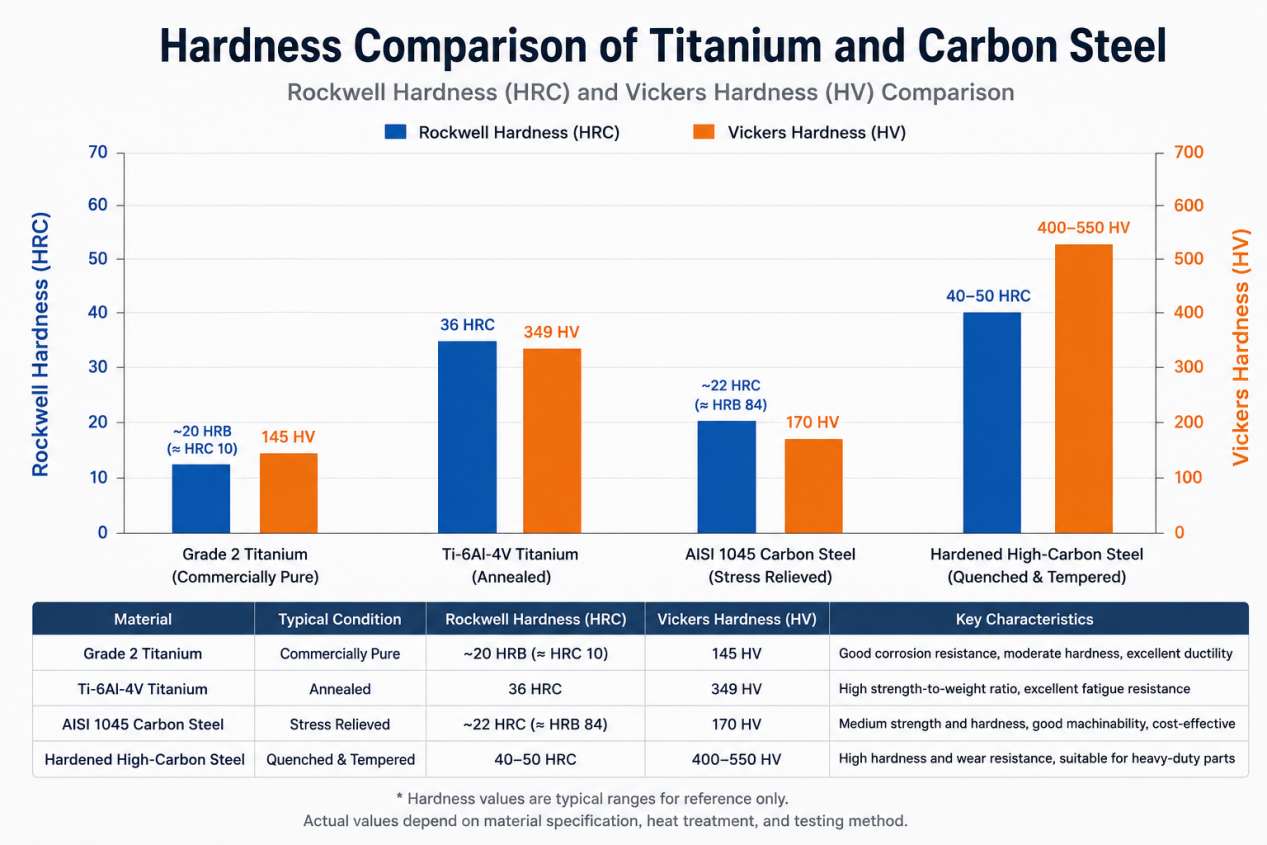
Titanium vs. Carbon Steel Hardness Comparison
材料 | Typical Condition | Approx. Hardness | Practical Meaning |
Grade 2 Titanium | Commercially pure | HRB 80 / 145 HV | Good corrosion resistance, moderate hardness |
Ti-6 Al-4 V(レベル5) | Annealed alloy | HRC 36 / 349 HV | High strength-to-weight ratio, harder to machine |
AISI 1045 Steel | Hot rolled / stress relieved | HRB 84 / 170 HV | Economical medium-carbon steel |
High-Carbon Steel | Quenched & tempered | Often > Ti-6Al-4V | Better for highly wear-resistant parts |
Tool Steel | Heat treated | Much higher | Used for dies, punches, molds, and tooling |
Why "Hardness" Isn't Everything in Material Selection
The reason "carbon steel" is a tricky category is due to its carbon content and heat treatment variability:
• Low-carbon (mild) steel: Soft, ductile, and highly machinable.
• Medium-carbon steel: Offers a great balance of strength, hardness, and cost.
• High-carbon steel: Can be heat-treated to achieve extreme hardness and wear resistance.
Titanium’s true value does not lie in being the "hardest" metal. Its distinct advantages are its incredible strength-to-weight ratio, excellent corrosion resistance, and biocompatibility. This is why titanium is the go-to choice for aerospace components, medical implants, robotics, marine equipment, and high-performance automotive parts. It provides robust mechanical performance while significantly reducing weight.
NCプロセス Challenges: Why Titanium "Feels" Harder
In CNC machining, titanium can often feel much harder to machine than steel, even if its Rockwell hardness number is lower. Why?
Titanium has low thermal conductivity. This means that during machining, the cutting heat doesn't dissipate through the chip; instead, it stays concentrated near the cutting tool edge. This accelerates tool wear and creates challenges with surface finish, chatter, and dimensional stability.
How to Choose: Titanium or Carbon Steel?
Material selection should always be aligned with your engineering drawings and end-use application.
Choose Titanium when your project requires:
• Significant weight reduction without sacrificing strength.
• Extreme corrosion resistance (e.g., marine or chemical environments).
• Biocompatibility (medical devices).
• High performance in aerospace or robotic applications.
Choose Carbon Steel when your project requires:
• High hardness and wear resistance (achieved via heat treatment).
• Lower material and manufacturing costs.
• Strong structural performance where weight is not a strict limiting factor.
• Components like shafts, gears, fixtures, and general tooling. (Note: Carbon steel requires surface treatments like plating or black oxide to prevent rust). 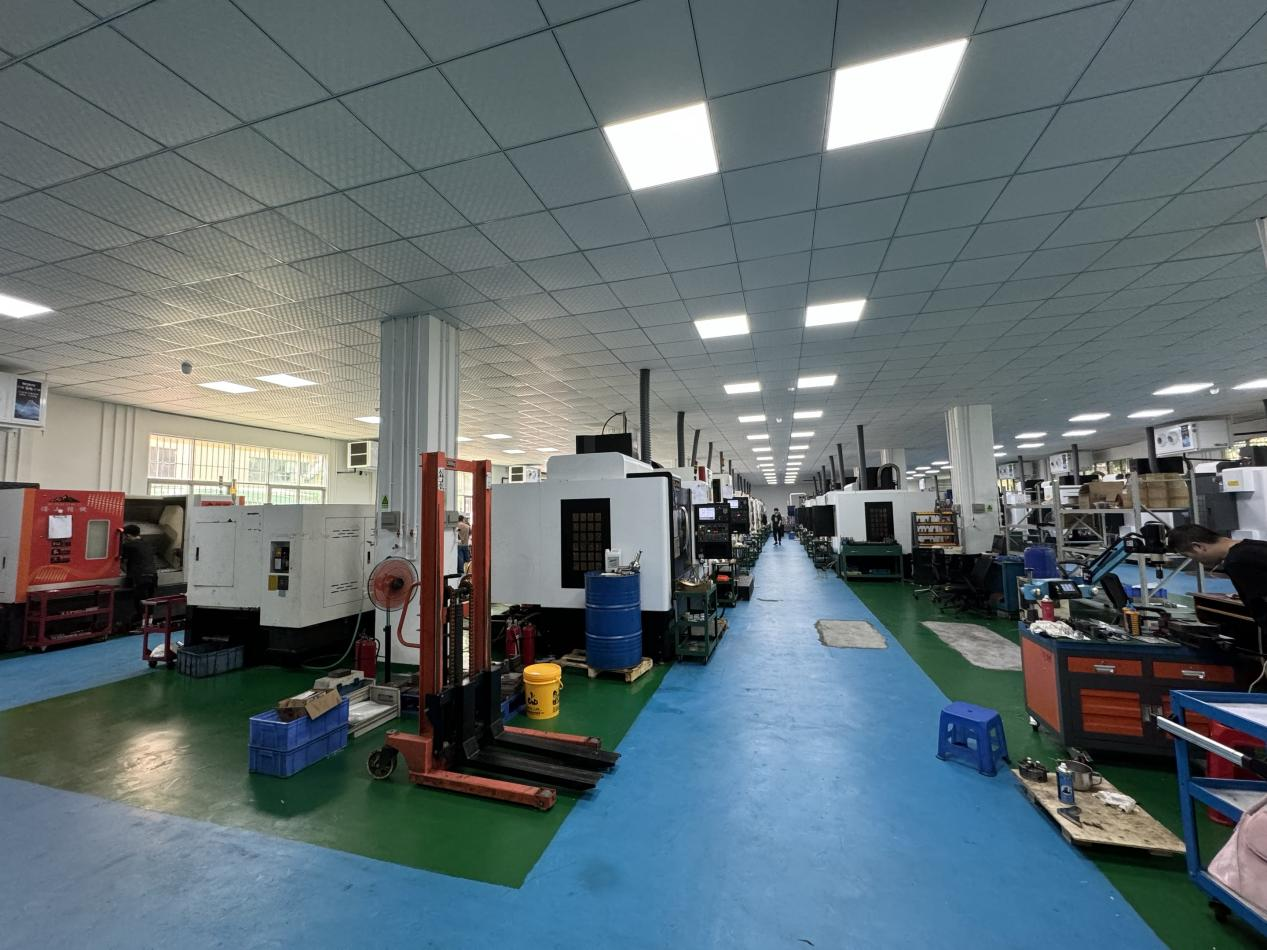
Professional CNC Machining Services at 高速モデル
A simple statement like "titanium is harder than carbon steel" can be misleading if the grade, condition, and application are not defined. For successful CNC projects, details matter: material grade, tolerance, surface finish, and production volume.
At Rapid-Model, we help our global customers evaluate materials from a practical, manufacturing-first perspective. As a premier Shenzhen-based CNC machining supplier, we provide end-to-end manufacturing solutions. From custom CNC machining, titanium and steel machining, to sheet metal fabrication—we take your project from rapid prototype to large-scale production seamlessly.
Final Verdict
Is titanium harder than carbon steel? Sometimes, but not always. Commercially pure titanium is often softer than medium-carbon steel. Grade 5 Titanium is harder than untreated steel, but hardened tool steel remains superior in pure hardness. Ultimately, hardness is just one factor. The best material is the one that perfectly balances strength, weight, wear, corrosion, precision, and cost for your specific part.