How to Find a CNC Machining Parts Manufacturer
Choosing the right CNC machining parts manufacturer can have a significant impact on product quality, development speed, and overall project costs. Whether you are sourcing precision components for aerospace equipment, medical devices, industrial machinery, or consumer products, the manufacturer you select will directly influence the success of your production process.
Many buyers focus primarily on price when comparing suppliers. However, experienced engineers and procurement teams understand that machining capability, quality management, communication efficiency, and delivery reliability are often far more important than obtaining the lowest quote.
According to the National Institute of Standards and Technology NIST, manufacturing quality issues and supply chain inefficiencies can significantly increase product development costs and lead to production delays. This makes supplier selection one of the most important decisions during any manufacturing project.
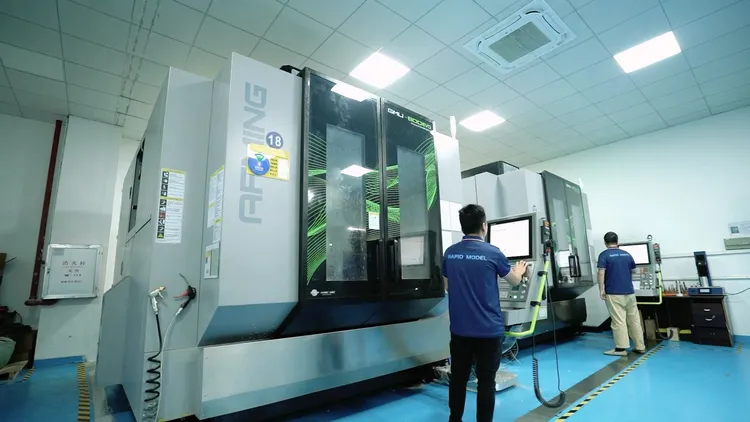
Start by Defining Your Project Requirements
Before contacting any manufacturer, it is essential to understand exactly what your project requires.
Many sourcing problems occur because suppliers receive incomplete information during the quotation stage. The more details you provide, the more accurate the quotation and production plan will be.
Key specifications typically include:
- Material selection
- Dimensional tolerances
- Surface finish requirements
- Production quantities
- Application environment
- Assembly requirements
For example, an aluminum prototype used for product testing may require different machining processes than a titanium component intended for aerospace applications. Likewise, a batch of 50 prototype parts demands a different production strategy than an order of 50,000 units.
If your design includes complex geometries, undercuts, or tight tolerances, verify that the manufacturer has experience with advanced CNC technologies such as 4-axis or 5-axis machining.
Clearly defined requirements help eliminate unsuitable suppliers early and save valuable time during supplier evaluation.
Research Potential Manufacturers Carefully
Finding a supplier has never been easier, but finding a reliable supplier remains a challenge.
Online sourcing platforms can provide hundreds of CNC machining companies within minutes. However, not all suppliers have the same technical expertise, equipment capabilities, or quality standards.
Some of the most effective ways to identify qualified manufacturers include:
- Industry trade shows
- Professional engineering networks
- Supplier recommendations
- Manufacturing directories
- Company websites and case studies
When reviewing a manufacturer's website, avoid focusing solely on marketing claims. Instead, look for evidence of actual production capabilities.
Questions worth asking include:
- What industries do they serve?
- What materials do they machine regularly?
- Do they provide inspection reports?
- Can they support both prototyping and production?
- How long have they been operating?
A professional manufacturer should be transparent about its equipment, quality systems, and manufacturing processes.
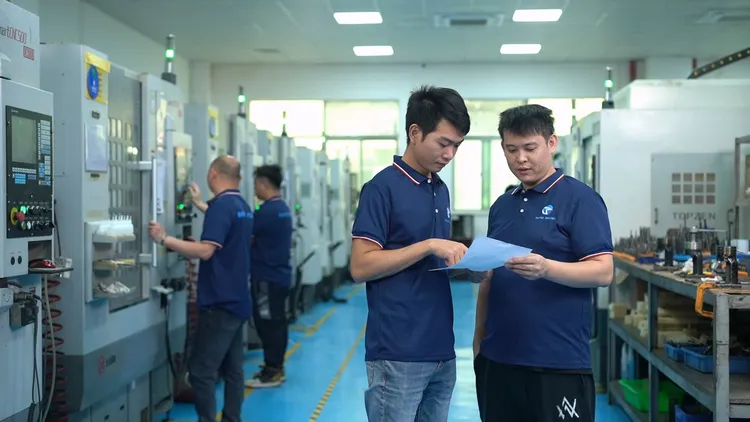
Evaluate Manufacturing Capabilities Beyond the Equipment List
Many suppliers advertise advanced CNC machines, but equipment alone does not guarantee consistent results.
A manufacturer's overall production system is equally important.
The International Organization for Standardization ISO emphasizes that quality management systems play a critical role in ensuring repeatability, traceability, and process control throughout manufacturing operations.
When evaluating suppliers, consider the following areas:
Precision and Tolerance Control
Ask what tolerances the manufacturer can consistently achieve rather than what they can achieve under ideal conditions.
Reliable suppliers should be able to explain their machining strategy, measurement methods, and process controls.
Inspection and Quality Assurance
Look for manufacturers that utilize professional inspection equipment such as:
- Coordinate Measuring Machines CMM
- Height gauges
- Optical measuring systems
- Surface roughness testers
Inspection reports should be available upon request.
Material Expertise
Different materials require different machining strategies.
A manufacturer experienced in aluminum machining may not necessarily excel at machining stainless steel, titanium, or engineering plastics. Reviewing previous projects can help verify their expertise.
Scalability
A supplier that performs well during prototyping should also be capable of supporting future production volumes.
Transitioning to a new supplier after product validation often increases cost and project complexity.
As a Shenzhen-based manufacturer, Rapid-Model supports both rapid prototyping and production machining, allowing customers to maintain consistency throughout different stages of product development.
Request Samples Before Committing to Large Orders
One of the most effective ways to evaluate a CNC machining supplier is by ordering a prototype or sample batch.
A sample order provides valuable insights that cannot be obtained through quotations alone.
Pay attention to:
- Machining accuracy
- Surface finish quality
- Packaging standards
- Documentation quality
- Delivery performance
A manufacturer's ability to produce a high-quality prototype often reflects the maturity of its manufacturing processes.
During this stage, it is also useful to assess how the supplier handles engineering feedback and design modifications.
Strong suppliers typically offer suggestions that improve manufacturability, reduce machining time, or lower production costs without compromising functionality.
Assess Communication and Engineering Support
Communication is frequently overlooked during supplier selection, yet it is one of the most important factors in long-term project success.
Even highly capable manufacturers can become difficult partners if communication is slow or unclear.
Pay attention to how quickly questions are answered and whether technical discussions are handled professionally.
The best CNC machining partners do more than simply manufacture parts. They actively participate in solving engineering challenges.
Experienced engineering teams often identify potential issues related to tolerances, material selection, machining accessibility, or assembly requirements before production begins.
This collaborative approach can significantly reduce development risks and shorten project timelines.
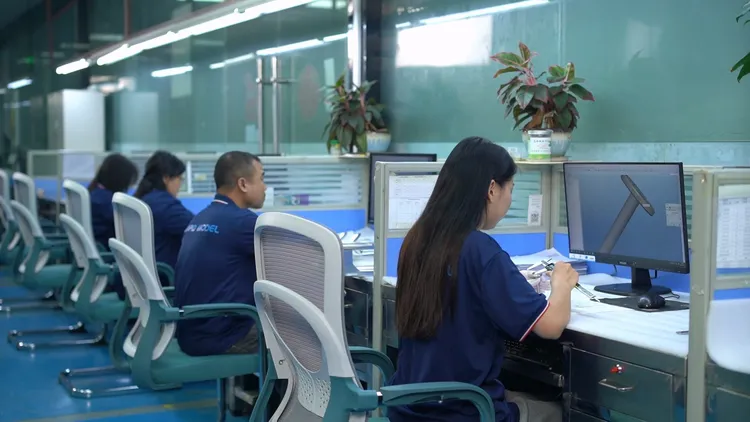
Consider Lead Times and Supply Chain Reliability
Fast delivery is increasingly important in today's competitive manufacturing environment.
A supplier's ability to meet deadlines depends on more than machine availability. Factors such as raw material sourcing, production planning, quality inspection, and logistics all affect lead times.
Manufacturing hubs such as Shenzhen have become popular among global buyers because of their mature supply chains and efficient logistics networks. Access to raw materials, skilled labor, and shipping infrastructure often enables faster turnaround compared with many other regions.
When comparing suppliers, ask for realistic delivery schedules rather than optimistic estimates. Consistent on-time delivery is usually more valuable than promises of exceptionally fast lead times.
Conclusion
Finding a CNC machining parts manufacturer is not simply about comparing prices. It requires a careful evaluation of technical capabilities, quality systems, communication practices, and production reliability.
By clearly defining your requirements, researching suppliers thoroughly, reviewing manufacturing capabilities, testing sample parts, and assessing long-term support, you can significantly reduce sourcing risks and improve project outcomes.
For companies seeking a trusted manufacturing partner, Rapid-Model combines advanced CNC machining technology, experienced engineering support, strict quality control procedures, and the flexibility to handle both prototype and production projects.
The right manufacturing partner does more than produce parts. They become an extension of your engineering team, helping bring products to market faster, more efficiently, and with greater confidence.