What Is Milling in Machining?
What Exactly Is CNC Milling?
Let’s cut to the chase. Milling is a subtractive manufacturing process where a rotating cutting tool moves along multiple axes to remove material from a solid workpiece, turning a raw block of metal or plastic into a finished part. When you add Computer Numerical Control (CNC) into the mix, you get CNC milling—a precision-driven process where every movement of the tool and workpiece is dictated by digital instructions, not manual guesswork.
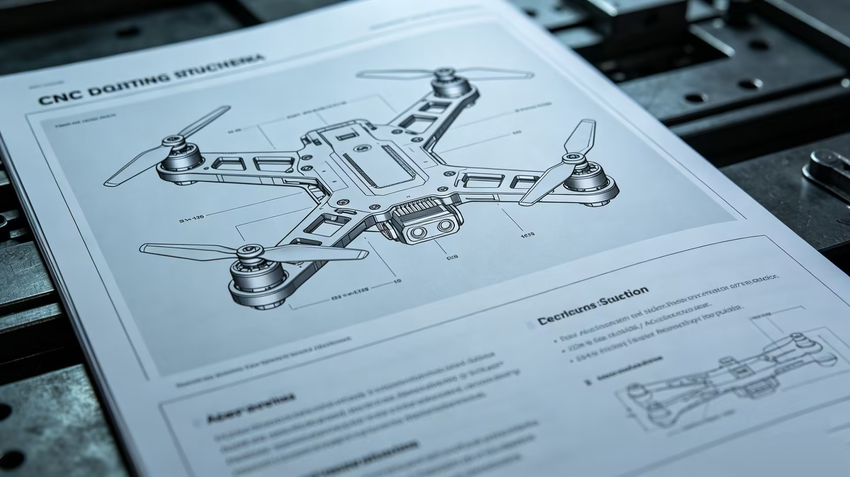
Think of it this way: if you’re an engineer designing a custom bracket, a housing, or any part with complex geometry, CNC milling takes your CAD file and translates it into a physical component with tolerances down to ±0.01mm or better. Unlike turning, which spins the workpiece against a stationary tool to create cylindrical parts, milling uses a rotating multi-point cutter to carve out flat surfaces, slots, angled contours, and 3D shapes from a stationary workpiece. That versatility is what makes milling the go-to process for everything from automotive engine brackets to aerospace structural components.
3-Axis vs. 5-Axis: Which One Delivers Better Results?
Not all milling is created equal. The number of axes a machine has determines how complex a part it can produce:
3-axis milling keeps the workpiece fixed while the cutting tool moves along the X, Y, and Z planes. It’s efficient for flat surfaces, simple profiles, and basic features like drilled holes and slots. For straightforward parts, 3-axis gets the job done at a lower cost.
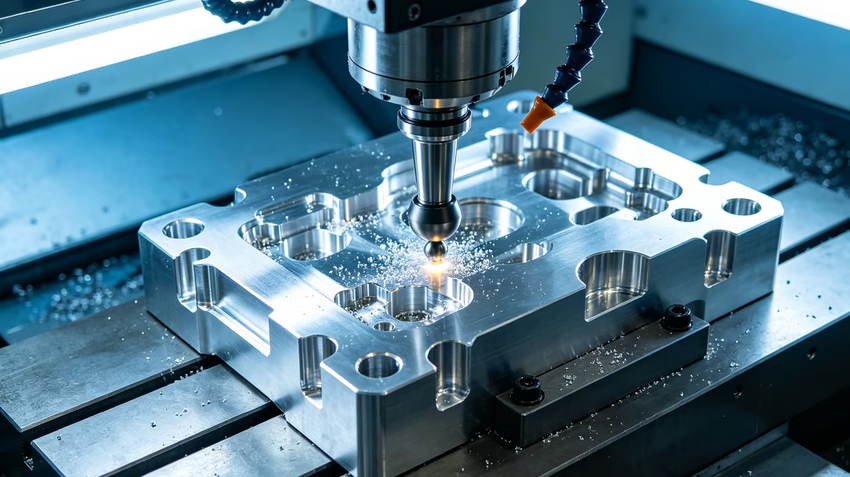
But when your part has compound curves, deep cavities, or multiple faces that require machining from various angles, 5-axis milling changes the game entirely. A 5-axis CNC adds two rotational axes to the traditional X, Y, and Z movements, allowing the cutting tool to approach the workpiece from virtually any angle in a single setup. The result? Fewer repositioning steps, tighter accuracy, and the ability to machine complex geometries that would be impossible—or painfully slow—on a 3-axis machine. Industries like aerospace, medical devices, automotive, and mold manufacturing have made 5-axis the standard for high-precision work.
Where Is CNC Milling Used in the Real World?
Almost everywhere. If you’ve ever held a smartphone, driven a car, or flown on an airplane, CNC milling played a role in making it happen. Here’s where it shows up:
Automotive: engine brackets, transmission housings, chassis components, and interior trim parts machined from high-strength aluminum and steel.
Aerospace: turbine blades, structural frames, and lightweight titanium components where every gram and micron matters.
Medical: surgical instruments, implants, and device housings that demand exceptional precision and clean surface finishes.
Industrial automation: robotic actuator housings, drive components, and assembly line parts built to withstand high-cycle operation.
How Does Rapid Model Deliver Precision Milling Parts?
Here at Rapid Model, CNC milling isn’t just one of our services—it’s a core competency that we’ve refined over 16 years of serving clients across automotive, aerospace, medical, and industrial sectors. We operate multi-axis milling capabilities, including 3axis, 4axis, and full 5axis simultaneous machining, to produce intricate parts from a wide range of engineering metals and plastics.
But what separates us from the pack isn’t just the hardware. It’s the engineering insight we bring to every project. Take our work with SkyVision UAV Solutions, for example. When the German drone manufacturer approached us for a “test batch” after being burned by local vendors who couldn’t hold ±0.01mm tolerances, our engineering team didn’t just quote the job—they performed a Design for Manufacturing (DFM) review and flagged that their 1.8mm thin-wall arm sections would warp under standard clamping. We designed custom vacuum fixtures, implemented a staged roughing-to-finishing strategy with a 24hour stress-relief cycle, and finished everything in one setup on our Haas 5axis mill. The result? The client reported a 30% reduction in vibration resonance compared to their previous prototypes, and we’ve since become their go-to technical partner.

We work with over 30 material types—including aluminum alloys (6061-T6, 7075-T6), stainless steel (304, 316), titanium, brass, PEEK, and engineering plastics—and deliver parts with tolerances as tight as ±0.01mm. And because we know time-to-market matters, we offer rapid prototyping in as fast as 24 hours and scalable batch production from single units to full-volume runs.
Conclusion
CNC milling remains one of the most versatile and reliable manufacturing processes for producing high-precision components across industries. Whether you need simple 3-axis machining for standard parts or advanced 5-axis capabilities for complex geometries, the right machining partner can make the difference between a successful project and costly delays.
At Rapid Model, we combine advanced multi-axis CNC milling technology with deep engineering expertise to help customers move from concept to production with confidence. From rapid prototypes to high-volume manufacturing, our team focuses on precision, manufacturability, and consistent quality at every stage of the process.
If you're looking for a trusted CNC milling partner capable of holding tight tolerances, machining complex parts, and providing engineering support from the very beginning, Rapid Model is ready to help. Upload your CAD files today and receive a fast quotation along with expert DFM feedback to accelerate your next project.