Engineering Specifications
The Challenge
For startups in the Electric Propulsion System (EPS) sector, every structural component directly impacts power output efficiency and operational safety. Leading brands in this industry maintain exceptionally strict requirements for mechanical performance and lightweighting.
The core components of a propulsion system—such as motor mounts, cooling housings, and high-strength connectors—must not only withstand extreme torque loads but also deliver superior thermal dissipation and corrosion resistance. Even a microscopic dimensional deviation can lead to operational vibration or thermal failure. Consequently, the client required a manufacturing partner capable of meeting sub-micron tolerances, complex geometries, and flawless surface treatments (such as hard anodizing) simultaneously.
The Solution
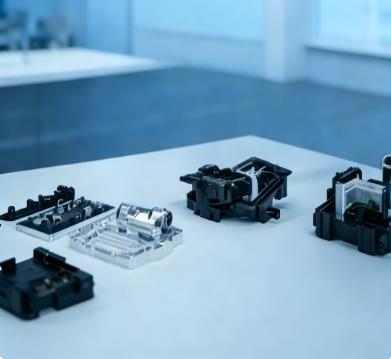
Through our online platform, the startup's engineering team achieved a seamless transition from Proof of Concept (PoC) to mass production. 1. Instant Quoting and Real-Time Cost Updates During the early R&D phase, engineers frequently adjusted the topology of brackets to reduce weight. Utilizing our intelligent quote builder, the team obtained real-time pricing within hours of design modifications, ensuring the iterative process remained strictly within budget. 2. In-Depth DFM Analysis and Injection Molding Expertise The system consists of three independent components: a CNC-machined high-strength aluminum alloy housing, an injection-molded precision internal shield, and stainless steel fasteners.
- CNC Machining: For the aluminum components, our platform’s built-in Design for Manufacturing (DFM) analysis helped optimize tool paths, ensuring that ultra-thin cooling fin structures could be machined with high stability.
- Injection Molding: As the project shifted to high-volume production, mold costs became a major hurdle. Our injection molding experts collaborated with the client via the platform to refine mold runner designs, ensuring a successful first-shot molding and avoiding expensive tool modification fees.
Integration Advantages of a Single-Source Supplier
For complex assemblies, tolerance stack-up is an engineer's nightmare. If the motor housing and internal shield are manufactured by different suppliers, variations in quality standards can lead to severe assembly difficulties.
The Perfect Fit: All core components were coordinated and produced by our unified network. This single-source strategy ensured that the fit between metal and plastic parts achieved a "perfect match," reducing the client's final assembly time by 70%.
Consistency in Surface Treatment: To withstand marine or industrial corrosive environments, all external structural parts underwent high-standard electroless nickel plating or anodizing. This ensured high color uniformity and consistent anti-corrosion performance across bulk orders.
"In the field of electric propulsion, there is zero room for error. Being able to source parts using both CNC and injection molding technologies on a single platform has been 'game-changing' for us. It allows us to focus our energy on motor control logic while leaving the manufacturing intricacies to the experts. — Lead Project Designer
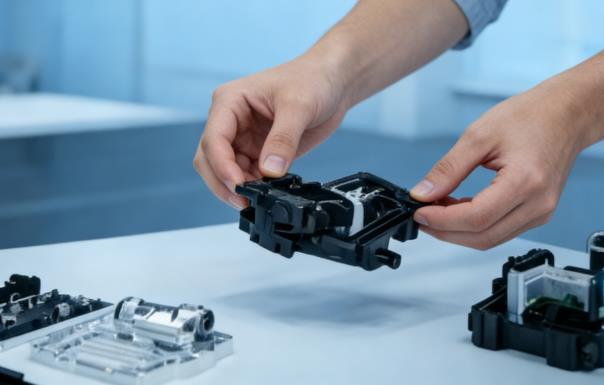
A Leap from Hundreds of Prototypes to Thousands in Mass Productione
By the end of 2024, the client successfully delivered over 5,000 sets of propulsion system structural assemblies through our manufacturing network.
Rapid Response: Compared to traditional offline outsourcing, the component procurement cycle was shortened by approximately 40%.
Cost Efficiency: Optimized manufacturing strategies reduced the cost per individual part by approximately 22%.
Reliability: All components passed rigorous vibration and pressure testing, achieving a "plug-and-play" assembly standard.
This integrated approach has allowed the startup to focus on core innovation while leaving the complexities of high-precision manufacturing to our network. As they continue to expand, our scalable manufacturing solutions remain the backbone of their hardware evolution.
Ready to Scale Your Propulsion Hardware?
Whether you are iterating on a prototype or scaling to thousands of units, we provide the precision and material expertise required for high-performance electric systems.
Request a Technical Review