What is CNC Machining? A Simple Guide for Product Designers and Engineers
When you are looking to bring a new product to life—whether it’s a sleek enclosure for a high-end audio system, a custom camera gimbal component, or a complex aerospace part—you need a manufacturing process that guarantees precision, repeatability, and speed. That is where CNC machining comes into play.
But what exactly is CNC machining, and why has it become the backbone of modern rapid prototyping and production? Let’s break it down into simple terms.
The Core Concept: Subtractive Manufacturing
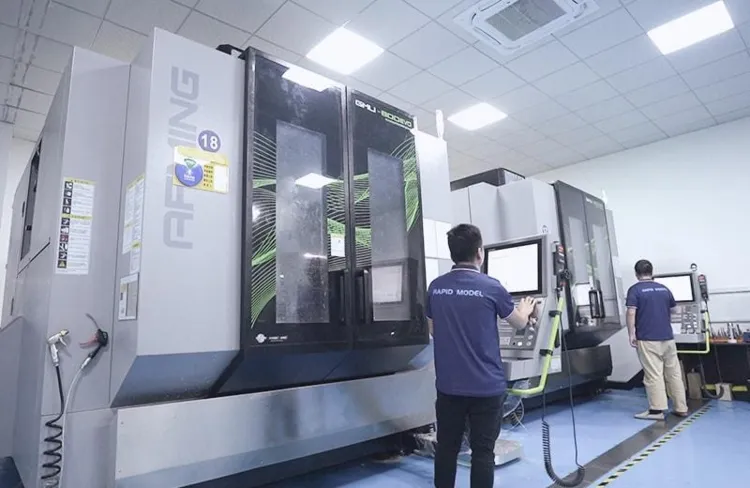
CNC stands for Computer Numerical Control. In short, it is a manufacturing process where pre-programmed computer software dictates the movement of factory tools and machinery.
Unlike 3D printing, which is an additive process (building a part layer by layer), CNC machining is a subtractive process. Imagine a sculptor starting with a solid block of marble and chipping away the excess material to reveal the statue inside. CNC machining works exactly the same way. It starts with a solid block of raw material—often called a "blank" or a workpiece—and uses high-speed cutting tools to precisely shave off material until the final, desired shape is achieved.
How It Works: From Blueprint to Physical Part
The beauty of CNC machining lies in its digital-to-physical workflow. The process typically follows three simple steps:
The CAD Model: An engineer creates a 3D digital design of the part using CAD (Computer-Aided Design) software.
The CAM Translation: This 3D file is converted into G-code via CAM (Computer-Aided Manufacturing) software. G-code is essentially the language that CNC machines understand, telling the cutting tools exactly where to move, how fast to rotate, and how deep to cut.
The Execution: The machine execution begins. The automated tools cut away the material with incredible speed and accuracy, often within tolerances as tight as a fraction of a millimeter.
Because the entire process is automated and controlled by computers, it eliminates the risk of human error. If you need ten identical metal parts, or even a thousand, the first part will be exactly the same as the last one.
Choosing the Right Process: Milling vs. Turning
While there are many types of CNC machines, the two most common operations you will encounter are milling and turning:
CNC Milling: The raw material remains stationary while the cutting tool rotates at high speeds to remove material. This is perfect for complex, asymmetrical shapes with flat surfaces, pockets, and intricate details.
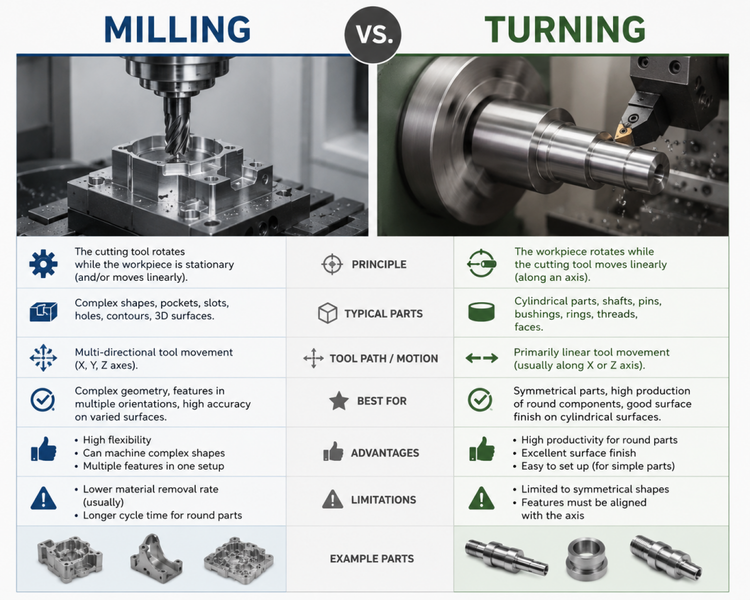
CNC Turning (Lathe): The material block rotates at high speeds while a stationary cutting tool shapes it. This method is the go-to choice for creating cylindrical or round parts, such as shafts, pins, and custom screws.
Advanced facilities often utilize 5-axis CNC machining. Unlike traditional 3-axis machines that move along the X, Y, and Z axes, a 5-axis machine can rotate the tool or the part on two additional axes. This allows for the creation of incredibly complex geometries without the need for multiple setups, saving both time and money.
Why Choose CNC Machining for Your Project?
For product developers, CNC machining offers several unmatched advantages over other manufacturing methods:
Material Versatility: CNC machining works with an incredibly wide range of materials. Whether you need engineering plastics like ABS, PC, or PEEK, or robust metals like Aluminum (6061, 7075), Stainless Steel, Brass, or Titanium, CNC can handle it.
Production-Grade Quality: Unlike prototypes made from 3D printing, CNC-machined parts are cut from solid blocks of production-grade materials. This means they possess the full mechanical strength, thermal resistance, and durability required for functional testing and real-world application.
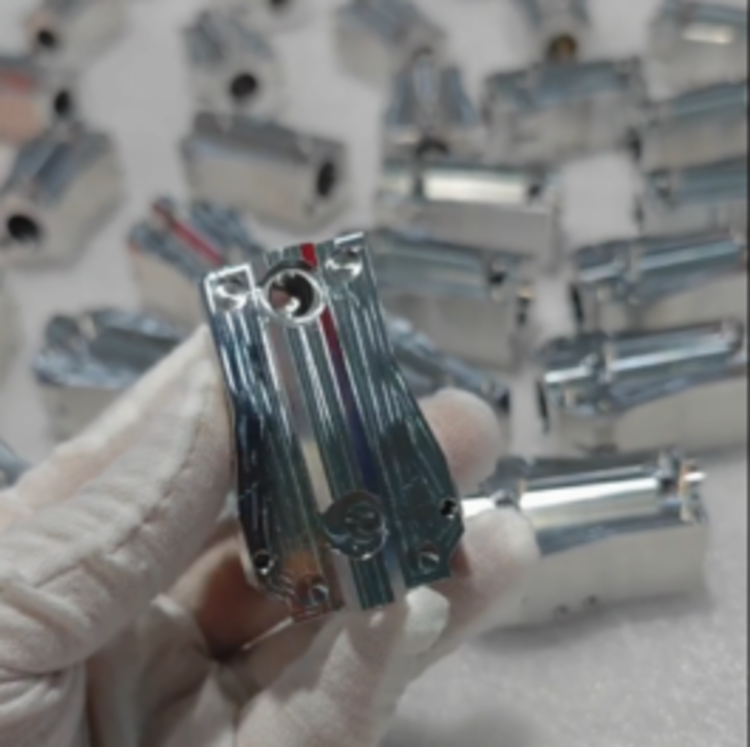
Flawless Surface Finishes: CNC parts can be post-processed to meet precise aesthetic and functional requirements. From a simple "as-machined" finish to anodizing, powder coating, bead blasting, and polishing, the cosmetic options are virtually limitless.
Getting Started with Your CNC Project
Understanding the basics of CNC machining is just the first step. The real magic happens when you partner with a manufacturer that understands how to optimize your designs for manufacturability, keeping your costs down and your lead times short.
At Rapid-Model, we specialize in turning your digital concepts into high-precision prototypes and low-volume production parts. Our experienced engineering team reviews every design to ensure the most efficient machining path, delivering the quality your project demands right to your doorstep.