What is the Milling Process?
Milling is one of those manufacturing processes that quietly sits at the center of modern engineering. You’ll find it behind countless parts used in aerospace systems, cars, medical devices, electronics, and industrial equipment. In simple terms, if a component needs precision and repeatability, there’s a good chance milling was involved somewhere along the way.
At Rapid-Model, a CNC machining factory based in Shenzhen, we deal with milling work every day. It’s one of the core processes we rely on to turn raw metal blocks into functional, well-engineered parts that meet tight tolerances and real-world performance requirements.
In this article, we’ll walk through what milling actually is, how it works in practice, the main types of operations, and where it is commonly used today.
Understanding the Milling Process
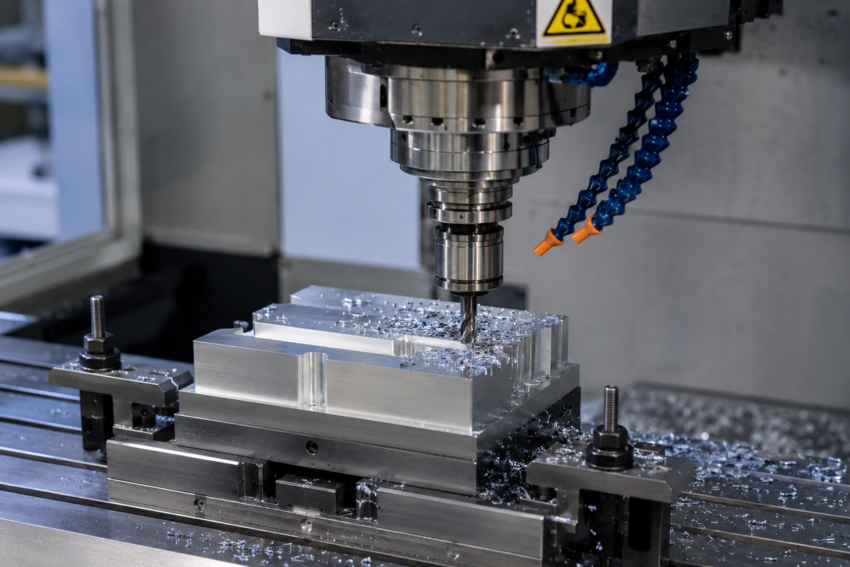
At its core, milling is a subtractive manufacturing method. That simply means material is removed from a solid block—known as the workpiece—until the desired shape is formed. The cutting is done using a rotating tool called a milling cutter.
What makes milling different from many other machining methods is the way the cutter works. Instead of a single cutting edge, milling tools often have multiple cutting points that continuously remove material in the form of small chips. This allows the machine to create flat surfaces, slots, holes, grooves, and even fairly complex 3D shapes.
In most modern workshops, milling is done using CNC machines (Computer Numerical Control). These machines follow programmed instructions rather than manual control, which helps maintain accuracy and consistency even across long production runs.
How CNC Milling Works
CNC milling is really a combination of digital design and physical machining working together.
In a typical workflow, it goes something like this:
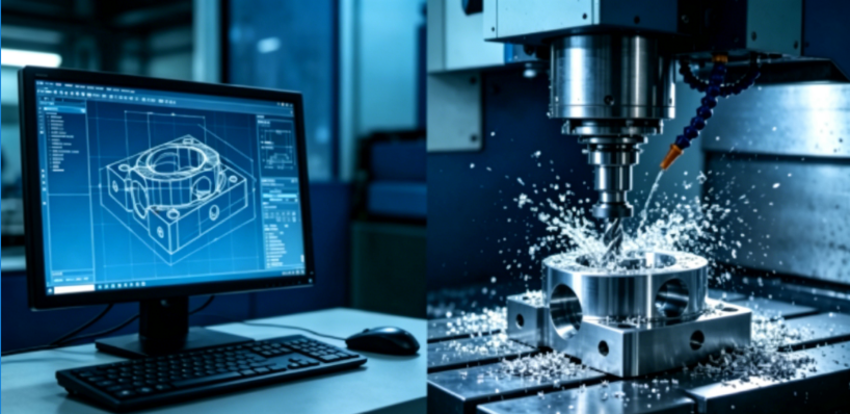
- A CAD model is first created based on the product design
- That model is then converted into toolpaths using CAM software
- The toolpaths are translated into G-code, which the machine can understand
- The CNC machine executes the movements step by step
- Finally, the finished part is inspected for dimensions and quality
During machining, the workpiece is firmly fixed on the machine table, while the cutting tool rotates at high speed and moves across multiple axes—usually X, Y, and Z. This controlled movement is what allows extremely precise shaping.
For manufacturers like Rapid-Model, this setup makes it possible to produce complex parts consistently, whether it’s a single prototype or a full production batch.
Types of Milling Operations
Milling isn’t just one single process. It actually covers a range of different operations depending on what needs to be produced.
Some of the most common include:
- Face milling, mainly used for creating flat surfaces
- End milling, often used for pockets, slots, and cavities
- Peripheral milling, suitable for deeper material removal
- Form milling, used when complex profiles are required
- Drilling and tapping, which are often integrated into CNC workflows
Each method has its own purpose, and in real production environments, they are often combined within a single setup to complete a part efficiently.
 Materials Used in Milling
One of the strengths of milling is how flexible it is in terms of materials. It’s not limited to just one type of metal or plastic.
In most machining projects, you’ll see materials like:
- Aluminum alloys such as 6061 and 7075
- Stainless steels including 304 and 316
- Carbon steel and tool steel
- Copper and brass components
- Engineering plastics like POM ABS and nylon
- Certain composite materials used in specialized industries
Of course, each material behaves differently during machining. Cutting speed, tool selection, and cooling methods all need to be adjusted accordingly to get a clean finish and avoid tool wear.
At Rapid-Model, material choice is always matched carefully with machining parameters so the final part performs as expected in real applications.
Advantages of Milling in Manufacturing
Milling remains widely used for a reason—it solves a lot of manufacturing challenges in a practical way.
One of the biggest advantages is precision. CNC milling can achieve very tight tolerances, sometimes down to the micron level, which is essential in industries like aerospace and medical technology.
Another important strength is geometric flexibility. With multi-axis machines, it becomes possible to produce shapes that would be extremely difficult or even impossible with traditional machining methods.
Repeatability is another key point. Once a program is set, the machine can reproduce the same part again and again with very little variation, even across large batches.
It’s also highly versatile in terms of materials, ranging from soft plastics to hardened steels, depending on the setup.
Finally, automation plays a big role. Modern CNC systems reduce manual intervention, which not only improves efficiency but also helps reduce human error in production.
 Industrial Applications of Milling
Milling is used across almost every major manufacturing industry you can think of.
In automotive production, it’s used for engine components and structural housings. In aerospace, it plays a role in producing brackets and load-bearing parts that require high reliability. In the medical field, milling is used for surgical tools and implants that demand precision and biocompatibility.
You’ll also find it in robotics, consumer electronics, and general industrial machinery.
Because it works well for both prototypes and mass production, milling often becomes the starting point for product development and stays relevant throughout the entire production lifecycle.
3-Axis vs 5-Axis Milling
CNC milling machines are generally categorized by how many directions they can move in.
A 3-axis machine moves in X, Y, and Z directions. It’s suitable for relatively simple geometries and is often more cost-effective for basic parts.
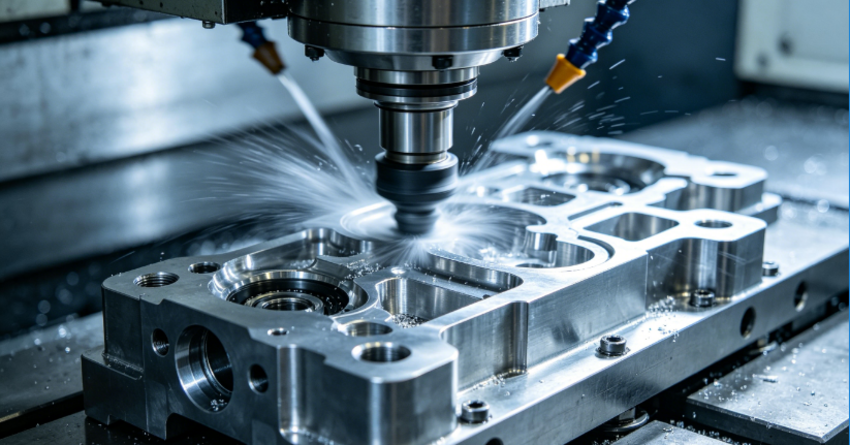
A 5-axis machine adds rotational movement, allowing the cutting tool to approach the part from multiple angles. This reduces the need for repositioning and makes it possible to machine very complex geometries in a single setup.
In advanced manufacturing environments like Rapid-Model, both types are used depending on the complexity and requirements of the project.
Why Choose Rapid-Model for CNC Milling
Rapid-Model is a CNC machining factory based in Shenzhen, China, focusing on precision milling and rapid prototyping services. Over the years, we’ve worked with clients from different industries who need reliable machining support from design to production.
What we focus on is not just machining, but also helping customers turn designs into manufacturable parts that actually work in real-world conditions.
Our strengths include precision CNC milling capability, fast turnaround times for both prototypes and production orders, strict quality control processes, a wide range of material options, and engineering support for design optimization when needed.
We work closely with clients throughout the entire process, from initial drawings to final delivery, making sure every part meets both functional and visual expectations.
Conclusion
Milling remains one of the most important processes in modern manufacturing. It may look simple on the surface—just cutting material away—but in reality, it combines precision engineering, digital programming, and advanced machinery to produce highly accurate components.
With CNC technology continuing to evolve, milling has become faster, more flexible, and more capable than ever before. At Rapid-Model, we see this every day in the parts we produce and the industries we support.
Whether it’s a single prototype or a full production run, milling continues to be one of the most dependable methods for turning engineering ideas into real, working products.