Types of Gears in Mechanical Engineering
Gears are everywhere in mechanical systems, even if they are not always visible. From automotive transmissions to industrial robots and precision instruments, they quietly handle one of the most important engineering tasks: transferring motion and torque in a controlled way.
In simple terms, gears are toothed mechanical components that mesh together to transmit rotational force between shafts. Depending on the design, they can change speed, torque, and even the direction of motion. Most engineering references describe gears as the backbone of power transmission systems in modern machinery, especially where reliability and precision are required.
At Rapid-Model, a Shenzhen-based CNC machining and rapid prototyping manufacturer, gear components are part of many custom engineering projects we support. Different industries often require very different gear structures, which makes understanding the main types of gears essential for both design and manufacturing decisions.
Below is a practical overview of the most commonly used gear types in mechanical engineering, explained in a more application-focused way rather than purely theoretical definitions.
1. Spur Gear
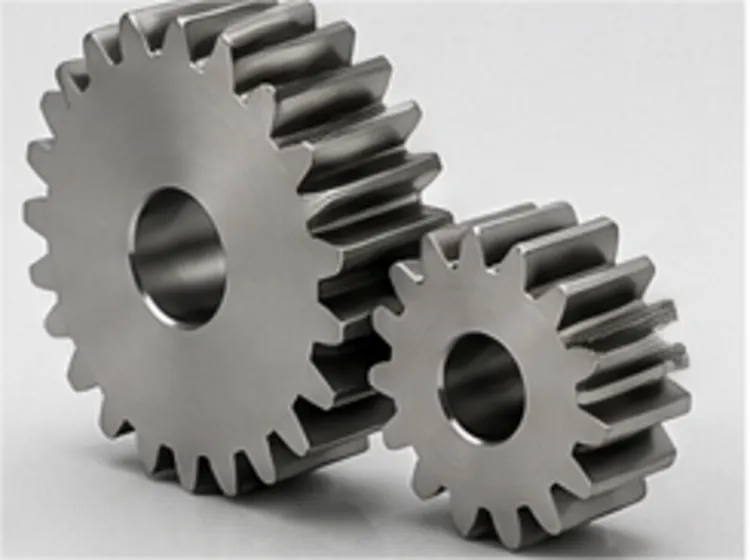
Spur gears are usually the first gear type engineers encounter. They are simple in structure, with straight teeth cut parallel to the axis of rotation. Because of this geometry, they transfer power between parallel shafts in a very direct and efficient way.
One reason spur gears are so widely used is their straightforward manufacturing process. They are relatively easy to machine, inspect, and replace, which keeps costs low in both prototyping and mass production.
In real applications, spur gears are commonly found in gearboxes, conveyor systems, mechanical clocks, and basic industrial equipment. The trade-off is that they tend to generate more noise at higher speeds because the teeth engage suddenly rather than gradually.
From a design standpoint, spur gears are often chosen when efficiency and simplicity matter more than noise control.
2. Helical Gear
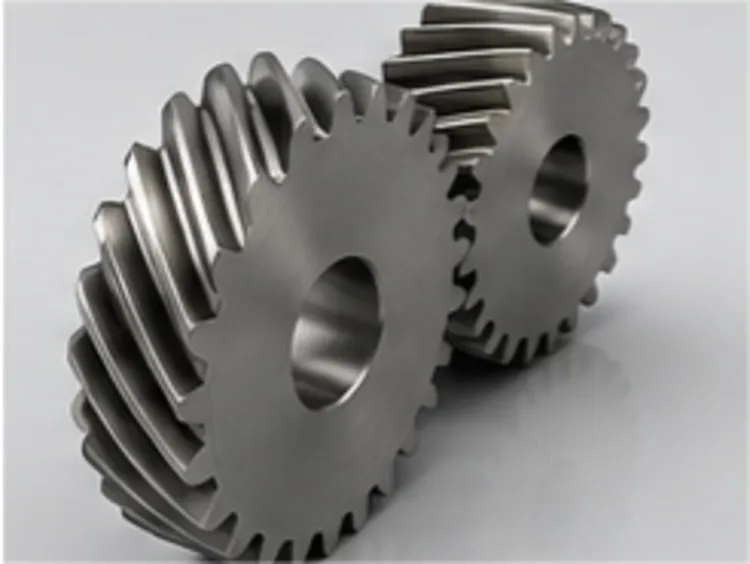
Helical gears look similar to spur gears at first glance, but the key difference lies in the tooth geometry. Instead of straight teeth, helical gears have angled teeth that wrap around the gear body in a spiral form.
This angled design allows the teeth to engage gradually, which makes operation noticeably smoother and quieter. It also improves load distribution, meaning helical gears can handle higher loads compared to spur gears of similar size.
However, this advantage comes with a design consideration: axial thrust is generated during operation, so proper bearing support is required.
Because of their smooth operation, helical gears are widely used in automotive transmissions, high-speed machinery, elevators, and compressors. In most modern industrial gearboxes, helical gears are often the default choice when noise and durability are important.
3. Bevel Gear
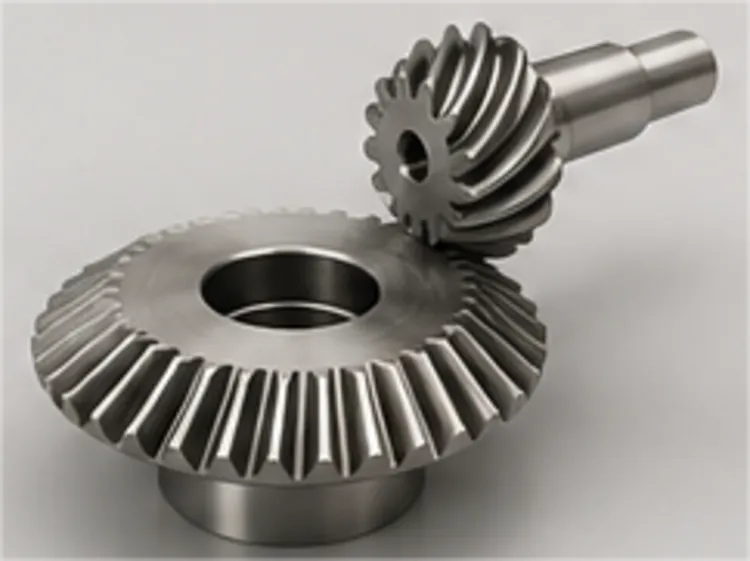
Bevel gears are used when power needs to be transmitted between shafts that intersect, typically at a 90-degree angle. Their teeth are cut on a conical surface, which allows the direction of rotation to change within a compact space.
There are different variations such as straight bevel gears and spiral bevel gears. In practice, spiral bevel gears are more common in high-performance applications because they provide smoother engagement and better load capacity.
Bevel gears are widely used in automotive differentials, hand tools, marine propulsion systems, and industrial gearboxes where directional change is required.
Compared to spur or helical gears, bevel gears introduce more design complexity, but they solve an important problem: transmitting motion between non-parallel shafts efficiently.
4. Worm Gear
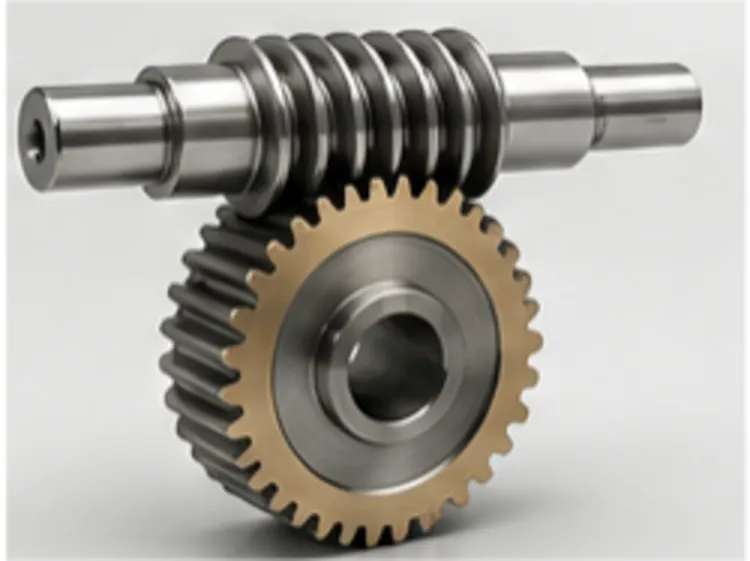
A worm gear consists of a screw-like worm and a mating gear wheel. The motion is transferred between non-intersecting shafts, usually arranged at a right angle.
One of the most important characteristics of worm gears is their ability to achieve very high reduction ratios in a single stage. This makes them extremely useful in compact systems where space is limited but torque reduction is significant.
In many designs, worm gears are also self-locking, meaning the output cannot easily drive the input. This feature is often used for safety or holding positions without additional braking systems.
Typical applications include lifting systems, conveyor drives, tuning mechanisms, and heavy-duty positioning systems.
5. Rack and Pinion
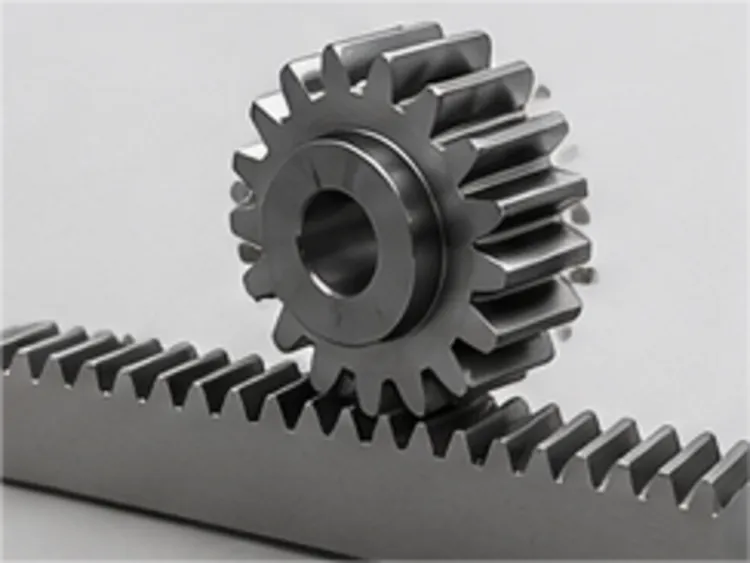
Rack and pinion systems convert rotational motion into linear motion. The pinion is a standard circular gear, while the rack is a straight toothed bar.
When the pinion rotates, the rack moves in a straight line. This simple mechanism is widely used because it provides precise and predictable linear movement.
You will commonly find rack and pinion systems in automotive steering, CNC machines, linear actuators, and railway mechanisms.
In automation and robotics, this type of gear system is often selected when accurate linear positioning is required.
6. Planetary Gear System
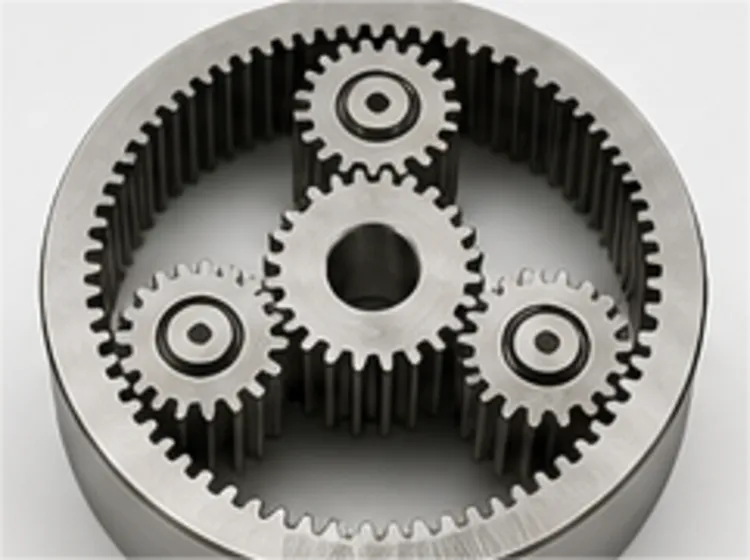
Planetary gear systems are more complex compared to basic gear pairs, but they are extremely efficient in compact mechanical design. The system includes a sun gear in the center, multiple planet gears, and an outer ring gear.
What makes planetary gears special is how the load is distributed across multiple contact points. This allows high torque transmission in a relatively small volume.
They are widely used in automatic transmissions, robotics joints, aerospace mechanisms, and electric vehicle drivetrains.
Because of their efficiency and compactness, planetary gear systems are often selected when space constraints and performance both matter.
7. Herringbone Gear
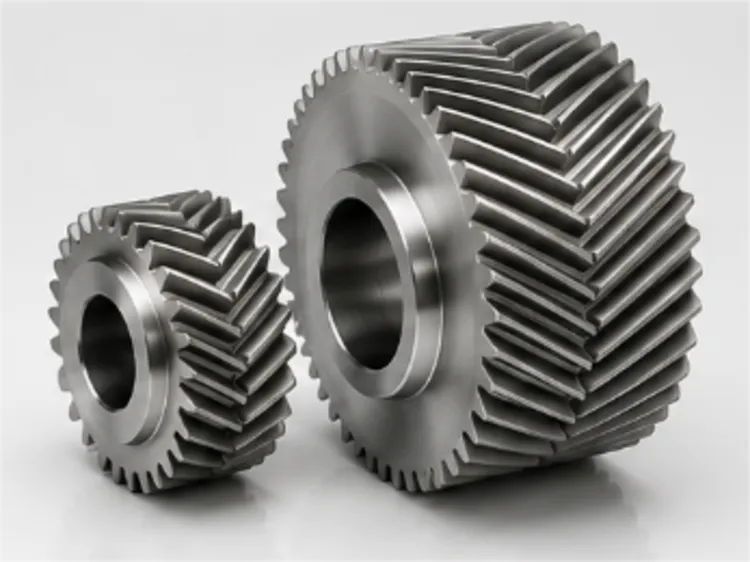
Herringbone gears can be seen as an advanced form of helical gears. Instead of a single helix direction, they combine two opposite helices in a V-shaped layout.
This design cancels out axial thrust, which is a major limitation in standard helical gears. As a result, herringbone gears can operate smoothly under heavy loads without requiring additional thrust bearings.
They are typically used in marine propulsion systems, power plants, and heavy industrial gearboxes.
The main drawback is manufacturing complexity, which makes them more expensive compared to standard gear types.
8. Internal Gear
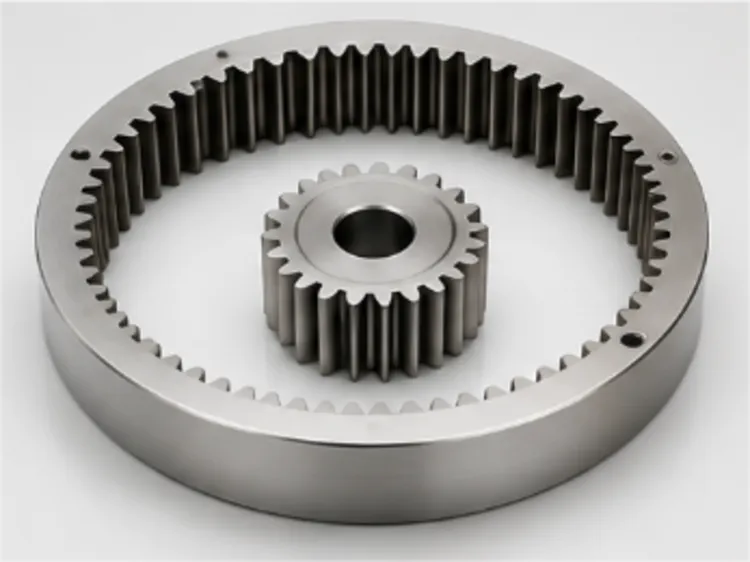
Internal gears have teeth cut on the inner surface of a ring rather than the outer surface. They are often used together with planetary gear systems or compact drive mechanisms.
One of their main advantages is space efficiency. Because the gear meshes internally, the overall system can be more compact compared to external gear arrangements.
Internal gears are commonly used in robotics, precision gearboxes, and automated mechanical systems where packaging space is limited.
Engineering Insight from Rapid-Model
At Rapid-Model, we support global clients in CNC machining, rapid prototyping, and low-volume production of precision mechanical parts, including custom gear systems. Whether it is a simple spur gear for a prototype or a complex planetary gearbox component, our engineering team works closely with customers to ensure manufacturability and performance.
Our production capabilities include a wide range of materials such as aluminum alloys, stainless steel, brass, and engineering plastics. Combined with precision CNC processes, this allows us to meet both functional and prototyping requirements across industries like robotics, automation, automotive, and industrial equipment.
Conclusion
Different gear types exist because different mechanical challenges require different solutions. Spur gears offer simplicity, helical gears improve smoothness, bevel gears change direction, worm gears provide high reduction, rack and pinion systems convert motion, planetary gears deliver compact efficiency, and herringbone and internal gears solve more specialized engineering problems.
Choosing the right gear is never just a theoretical decision—it directly impacts performance, cost, and system reliability.
For engineering teams looking for reliable manufacturing support, Rapid-Model provides practical CNC machining and prototyping solutions tailored to real-world mechanical design needs.