How much does 6061 t6 aluminum cnc cost per
Manufacturing Cost Guide
How Much Does 6061-T6 Aluminum CNC Cost Per Hour?
6061-T6 aluminum CNC machining costs $50-$120/hr in the US, $30-$110/hr across Asian processes, and $2-$5.50 per pound. See the full per-part cost breakdown.
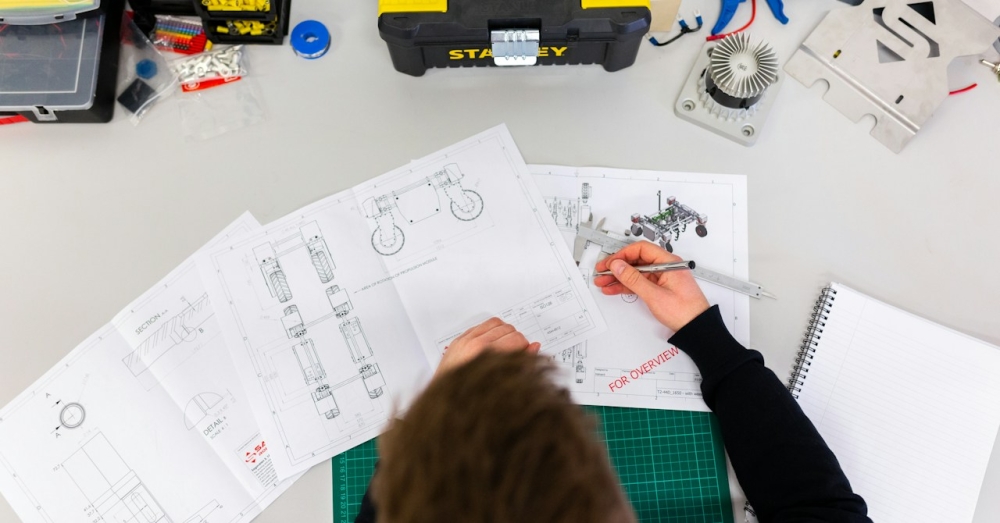
6061-T6 aluminum CNC machining typically costs $50–$120 per machine hour at a US shop (roughly $30–$110 per hour in Asia, depending on the process), $2–$5.50 per pound of raw stock, and about $8–$12 for a simple 50 mm cube — before tight tolerances, surface finishing, or low-volume setup premiums push the price higher. 6061-T6 is the most economical engineering alloy to machine, so it is the default choice for brackets, housings, fixtures, and prototypes.
Key Takeaways - US CNC shop rates for 6061-T6 work run $50–$120/hour; Asian benchmarks in Q4 2026 run $30–$110/hour depending on the process. - Raw 6061-T6 stock costs $2–$5.50 per pound across published 2026 ranges. - A simple 50 mm 6061-T6 cube totals $8–$12 per part in material, machine time, and tooling at low volume. - Tolerance is a hidden multiplier: moving from ±0.005" to ±0.001" can add about 30% to machining cost. - Prototype runs (1–10 pieces) carry a 30–60% setup premium over production runs of 100+ pieces.
In this article:
- What Is the Hourly Rate for 6061-T6 CNC Machining in 2026?
- How Much Does 6061-T6 Aluminum Cost per Pound?
- What Does a Finished 6061-T6 CNC Part Cost per Piece?
- Which Cost Drivers Move the Final Price Most?
- Why 6061-T6 Is Usually the Cheapest Alloy to Machine
- How to Reduce Your 6061-T6 CNC Cost
- Quality and Inspection: What You Are Paying For
- Frequently Asked Questions
- Conclusion
- Sources and Methodology
What Is the Hourly Rate for 6061-T6 CNC Machining ?
For 6061-T6 parts, expect $50–$120 per hour at a US shop and $30–$110 per hour in Asia, with the rate set mainly by how many axes are moving at once. A 3-axis mill is cheapest; simultaneous 5-axis and Swiss-type work command the highest rates because they need advanced machines and skilled programmers.
HRC CNC reports a $50–$120/hour CNC rate for 6061 aluminum, while an industry budget guide puts a typical commercial shop at $65/hour, rising to $95–$130/hour for defense work because of compliance and inspection overhead (HRC CNC, retrieved 2026-11-17; The Machine Daily, retrieved 2026-11-17). For Asian benchmarks, Q4 2026 published rates span $30/hour for turning to $110/hour for Swiss-type turning (Alloys-Metal, October 2026).
A rate alone does not set your invoice: you are billed for machine time plus material, setup, tooling, finishing, and inspection. That is why two quotes for the same 6061 bracket can differ by hundreds of dollars. If you need help matching a process to a part, our team can review drawings through our CNC milling service and recommend the lowest-cost setup that still meets tolerance.
How Much Does 6061-T6 Aluminum Cost per Pound?
Raw 6061-T6 stock runs $2–$5.50 per pound in 2026, depending on form (plate, bar, billet), supplier, and order size. Published ranges differ by source, and the spread is wide enough that material choice and stock size materially affect a quote.
| Source (retrieved 2026-11-17) | 6061 / 6061-T6 stock price | Notes |
|---|---|---|
| HRC CNC | $2–$4 / lb | General 6061, CNC material table |
| The Machine Daily | $3.50–$5.00 / lb | 6061-T6, machinability baseline material |
| ManufacturingStandard | $3.50–$5.50 / lb | 6061-T6 plate, bar, billet |
| Alloys-Metal | $4–$7 / kg | Finished stock, October 10 spot assessment |
6061-T6 earns its "workhorse" label because it machines cleanly: ManufacturingStandard lists a 95% machinability rating and 80–120 m/min cutting speeds, while an industry comparison assigns 6061 a 1.0× cycle-time baseline (ManufacturingStandard, retrieved 2026-11-17). Fast cutting means fewer billable hours, which is why a slightly pricier sheet of 6061-T6 can still be cheaper end-to-end than a less expensive but slower-to-machine alloy.
What Does a Finished 6061-T6 CNC Part Cost per Piece?
A simple, small 6061-T6 part can cost as little as $8–$12 each in material, machine time, and tooling; complexity and tight tolerances are what push prices into the hundreds. The per-piece number is the sum of stock, cycle time, setup amortization, tooling, finishing, inspection, and overhead.
ManufacturingStandard's worked example for a 50 mm cube in 6061-T6 breaks down as roughly $2.50 in material, 8–10 minutes of machine time, and $0.30 in tooling, for a total near $8–$12 per part (ManufacturingStandard, retrieved 2026-11-17). Scale that cube into a thin-wall housing with deep pockets, internal radii, and a Type III anodize, and the same block of aluminum can take hours instead of minutes.
Two levers dominate the per-piece result:
- Quantity. Prototype runs of 1–10 pieces carry a 30–60% setup premium over production runs of 100+ pieces, because programming and fixturing are amortized over fewer units (Alloys-Metal, October 2026).
- Tolerance. Standard commercial machining holds ±0.005" (±0.127 mm). Tightening to ±0.001" (±0.025 mm) adds about 30% through slower feeds and extra finishing passes; ±0.0002" needs climate control and specialized grinding (The Machine Daily, retrieved 2026-11-17).
Our aluminum CNC machining process holds ±0.01 mm on critical features under standard conditions, with tighter capability available when a design truly requires it — and engineers review drawings for cost efficiency before cutting, so DFM feedback changes unit cost before the first chip is cut.
Which Cost Drivers Move the Final Price Most?
Tolerance, feature geometry, and volume move a 6061-T6 quote far more than the raw price of aluminum does. Material is often under half the total; machine time and the requirements wrapped around it decide the number.
| Cost driver | Low-cost choice | Cost-increasing choice |
|---|---|---|
| Tolerance | ISO 2768-m general | ±0.01 mm on critical bores |
| Pocket depth | Depth ≤ 3× tool diameter | Deep pockets needing long-reach tools |
| Surface finish | As-machined Ra 3.2 µm | Ra 0.8 µm or cosmetic anodize |
| Volume | 100+ pieces | 1–10 prototypes (30–60% premium) |
| Setup | Existing fixtures | Custom soft jaws and pallets |
| Inspection | Dimensional spot check | Full CMM report with material cert |
Deep pockets and small internal radii reduce feed rates, and a global Ra 0.8 µm requirement multiplies finishing cycle time. Applying tight tolerances only to functional features — and leaving the rest at general tolerance — is the single most effective way to hold cost down without changing the part's performance. This is the kind of trade-off reviewed during drawing evaluation on our quality assurance workflow, where inspection plans are matched to the features that actually need them.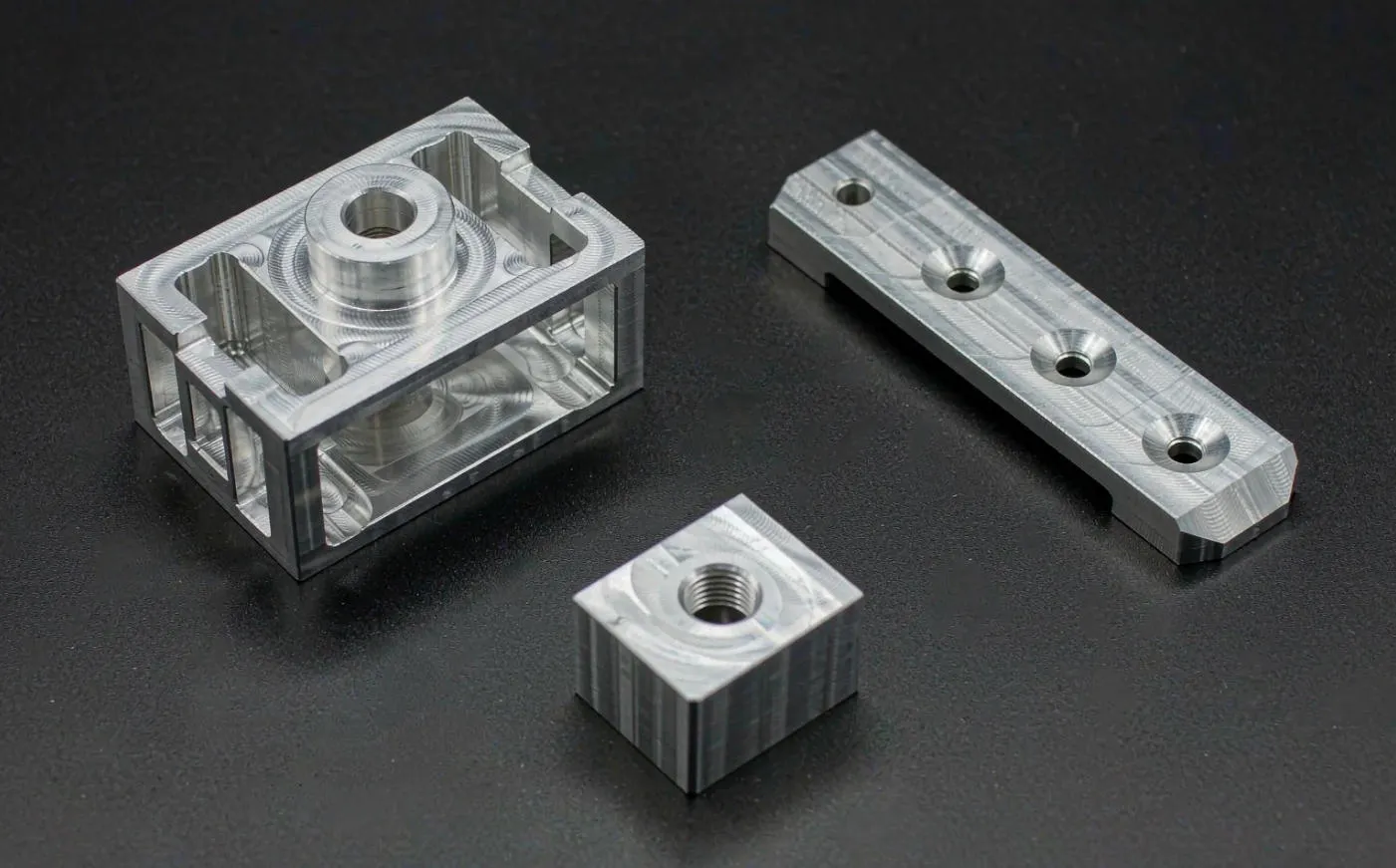
Why 6061-T6 Is Usually the Cheapest Alloy to Machine
6061-T6 is cheaper than 7075, stainless, or titanium mainly because it cuts faster and wears tools less, not just because the raw stock costs less. Its cycle-time factor of 1.0× is the baseline against which harder alloys are measured.
Alloys-Metal publishes cycle-time factors of 1.0× for 6061-T6, 1.3× for 7075-T6, 2.2× for 304 stainless, and 5–8× for Ti-6Al-4V (Alloys-Metal, October 2026). A defense cost guide adds that titanium and nickel alloys drive 4×–6.5× tooling wear and need premium coolants (The Machine Daily, retrieved 2026-11-17). Unless your design genuinely needs 7075's strength or titanium's strength-to-weight ratio, specifying 6061-T6 is the most reliable way to control spend.
How to Reduce Your 6061-T6 CNC Cost
You can cut 6061-T6 machining cost by simplifying geometry, relaxing non-critical tolerances, and ordering in larger batches — without changing the part's function. These moves reduce billable minutes and amortized setup.
- Apply tolerance selectively. Use ISO 2768-m for non-mating features and reserve ±0.01 mm for true critical dimensions.
- Keep pockets shallow. Limit cavity depth to about 3× the tool diameter; deeper pockets need slow, long-reach tooling.
- Add edge chamfers. A 0.1–0.3 mm chamfer improves anodizing consistency and prevents brittle edges.
- Choose T651 when stability matters. Stress-relieved 6061-T651 reduces warping on thin or complex parts.
- Batch your order. Moving from 5 pieces to 100+ removes the 30–60% prototype setup premium.
- Request DFM feedback before cutting. An engineering review catches cost traps while the design is still free to change.
Each of these is a design-stage decision. Once a part is on the machine, most of its cost is already locked in.
Quality and Inspection: What You Are Paying For
Inspection cost scales with the tolerance you specify, so a full CMM report is only worth paying for when critical features need it. For general 6061-T6 brackets, in-process checks and a dimensional report are usually sufficient; aerospace or medical work may require material certification and first-article inspection.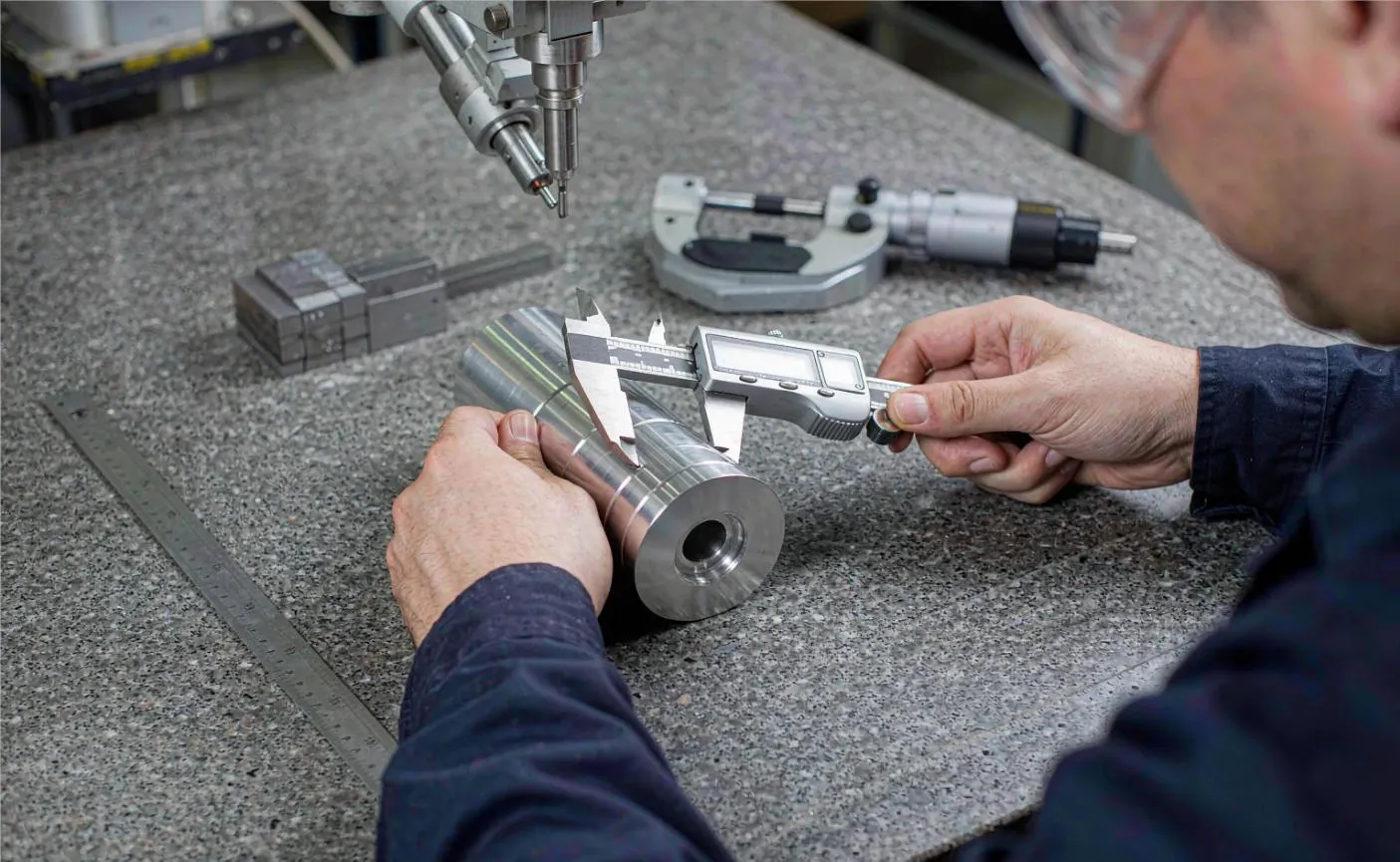
Understanding this trade-off helps you read a quote: the line item for quality is not padding, it is the cost of proving the part meets your drawing. A supplier with documented controls can hold ±0.005 mm and verify it, while a cheaper shop may quote the same part without the metrology to back it up. Our quality assurance process covers drawing evaluation, in-process sampling, and final inspection so the reported tolerance is a measured result, not an assumption.
Frequently Asked Questions
How much does 6061-T6 aluminum CNC machining cost per hour?
In 2026, US shops typically charge $50–$120 per hour for 6061 aluminum work, with $65/hour a common commercial benchmark. Asian rates are lower, generally $30–$110 per hour depending on the process — about $35–$50 for 3-axis milling and $60–$90 for 5-axis.
How much does 6061-T6 aluminum cost per pound?
Raw 6061-T6 stock falls between $2 and $5.50 per pound across published 2026 sources. The range reflects differences in form (plate, bar, billet), supplier, and quantity.
What is a typical cost for a small 6061 CNC part?
A simple 50 mm 6061-T6 cube can total $8–$12 per part in material, machine time, and tooling. Complex geometry, tight tolerances, and one-off quantities raise this substantially, often into the hundreds of dollars for a single prototype.
Is 6061-T6 cheaper to machine than 7075-T6?
Yes. 6061-T6 has a 1.0× machining cycle-time baseline versus 1.3× for 7075-T6, and lower tooling wear. Raw 6061-T6 is also cheaper, at roughly $3.50–$5.00 per pound compared with $5.50–$8.00 for 7075-T6 (The Machine Daily, retrieved 2026-11-17; Alloys-Metal, Q4 2026).
Why do prototypes cost more per piece than production runs?
Setup, programming, and fixturing are fixed costs. Spread over 1–10 pieces they dominate the unit price, which is why prototype rates carry a 30–60% premium over production runs of 100+ pieces.
Does surface finishing add much to the cost?
Yes. Anodizing, bead blasting, and cosmetic finishes add process steps and handling. Requiring a fine Ra 0.8 µm finish also adds finishing passes; specify fine finishes only on surfaces that need them.
Conclusion
6061-T6 aluminum CNC machining is priced on three axes: $50–$120 per hour of machine time in the US, $2–$5.50 per pound of raw stock, and a per-piece total driven mainly by tolerance, geometry, and volume. A simple part can cost under $12; the same alloy in a tight-tolerance, low-volume part costs far more. Because 6061-T6 is the fastest and cheapest alloy to machine, most cost savings come from design decisions — relax non-critical tolerances, keep pockets shallow, and batch your order.
If you want a number for your specific part, send your CAD file and drawing for a quote with free DFM feedback. Our engineers will flag the features driving cost and suggest changes that keep performance while lowering price. Talk to our team about your 6061-T6 project.
Sources and Methodology
Cost figures in this guide come from published 2026 industry sources. Ranges are reported as published; where sources disagree, the spread is shown rather than averaged. All figures were retrieved 2026-11-17 unless noted.
- HRC CNC, "How Much Does CNC Machining Cost?" (www.hrccnc.com) (material and hourly rate tables)
- The Machine Daily — Cost Analysis for Defense CNC Machined Components, 2026 Budget Guide (shop rates, tolerance cost curve, alloy multipliers)
- ManufacturingStandard — Top Materials for CNC Machining Compared, 2026 (material prices, 50 mm cube worked example)
- Alloys-Metal — CNC Machining Prices, Q4 2026 (Asian hourly benchmarks, cycle-time factors, prototype premiums, October 2026)