Titanium vs Stainless Steel for CNC Machined Parts: Weight, Strength, Corrosion, Machinability & Cost
Titanium and Stainless Steel CNC Machined : Weight, Strength, Corrosion, Machinability & Cost
An engineering comparison of Ti-6Al-4V, 304 and 316/316L for precision CNC parts, with property data, machining practice, cost drivers and selection rules.
1. Titanium vs Stainless Steel: Property Comparison
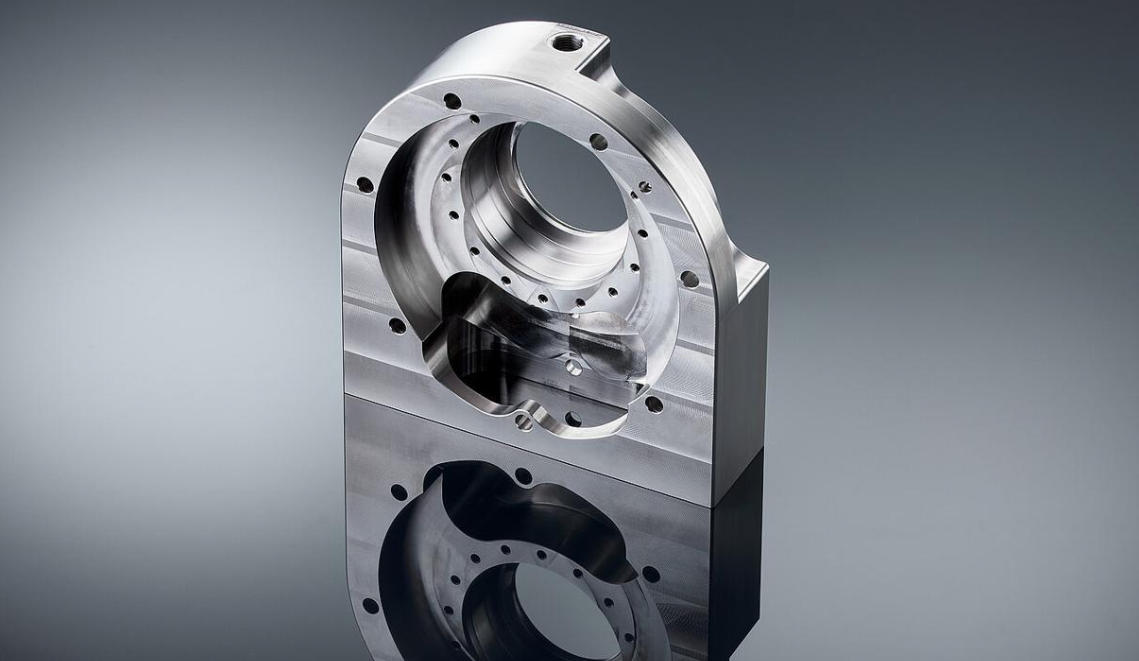
Titanium and stainless steel solve different engineering problems. The table compares annealed Ti-6Al-4V (ASTM B348 Grade 5), 304 and 316/316L at room temperature. Minimum strengths are specification values; other properties are typical. Always confirm against the exact standard, product form and heat-treat condition.
| Property | Ti-6Al-4V (Grade 5) | 304 | 316 / 316L |
|---|---|---|---|
| Density | 4.43 g/cm³ | 7.93–8.00 g/cm³ | 7.98–8.00 g/cm³ |
| Yield strength (min.) | ≈ 825 MPa | ≈ 205 MPa | ≈ 170–205 MPa |
| Tensile strength (min.) | ≈ 895 MPa | ≈ 515 MPa | ≈ 485–515 MPa |
| Elastic modulus | ≈ 114 GPa | ≈ 193 GPa | ≈ 193 GPa |
| Thermal conductivity | ≈ 6.7 W/m·K | ≈ 16 W/m·K | ≈ 16 W/m·K |
| Thermal expansion (20–100 °C) | ≈ 8.6 µm/m·K | ≈ 17 µm/m·K | ≈ 16 µm/m·K |
| Useful service temperature | Up to ≈ 300–350 °C | Much higher; oxidation-resistant to ≈ 870 °C | Similar to 304 |
| Chloride pitting resistance | Excellent at ambient temperature | Limited (PREN ≈ 18–19) | Moderate (PREN ≈ 24–25) |
| CNC machinability | Difficult: heat, tool wear | Moderate: work hardening | Moderate to difficult: gummy chips |
| Material cost per kg | Several times higher | Low | Low to moderate |
Representative values for preliminary comparison only. PREN = %Cr + 3.3 × %Mo + 16 × %N.
2. Which Grades Should You Compare?
“Titanium” and “stainless steel” are families, and the grade often matters more than the family. Specify the alloy, specification and condition on the drawing.
| Grade | Character | Typical use |
|---|---|---|
| Titanium Grade 2 | Commercially pure; moderate strength, best formability and corrosion resistance; easier to machine than Grade 5 | Chemical processing, marine and heat-exchanger hardware |
| Titanium Grade 5 (Ti-6Al-4V) | Highest-volume alpha-beta alloy; high specific strength; heat-treatable | Aerospace structures, robotics, motorsport, high-performance components |
| Titanium Grade 23 (Ti-6Al-4V ELI) | Lower interstitials; better toughness and biocompatibility (ASTM F136) | Surgical implants and instruments |
| 304 / 304L | General-purpose austenitic; 304L limits carbon for welding | Housings, brackets, fixtures, food equipment |
| 316 / 316L | Molybdenum-bearing; better chloride and acid resistance; 316L preferred for welds | Marine, pharma, medical, fluid handling |
| 303 | Sulfur added for free machining; reduced corrosion resistance and weldability | Fasteners, shafts, high-volume turned parts |
| 17-4 PH | Precipitation-hardening; ≈ 1,000–1,170 MPa yield in H1025–H900 condition | Valve parts, aerospace fittings, high-load shafts |
Reference: ASTM B348, titanium and titanium alloy bars and billets.
3. Weight, Strength and Stiffness
Ti-6Al-4V has a density of about 4.43 g/cm³ against about 8.0 g/cm³ for 304. At equal volume, titanium is about 44% lighter: (8.0 − 4.43) / 8.0.
Specific strength strongly favors titanium
Annealed Ti-6Al-4V yields at roughly 825 MPa, about four times annealed 304 or 316. Divided by density, its specific yield strength is about 7 times higher. For strength-limited parts such as lugs, links and brackets, this converts directly into mass savings.
Specific stiffness is nearly identical
Titanium's modulus (≈ 114 GPa) is about 40% below stainless steel (≈ 193 GPa), and its density is about 45% lower, so stiffness-to-weight is almost the same for both (≈ 26 vs ≈ 24 MN·m/kg). A stiffness-limited part must be made thicker in titanium, which erodes the weight advantage. Expect real savings of well under 44% on deflection-governed designs.
Lower modulus also means more elastic deflection under cutting forces, which affects thin-wall accuracy (see section 5). For fatigue-critical parts, evaluate surface finish, notch sensitivity and condition separately from tensile data.
4. Corrosion Resistance
Titanium forms a thin, tenacious, self-healing TiO₂ film that remains stable across a wide pH and potential range. Stainless steel relies on a chromium-rich passive film that needs oxygen to repair and can be compromised by free-iron contamination from tooling, which is why passivation after machining matters.
| Environment | Engineering consideration |
|---|---|
| Indoor, general industrial | 304 is usually sufficient; titanium is rarely justified on corrosion alone. |
| Chlorides, brine, splash zone | 316L may pit or crevice-corrode in warm service; titanium is far more resistant at ambient temperature. |
| Seawater, marine | Titanium performs well. Check crevices (flanges, gaskets, threads) and galvanic coupling with stainless. |
| Oxidizing acids (nitric) | Stainless and titanium both perform well in many cases. Verify concentration and temperature. |
| Reducing acids (HCl, H₂SO₄), fluorides | Titanium can corrode rapidly; stainless is often also unsuitable. Consult corrosion tables or specialist alloys. |
Galvanic coupling: titanium is cathodic to stainless steel. A large titanium surface coupled to a small stainless part in a conductive electrolyte accelerates stainless corrosion; the reverse area ratio is much safer.
Reference: World Stainless, corrosion properties.
5. CNC Machinability
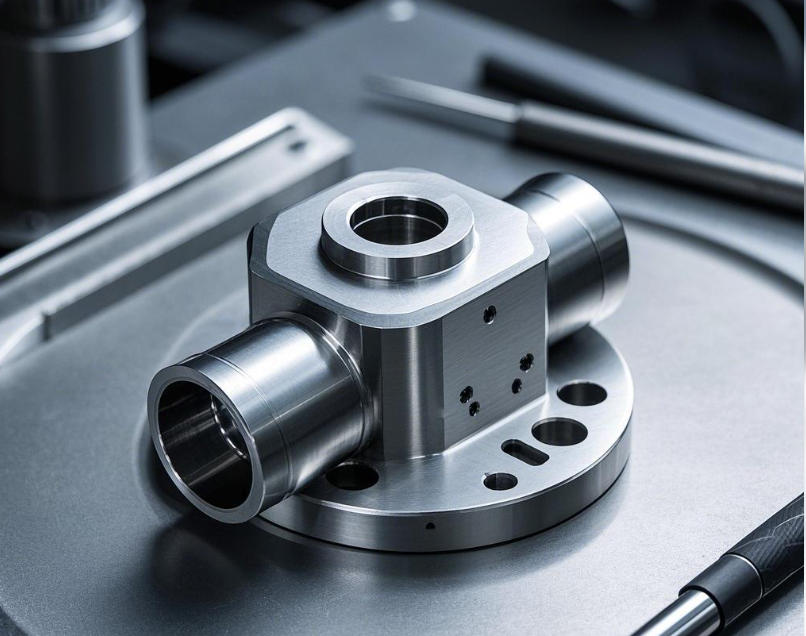
Both materials are classed as difficult-to-cut, for different reasons. Titanium's low thermal conductivity traps heat at the tool edge. Austenitic stainless steel work-hardens when the tool rubs instead of cutting.
| Factor | Ti-6Al-4V | 304 / 316L |
|---|---|---|
| Main failure mode | Crater wear, edge chipping, notch wear from heat | Built-up edge, notch wear from work-hardened skin |
| Carbide cutting speed | ≈ 30–60 m/min (100–200 SFM) | ≈ 80–180 m/min (260–600 SFM) |
| Coolant | High-pressure, through-tool where possible (≥ 70 bar for roughing) | Flood or through-tool; high volume for chip control |
| Chips | Segmented; fine swarf is a fire risk when dry | Long, stringy; needs chip breakers |
| Rigidity concern | Low modulus causes deflection and chatter on thin walls | Springback and distortion on thin-wall parts |
| Relative cycle time | Often noticeably longer | Baseline |
Practical rules for titanium Grade 5
- Use sharp, positive-geometry carbide tools with grades and coatings intended for titanium.
- Maintain constant tool engagement; use trochoidal or dynamic milling and compensate for radial chip thinning.
- Never dwell or rub: a tool that stops in the cut work-hardens and burns the surface.
- Keep tool overhang short, fixture rigidly, and support thin walls during finishing.
- Keep swarf wet and cleared; do not machine fine chips dry.
- Avoid alpha case from prior heat treatment on finished surfaces; remove it with sufficient stock allowance.
Practical rules for 304 and 316L
- Keep a positive, sustained feed: never let the tool skim a work-hardened layer.
- Use sharp edges, appropriate coatings and chip breakers to avoid built-up edge and long chips.
- Consider 303 or 416 where corrosion requirements allow free-machining alternatives.
- Allow for distortion, burr formation and residual stress on thin or asymmetric parts.
Thread galling: both materials gall on themselves. Use thread lubricants or anti-seize, rolled threads, coated or dissimilar-material inserts, and appropriate thread fit classes.
Reference: Carpenter Technology, machining austenitic stainless steels.
6. Titanium vs Stainless Steel CNC Machining Cost Drivers
Titanium parts typically cost several times more than the same geometry in 304 or 316L. The gap comes from four sources, and each varies by part.
| Driver | Why it differs |
|---|---|
| Raw material | Titanium bar and plate cost much more per kg. Heavy material removal (high buy-to-fly ratio) amplifies this. |
| Cycle time | Lower cutting speeds and conservative engagement extend machining hours on a spindle-hour basis. |
| Tooling and scrap | Shorter tool life and higher consequence of late-stage scrap on expensive stock. |
| Certification and finishing | Mill certificates (e.g. EN 10204 3.1), traceability, anodizing, passivation and inspection add cost to both. |
Cost shifts back toward titanium when its strength allows lighter, simpler or fewer parts, or when stainless would need coatings, replacement or a premium alloy to survive the environment. Quote on total delivered cost and service life. For a fair comparison, give every supplier the same drawing revision, tolerances, finish, quantity, documentation and delivery terms.
7. Tolerances, Surface Finish and Post-Processing
Both materials can hold tight tolerances on capable equipment. As a practical guide, general CNC tolerances of ±0.05 mm (ISO 2768-m class) are routine, and ±0.01 mm or tighter is achievable on controlled features with suitable fixturing and in-process inspection. Typical as-machined finish is Ra 1.6 µm, with Ra 0.8 µm and finer attainable with finishing passes or secondary processes. Titanium's lower stiffness and stainless steel's residual stress both make thin walls, deep pockets and long slender features the main sources of tolerance risk.
| Material | Options |
|---|---|
| Titanium | Bead blasting, polishing, anodizing for color and wear (e.g. AMS 2488), pickling or descaling (ASTM B600). Stress relief where required. |
| Stainless steel | Passivation (ASTM A967 or AMS 2700), electropolishing (ASTM B912), bead blasting, polishing. |
8. Applications by Industry
| Industry | Typical choice | Reason |
|---|---|---|
| Aerospace | Ti-6Al-4V; 17-4 PH for high-load fittings | Specific strength, fatigue performance, qualified specifications |
| Robotics and automation | Titanium for moving links; 304 or 6061 for fixtures | Mass reduction on moving parts; cost and stiffness elsewhere |
| Medical devices | Ti-6Al-4V ELI (ASTM F136); 316L (ASTM F138) | Biocompatibility, corrosion resistance, MRI compatibility |
| Marine and offshore | Titanium Grade 2 or 5; 316L in non-critical areas | Chloride resistance; manage crevices and galvanic coupling |
| Chemical and fluid handling | 316L; titanium for specific oxidizing or chloride duties | Chemistry-dependent; confirm with corrosion data |
| Food and pharma equipment | 304 or 316L | Cleanability, cost, passivation and electropolish options |
9. How to Choose the Right Material
Choose titanium when
- Weight is a primary requirement and the part is strength-limited.
- The environment includes chlorides or seawater and 316L is marginal.
- Biocompatibility or non-magnetic behavior is required.
- Fatigue performance per unit mass drives the design.
Choose stainless steel when
- Stiffness, cost or lead time governs.
- Service temperature is high or cryogenic toughness is needed.
- The part is welded, threaded or needs wide material availability.
- Volume is high and cycle time dominates.
- Define loads, deflection limits, mass target and operating temperature.
- Identify the governing criterion: strength, stiffness, corrosion or cost.
- Specify exact alloy, standard and condition (for example, Ti-6Al-4V per ASTM B348 or AMS 4928).
- Review geometry, tool access, wall thickness, tolerances and inspection needs.
- Compare total delivered cost and service life, not raw material price.
10. CNC Procurement Checklist
- 2D drawing with tolerances and a 3D CAD model in a neutral format (STEP).
- Exact material grade, specification, product form and heat-treat condition.
- Surface finish, critical features, thread specifications and datum scheme.
- Order quantity, annual forecast and repeat-order expectations.
- Certification (mill certificates, EN 10204 3.1), first-article and inspection requirements.
- Surface treatment, passivation or anodizing specification.
- Target delivery date and packaging requirements.
11. Frequently Asked Questions
Is titanium better than stainless steel for CNC machined parts?
Neither is universally better. Titanium Ti-6Al-4V (Grade 5) wins on specific strength, weight and resistance to chloride pitting. Stainless steel wins on stiffness, material cost, machinability and high-temperature strength. Select the material by the requirement that governs the design: weight, stiffness, environment or cost.
How much lighter is titanium than stainless steel?
Ti-6Al-4V has a density of about 4.43 g/cm3 against 7.93 to 8.00 g/cm3 for 304 and 316, so it is about 44% lighter at equal volume. Real redesign savings are usually smaller, because titanium's elastic modulus (about 114 GPa) is roughly 40% lower than stainless steel (about 193 GPa), and stiffness-limited sections need more material.
Is titanium stronger than stainless steel?
Annealed Ti-6Al-4V has a minimum yield strength of roughly 825 MPa, about four times the 205 MPa minimum of annealed 304 or 316. Cold-worked austenitic grades and precipitation-hardening 17-4 PH (roughly 1,000 to 1,170 MPa yield in H1025 to H900 condition) can match or exceed titanium on absolute strength, but at about 1.8 times the density.
Is titanium harder to machine than stainless steel?
Generally yes. Titanium's thermal conductivity (about 6.7 W/m-K versus about 16 W/m-K for 304) keeps heat at the cutting edge, which shortens tool life and limits cutting speed. 304 and 316 are easier on tools but work-harden and produce stringy chips. Titanium Grade 2 machines more easily than Grade 5.
Is titanium more corrosion-resistant than 316 stainless steel?
In seawater and most chloride environments, usually yes: titanium is highly resistant to pitting and chloride stress corrosion cracking, while 316 can pit or crevice-corrode in warm chloride service. Titanium is not resistant everywhere. Hot reducing acids, fluorides and some dry oxidizing conditions attack it, so confirm against the actual chemistry and temperature.
How much more expensive is titanium CNC machining than stainless steel?
Titanium bar typically costs several times more per kilogram than 304, and cycle times are often longer because of lower cutting speeds and shorter tool life. Finished part cost is therefore commonly a multiple of the stainless equivalent. The ratio depends on geometry, buy-to-fly ratio, tolerances, quantity and certification, so compare quotes on an identical drawing.
Can titanium and stainless steel be used together in one assembly?
Yes, with precautions. Titanium is the more noble metal, so in a conductive electrolyte such as seawater it can accelerate corrosion of a small stainless steel part coupled to a large titanium area. Titanium-on-stainless threads also gall, so use anti-seize, thread inserts, rolled threads or dissimilar fastener materials.
Which stainless steel grade is best for CNC machining?
303 machines best but has lower corrosion resistance and poor weldability. 304 is the general-purpose choice, 316L is preferred for chlorides, welded assemblies and many medical or food applications, and 17-4 PH is used where high strength is needed after heat treatment.
What should I send with a CNC machining quote request?
Send a 2D drawing with tolerances and a 3D CAD model, the exact grade and specification (for example Ti-6Al-4V per ASTM B348 Grade 5 or 316L per ASTM A276), material condition, surface finish, quantity and forecast, certification needs such as EN 10204 3.1, inspection requirements and delivery date.
Need Precision Titanium or Stainless Steel CNC Parts?
Share your drawing, CAD model, material requirements, tolerances and order quantity for a manufacturability review and quotation.
Request a CNC Machining QuoteTechnical References
- ASTM B348, titanium and titanium alloy bars and billets
- Carpenter Technology, 316 stainless steel
- Carpenter Technology, machining austenitic stainless steels
- World Stainless, corrosion properties
Technical values are representative and rounded. Confirm the exact grade, condition, product form and applicable specification (ASTM, AMS, EN) before engineering approval or purchase.