How Much Does PEEK CNC Machining Cost?
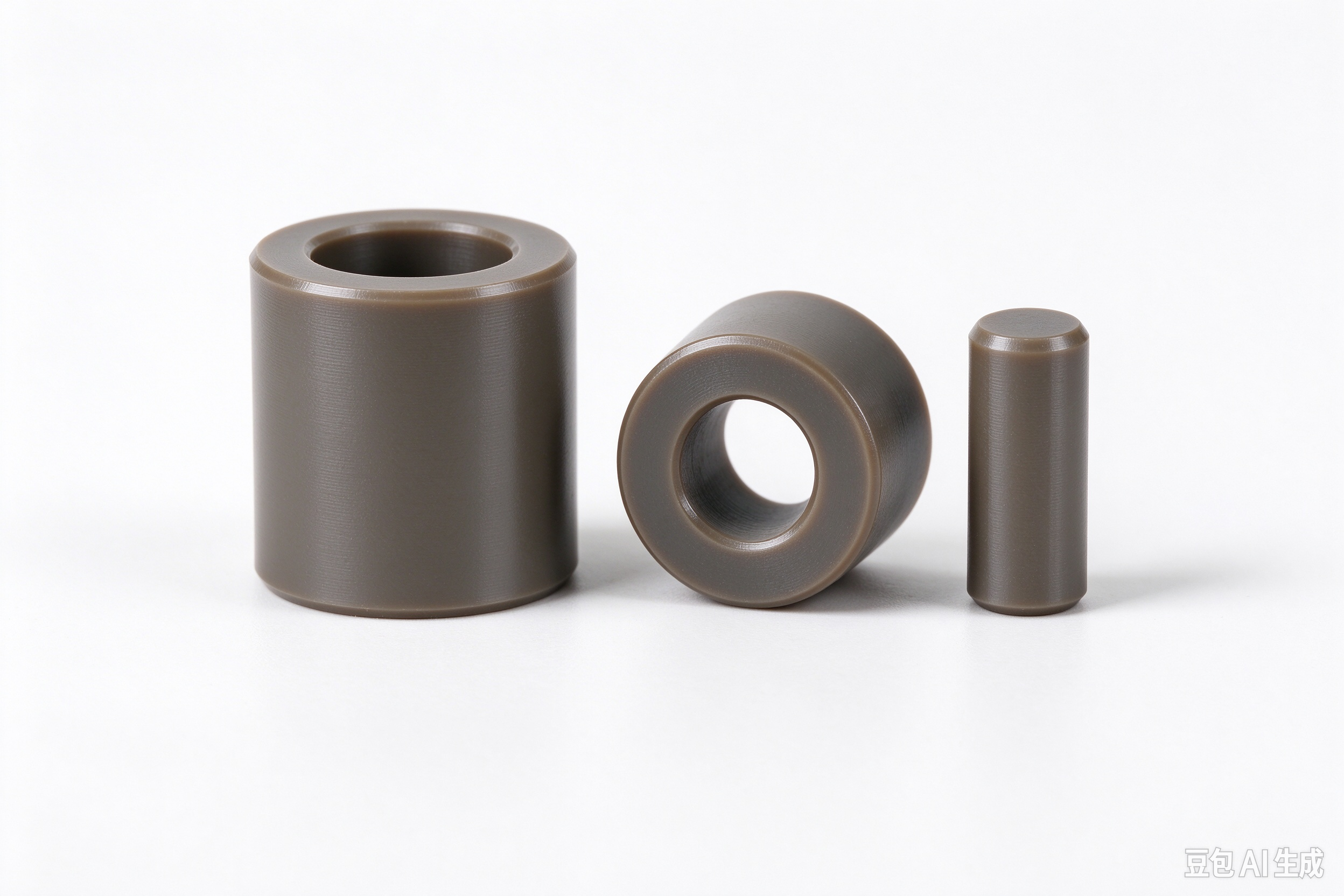 PEEK CNC machining does not have a single fixed price. The final cost depends on material grade and stock size, part geometry, machining time, tooling, tolerances, surface-finish requirements, inspection, setup, production volume, and logistics. For B2B buyers, the most useful way to evaluate a quotation is not simply to compare the unit price, but to understand how each supplier builds the total CNC machining cost.
For overseas companies sourcing precision PEEK parts from China, the commercial calculation becomes even more important. A supplier may quote a lower machining price while using a more expensive material grade, adding a large setup charge, or excluding inspection, packaging, and shipping from the initial quotation.
This guide explains the major PEEK machining cost factors, how suppliers normally estimate CNC machining cost, why material cost and machining time often dominate the quotation, how tool cost changes with geometry and production volume, and how procurement teams can reduce the total cost of ownership without compromising part performance.
Answer summary: For custom PEEK CNC parts, the largest cost drivers are normally the PEEK material and blank size, total machining time, part complexity, tooling and setup requirements, tolerance and inspection requirements, and production volume. The most reliable quotation therefore starts with the actual CAD model, engineering drawing, PEEK grade and quantity rather than a generic price-per-piece estimate.
Table of Contents
What Determines PEEK CNC Machining Cost?
PEEK Material Cost
Machining Time and CNC Machine Cost
Tool Cost in PEEK CNC Machining
Setup, Programming and Engineering Costs
Part Complexity and Geometry
Tolerance, GD&T and Inspection Requirements
Production Volume and Batch Size
PEEK CNC Machining Cost Example
Prototype vs. Batch vs. Mass Production Cost
How PEEK Grade Affects Machining Cost
How Design Influences PEEK Machining Cost
PEEK CNC Machining Cost in China vs. Local Sourcing
How Suppliers Quote PEEK CNC Parts
How to Reduce PEEK CNC Machining Cost
PEEK CNC Machining Cost FAQ
How to Request an Accurate PEEK CNC Machining Quote
What Determines PEEK CNC Machining Cost?
The simplest way to understand PEEK CNC machining cost is to divide the quotation into several cost categories:
| Cost Factor | Typical Effect on Price | Why It Matters |
|---|---|---|
| PEEK material | High | PEEK is a high-performance engineering thermoplastic and stock selection strongly affects material cost |
| Part size | High | Larger blanks generally require more material and may require larger machine capacity |
| Machining time | High | Longer cycle times directly increase manufacturing cost |
| Geometry complexity | High | Complex pockets, thin walls, deep features and multi-axis operations require more programming and machining |
| Tooling | Medium–High | Special tools, tool wear and additional operations can increase cost |
| Setup | Medium | Fixtures, workholding and machine setup create fixed costs |
| Tolerances | Medium–High | Tight dimensional and geometric tolerances require additional process control and inspection |
| Inspection | Low–Medium | CMM, first article inspection and documentation increase engineering and quality-control work |
| Quantity | Very High | Fixed costs can be distributed over more parts as production volume increases |
| Finishing | Low–Medium | Deburring, polishing and special requirements may add processing cost |
| Packaging & logistics | Variable | Export packaging and shipping can materially affect total landed cost |
PEEK is a high-performance semi-crystalline thermoplastic with properties such as high-temperature performance, chemical resistance, dimensional stability, wear resistance and electrical performance. Those characteristics are valuable in demanding applications, but they also mean that material selection and processing deserve more attention than for ordinary commodity plastics.
A useful conceptual formula is:
Total PEEK CNC Cost = Material Cost + Setup Cost + Programming/Engineering Cost + Machining Cost + Tooling Cost + Inspection Cost + Finishing Cost + Packaging + Logistics
For high-volume programs, the commercial calculation becomes:
Unit Cost = (Fixed Costs ÷ Production Quantity) + Variable Cost per Part
This explains why a part that is expensive to produce as a single prototype can become significantly more economical when manufactured in a repeat batch.
PEEK Material Cost
Why Is PEEK Material Expensive?
One of the first things B2B buyers notice is that material cost can represent a meaningful percentage of the total part price.
PEEK is not a standard commodity thermoplastic. It is a high-performance engineering polymer used when conventional plastics cannot satisfy application requirements. Victrex describes PEEK as a high-performance thermoplastic with a combination of temperature capability, chemical resistance, mechanical performance, dimensional stability, low moisture absorption and wear characteristics.
That means a PEEK quotation should not be evaluated using only the weight of the finished part.
The supplier normally purchases or consumes a larger PEEK blank such as:
PEEK rod
PEEK plate
PEEK tube
PEEK sheet
PEEK near-net blank
For example, imagine a finished component weighing 80 g but requiring a 500 g starting blank because of its external dimensions and machining strategy. The customer ultimately receives an 80 g component, but the manufacturing process has to purchase substantially more stock and remove the excess material.
Material utilization matters
A useful procurement metric is:
Material Utilization = Finished Part Weight ÷ Starting Blank Weight
Higher material utilization generally helps reduce material waste.
However, simply choosing a smaller blank is not always the right solution. The blank still needs sufficient machining allowance, structural stability and appropriate dimensions for workholding.
Does PEEK Grade Affect Cost?
Yes.
Not all PEEK is economically equivalent.
Common categories encountered in CNC machining include:
| PEEK Type | General Characteristics | Potential Cost Consideration |
|---|---|---|
| Unfilled / Natural PEEK | General-purpose high-performance PEEK | Often simpler than specialty grades |
| Black PEEK | Similar base material with black coloration | Depends on grade and supplier |
| Glass-filled PEEK | Increased stiffness and dimensional-performance characteristics | Material and machining behavior can differ from unfilled grades |
| Carbon-filled PEEK | Reinforced performance for demanding applications | Can affect both material price and tooling considerations |
| Bearing / wear grades | Formulated for tribological applications | Specialty material pricing may be higher |
| Conductive / ESD grades | Modified electrical properties | Application-specific pricing |
| Semiconductor grades | Formulated for demanding semiconductor applications | Traceability, material requirements and quality controls can raise total cost |
| Medical grades | Application-specific material requirements | Documentation and traceability may affect sourcing cost |
Ensinger, for example, lists unfilled, reinforced, heat-resistant, bearing, conductive/antistatic, semiconductor and medical PEEK grades among its machining materials.
The important purchasing rule is:
Do not substitute a cheaper PEEK grade simply to reduce machining price.
Material grade should first be determined by the application's temperature, wear, chemical, electrical, mechanical, regulatory and dimensional requirements.
Machining Time and CNC Machine Cost
Why Is Machining Time One of the Biggest Cost Drivers?
When a CNC supplier calculates the manufacturing portion of a quotation, machining time is usually one of the most important variables.
A simplified production calculation is:
Machining Cost = Machine Rate × Machining Time
The machine rate may include more than electricity. Depending on the supplier, it can reflect:
CNC machine depreciation
machine maintenance
operator labor
engineering support
factory overhead
programming resources
inspection resources
utilities
tooling administration
Therefore, a part requiring 20 minutes of machine time should normally cost less to machine than a geometrically similar part requiring 90 minutes, assuming comparable machine and process conditions.
What Makes PEEK Machining Take Longer?
Several factors can increase CNC machining time:
Complex geometry
A part with many pockets, holes, channels and contours may require multiple operations.
Tight internal features
Small radii and difficult-to-reach surfaces may require smaller tools and slower machining strategies.
Thin walls
Thin PEEK walls can require conservative machining strategies and additional workholding consideration.
Deep cavities
Deep pockets may increase tool engagement, chip evacuation requirements and tool-path complexity.
Multiple setups
A simple component might be machined in one setup. A more complex component may require two, three or more orientations.
Every additional setup adds:
machine preparation
workholding
datum establishment
alignment
probing or measurement
operator time
requalification risk
5-axis machining
Five-axis machining can sometimes reduce the number of setups and improve access to complex features, but it can also involve more sophisticated CAM programming, machine capability and process planning.
Therefore, 5-axis machining should not automatically be considered “more expensive.” For certain complex parts, reducing multiple setups can offset some of the additional machine and programming cost.
Tool Cost in PEEK CNC Machining
Does Tooling Significantly Affect PEEK CNC Machining Cost?
It can.
PEEK itself is machinable, but consistent results depend on suitable tooling and process conditions. Ensinger notes that optimized tooling and machining parameters are important for achieving tight tolerances and surface quality, including for filled PEEK materials.
Tool cost can include:
Cutting tools
Drills
End mills
Reamers
Threading tools
Special form tools
Tool holders
Tool replacement
Tool inspection
Tool-setting time
For a simple prototype, tooling may represent a relatively visible percentage of the total quotation.
For a 10,000-piece production order, however, tooling can often be distributed over a much larger number of parts.
This creates an important relationship between tool cost and production volume.
Why Do Filled PEEK Grades Matter?
Glass-filled or carbon-filled PEEK can behave differently from unfilled PEEK during machining.
The reinforcement can influence:
tool wear
cutting behavior
surface finish
dimensional stability
chip characteristics
process parameters
Therefore, a supplier should know the exact PEEK grade before finalizing the machining strategy.
A quotation that simply says “PEEK” without identifying the grade is often insufficient for a production-level sourcing decision.
Setup, Programming and Engineering Costs
Not every dollar in a CNC quote represents machine cutting time.
A production supplier may also need to perform:
CAD review → DFM analysis → CAM programming → tool selection → fixture planning → first-piece setup → inspection planning
These are partly fixed costs.
Suppose an engineer spends two hours preparing a complex PEEK component.
For one prototype, that engineering effort has a substantial effect on unit cost.
For 1,000 pieces, the same setup and programming effort may be distributed across the complete order.
This is one reason procurement managers should always distinguish between:
Fixed manufacturing cost
and
Variable production cost
The difference becomes particularly important when comparing prototype and production quotations.
Part Complexity and Geometry
Two parts can use exactly the same PEEK material and weigh approximately the same amount yet have very different prices.
For example:
Part A
A simple cylindrical PEEK bushing may require:
One turning setup
External turning
Internal boring
Grooving
Parting
Part B
A complex PEEK component may require:
Multi-axis milling
Multiple setups
Small-diameter tooling
Deep pockets
Tight positional tolerances
Thread machining
Detailed inspection
The second component can take several times longer to manufacture even if the two parts have similar material weight.
Features That Commonly Increase PEEK CNC Machining Cost
| Feature | Cost Impact | Main Reason |
|---|---|---|
| Deep pockets | Higher | Longer tools and more difficult chip evacuation |
| Very thin walls | Higher | Greater risk of deformation |
| Small holes | Higher | Specialized drills and slower processes |
| Deep holes | Higher | Tool access and chip evacuation |
| Many internal corners | Higher | Smaller cutters may be required |
| Tight threads | Higher | Additional tooling and inspection |
| Complex 3D surfaces | Higher | More advanced CAM programming |
| Multiple orientations | Higher | Additional setup and alignment |
| Tight GD&T | Higher | More process control and inspection |
| Large overall dimensions | Higher | Larger blanks and machine requirements |
This is why a supplier should quote from the actual engineering drawing rather than from a general “PEEK machining price.”
Tolerance, GD&T and Inspection Requirements
How Do Tolerances Affect PEEK CNC Machining Cost?
Tolerance requirements can significantly influence CNC machining cost.
A component specified with conventional general tolerances may be produced using a relatively straightforward process.
A component requiring:
very tight dimensional tolerances
precise hole locations
flatness
parallelism
perpendicularity
concentricity
position
runout
may require additional process stages.
For example:
Machining → Inspection → Adjustment → Finish Machining → Final Inspection
may be necessary for a highly controlled feature.
PEEK's engineering properties make dimensional management important, particularly when components operate across temperature ranges or require repeatable fit. Victrex highlights PEEK's dimensional stability and mechanical properties as key performance characteristics.
Does More Inspection Always Mean Higher Quality?
Not necessarily.
A professional manufacturing process matches inspection effort with the actual risk of the component.
For example:
| Requirement | Potential Quality Method |
|---|---|
| Basic dimensions | Calipers / micrometers |
| Critical hole diameter | Bore gauge / precision measurement |
| Position tolerance | CMM or suitable coordinate measurement |
| Complex geometry | CMM / specialized inspection |
| First article | Detailed inspection report |
| Production consistency | In-process + final inspection |
| Material identity | Material certification / traceability |
The procurement goal should be appropriate quality control, not simply maximum inspection activity.
Production Volume and Batch Size
Why Does Production Volume Change PEEK CNC Machining Cost?
Production volume is one of the most important cost variables.
A CNC project normally contains fixed and variable costs.
Fixed costs
These may include:
Engineering review
CAM programming
Fixture preparation
Initial machine setup
First-piece inspection
Process planning
Variable costs
These may include:
Material consumption
Machine time
Tool wear
Operator handling
Inspection per batch
Packaging
For a single prototype:
Unit cost = Fixed Cost + Variable Cost
For 1,000 units:
Unit cost = Fixed Cost ÷ 1,000 + Variable Cost per Part
This is why unit pricing can decrease substantially as quantity increases.
PEEK CNC Machining Cost Example
The following example is illustrative only, not a market quotation.
Suppose a company requests:
PEEK machined component
Quantity: 1 piece
Estimated internal supplier cost structure:
| Cost Component | Illustrative Amount |
|---|---|
| PEEK material | $35 |
| Setup | $40 |
| Programming / engineering | $30 |
| CNC machining | $75 |
| Tooling | $20 |
| Inspection | $25 |
| Packaging | $10 |
| Illustrative total | $235 |
Now suppose the same component is ordered in a batch of 500 pieces.
The fixed engineering and setup costs might be distributed across the batch.
For example:
| Cost Component | Prototype | 500 Pieces |
|---|---|---|
| Material per part | $35 | $35 |
| Setup allocation | $40 | $0.08 |
| Programming allocation | $30 | $0.06 |
| Machining | $75 | $75 |
| Tooling allocation | $20 | $0.04 |
| Inspection allocation | $25 | $2–$5 |
| Packaging | $10 | $2 |
| Conceptual unit cost | $235 | ~$114–$117 |
Again, these values are only a mathematical illustration of cost allocation.
The actual quotation could be higher or lower depending on material grade, blank size, geometry, machining time, supplier overhead, inspection requirements, quantity and logistics.
The important lesson is:
A prototype price should not be compared directly with a mass-production unit price.
Prototype vs. Batch vs. Mass Production Cost
PEEK Prototype Machining
Prototype machining usually has a higher unit price because:
Programming costs are concentrated into one or a few parts.
Material waste may be proportionally higher.
First-piece inspection represents a larger percentage of the project.
Process optimization has not yet been distributed over a production run.
However, prototypes are valuable because they allow the engineering team to validate:
fit
function
dimensions
material selection
thermal performance
wear characteristics
assembly
Low-Volume PEEK Production
Low-volume production can provide a useful balance between engineering validation and manufacturing efficiency.
Typical priorities include:
process repeatability
stable raw material
fixture consistency
inspection planning
predictable lead time
Batch PEEK Manufacturing
As quantity increases, suppliers can optimize:
tool paths
workholding
setup
tool life
inspection frequency
production scheduling
This can improve manufacturing efficiency and reduce unit cost.
High-Volume PEEK Manufacturing
For high-volume PEEK programs, CNC machining should be evaluated against alternative production methods as part of the total manufacturing strategy.
Ensinger notes that combinations of semi-finished stock, injection molding and subsequent machining can be considered for certain complex components and production scenarios.
That means CNC machining is not automatically the cheapest manufacturing method for every high-volume PEEK component.
For a high-volume program, a good supplier should be willing to discuss:
CNC machining vs. near-net-shape production vs. injection molding vs. hybrid manufacturing
based on geometry, quantity, tolerances and tooling economics.
How PEEK Grade Affects Machining Cost
Material selection can influence both material cost and manufacturing cost.
Consider these questions before requesting a quote:
Is standard natural PEEK sufficient?
If the application only requires general PEEK performance, a specialty filled grade may add unnecessary cost.
Is carbon-filled PEEK actually required?
Carbon reinforcement can provide application-specific performance, but it may also affect machining behavior and tooling considerations.
Does the application require electrical or ESD properties?
If so, the correct grade should be selected based on the application's electrical requirements.
Does the component require medical or semiconductor-grade material?
Specialty application requirements may involve documentation, traceability, contamination control or other purchasing requirements.
Material cost should therefore be evaluated as part of the functional requirement, not only as a raw material price.
How Design Influences PEEK Machining Cost
One of the best opportunities for cost reduction happens before manufacturing begins.
1. Avoid unnecessarily thin walls
Very thin walls can make workholding and dimensional control more difficult.
2. Use realistic internal radii
Extremely small internal corners may require smaller cutting tools and longer machining cycles.
3. Avoid unnecessarily deep pockets
Deep pockets increase material removal time and can complicate tool access.
4. Define only necessary tolerances
Applying extremely tight tolerances to every dimension can increase production cost without improving product performance.
Use tight tolerances where they are functionally necessary.
5. Use GD&T correctly
A well-designed GD&T scheme can sometimes communicate functional requirements more efficiently than overly tight conventional dimensions.
6. Consider machining orientation
Part orientation can strongly affect the number of setups required.
7. Design for inspection
Critical features should be accessible to the inspection process.
A technically difficult feature that cannot be reliably inspected can create unnecessary production risk.
PEEK CNC Machining Cost in China vs. Local Sourcing
For an overseas buyer, the relevant number is not necessarily the supplier's quoted unit price.
It is the:
Total Landed Cost
A better comparison is:
Total Landed Cost = Part Price + Packaging + Freight + Duties/Taxes + Inspection/Documentation + Other Procurement Costs
China-based CNC suppliers can be commercially attractive for international OEMs because of the country's broad manufacturing ecosystem, CNC machining supply chain and export infrastructure.
However, sourcing from China introduces additional considerations:
communication
engineering response time
shipping
customs
supplier qualification
quality documentation
production consistency
payment terms
intellectual-property protection
supply-chain continuity
Therefore, comparing a Shenzhen PEEK CNC machining supplier against a domestic supplier should involve the complete supply-chain model rather than only the machine-shop price.
How Suppliers Quote PEEK CNC Parts
A professional PEEK CNC machining supplier will normally want several pieces of information before issuing a final quotation.
Required information
| Information | Why the Supplier Needs It |
|---|---|
| 3D CAD model | Determines geometry and machining strategy |
| 2D engineering drawing | Defines dimensions, tolerances and GD&T |
| PEEK grade | Determines material and process requirements |
| Quantity | Determines setup allocation and production economics |
| Surface finish | Determines process requirements |
| Critical dimensions | Helps identify manufacturing risk |
| Inspection requirements | Determines QC workload |
| Delivery requirement | Influences production scheduling |
| Packaging requirements | Determines export preparation |
Typical CAD formats may include:
STEP, STP, SLDPRT, IGES, X_T and STL
For production work, a 2D drawing remains particularly important because a 3D model alone may not fully communicate the required tolerances, surface finish, datums and inspection criteria.
What Should Be Included in a PEEK CNC Machining Quote?
A professional quotation should make the pricing structure clear.
Ask the supplier whether the quotation includes:
PEEK material
material certification
CNC machining
setup
programming
tooling
deburring
inspection
inspection report
packaging
freight
taxes/duties
sample approval
production documentation
A useful purchasing comparison table is:
| Question | Supplier A | Supplier B | Supplier C |
|---|---|---|---|
| Exact PEEK grade specified? | |||
| Material certification included? | |||
| Setup included? | |||
| Tooling included? | |||
| Inspection included? | |||
| First article inspection? | |||
| Packaging included? | |||
| Shipping included? | |||
| Production quantity | |||
| Lead time | |||
| Unit price | |||
| Total landed cost |
This approach prevents procurement teams from choosing a quotation based only on the largest number displayed on the first page.
How to Reduce PEEK CNC Machining Cost
The objective should not be:
“Find the cheapest PEEK supplier.”
A better objective is:
“Optimize the total manufacturing cost while maintaining the required technical performance.”
Choose the correct PEEK grade
Do not over-specify material.
Using a specialty grade without an engineering reason can increase cost.
Optimize the blank size
Ask the manufacturer whether a different standard rod, sheet or plate size can improve material utilization.
Reduce unnecessary machining
Features that do not contribute to product function should be evaluated carefully.
Optimize tolerances
Use tight tolerances on functional features and appropriate general tolerances elsewhere.
Optimize the quantity
Moving from one prototype to a small production batch can significantly change setup-cost allocation.
Consolidate orders
Several similar parts produced in one production run may offer opportunities for more efficient setup and material planning.
Improve part design
A DFM review before production can identify:
deep pockets
unnecessarily thin walls
difficult internal corners
redundant features
difficult inspection requirements
Improve fixture strategy
A stable fixture can reduce setup time and improve repeatability.
Consider alternative manufacturing methods
For larger production volumes, ask whether CNC machining remains the most economical process.
PEEK Machining Cost Factors: A Procurement Checklist
Before selecting a supplier, evaluate these six major categories.
1. Material Cost
Ask:
What exact PEEK grade is quoted?
What stock form is used?
Is material certification available?
How much machining allowance is included?
2. Machining Time
Ask:
How many operations are required?
How many setups?
Which CNC process is planned?
Is 3-axis, 4-axis or 5-axis machining appropriate?
3. Tool Cost
Ask:
What tooling is required?
Are special cutters needed?
Is the PEEK filled or unfilled?
Is tooling included in the quoted price?
4. Production Volume
Ask:
Is the quotation for prototype or production?
What happens to the unit price at 50, 100, 500 or 1,000 pieces?
Can the supplier maintain repeatability across batches?
5. Quality Requirements
Ask:
What inspection method is used?
Is a CMM available if required?
Can an inspection report be supplied?
How are critical GD&T features controlled?
6. Total Landed Cost
Ask:
Is packaging included?
Is shipping included?
What export terms are being used?
Are duties and taxes included or excluded?
How to Choose a PEEK CNC Machining Supplier
Price is only one part of supplier selection.
For an industrial B2B program, procurement teams should evaluate:
| Supplier Capability | Why It Matters |
|---|---|
| PEEK machining experience | Reduces process-development risk |
| Engineering support | Helps resolve DFM and drawing issues |
| CNC milling and turning | Allows more comprehensive manufacturing |
| Batch production | Supports production programs |
| Quality control | Improves dimensional consistency |
| Material traceability | Important for controlled applications |
| Stable communication | Reduces project delays |
| Export experience | Simplifies international supply |
| Inspection documentation | Supports incoming-quality control |
| Production capacity | Important for repeat orders |
The best supplier for a particular program depends on the project's material, geometry, tolerances, quantity, documentation and commercial requirements.
A low quotation can become expensive if it results in:
rejected parts
inconsistent dimensions
production delays
material substitutions
repeated sampling
emergency freight
assembly problems
This is why experienced procurement teams often evaluate cost, quality, delivery and engineering support together.
PEEK CNC Machining Cost FAQ
How much does PEEK CNC machining cost?
There is no universal price for PEEK CNC machining. The final quotation depends on PEEK grade, material size, part geometry, machining time, tooling, setup, tolerances, inspection requirements, quantity and logistics.
A reliable supplier should quote from the actual CAD model and engineering drawing.
Why is PEEK CNC machining more expensive than ordinary plastic machining?
PEEK is a high-performance engineering thermoplastic with demanding application requirements and significantly higher material value than common commodity plastics. Its technical performance includes high-temperature capability, chemical resistance, dimensional stability and wear properties.
The difference in total cost therefore comes from both material price and the manufacturing requirements of the component.
What is the biggest PEEK machining cost factor?
For many parts, the largest contributors are material cost, machining time and production quantity. Part complexity, tooling and tolerances can become equally important for difficult geometries.
Does PEEK machining time affect price?
Yes. CNC machining cost generally increases as cycle time increases because the supplier must allocate more machine capacity, labor and overhead to each component.
Does PEEK grade affect machining cost?
Yes. Unfilled and reinforced PEEK grades can differ in material price and machining behavior. Filled PEEK can also affect tooling and process requirements.
Is PEEK CNC machining suitable for prototypes?
Yes. CNC machining is commonly used when engineering teams need precise machined PEEK prototypes before committing to larger production volumes.
Is CNC machining economical for high-volume PEEK production?
It can be, depending on geometry and quantity. For larger production programs, suppliers should compare CNC machining with other manufacturing approaches such as molding or hybrid near-net-shape plus machining strategies.
Can I reduce PEEK machining cost by using a cheaper material?
Only when the alternative satisfies the application's functional and regulatory requirements. Material substitution should be an engineering decision rather than a purely purchasing decision.
Does tight tolerance increase PEEK CNC machining cost?
Usually, yes. Tight dimensional or geometric tolerances can require tighter process control, additional inspection, different machining strategies and sometimes additional finishing operations.
Does batch production reduce PEEK machining cost?
Often. Fixed costs such as setup, programming and first-piece inspection can be distributed across a larger quantity.
What files are needed for a PEEK CNC machining quote?
A 3D CAD file such as STEP/STP is useful for geometry, while a 2D engineering drawing defines dimensions, tolerances, GD&T, surface finish and material requirements.
How can I get an accurate PEEK CNC machining quote?
Provide the supplier with the CAD model, engineering drawing, exact PEEK grade, quantity, tolerances, surface finish, inspection requirements and target delivery date.
How to Request an Accurate PEEK CNC Machining Quote
For overseas OEM and procurement teams, a good RFQ package can dramatically improve quotation accuracy.
Provide:
1. 3D CAD model
Prefer a production-ready STEP/STP file where possible.
2. 2D engineering drawing
Include dimensions, GD&T, tolerances, surface finish and datums.
3. Exact PEEK material
Specify the required grade rather than simply writing “PEEK.”
4. Quantity
Provide prototype quantity and expected annual production volume when available.
For example:
Prototype: 5 pcs
Pilot batch: 50 pcs
Production batch: 500 pcs
Annual demand: 5,000 pcs
5. Quality requirements
Specify inspection reports, material certificates or special documentation when required.
6. Delivery requirements
State your target production date and destination.
Final Takeaway: Understanding PEEK CNC Machining Cost
The price of a PEEK CNC machined part is not determined by the material alone.
A more useful way to think about the quotation is:
PEEK CNC Machining Cost = Material + Machining Time + Tooling + Setup + Engineering + Inspection + Finishing + Logistics
Among these variables, PEEK material cost, machining time, tool cost and production volume are especially important.
For prototypes, setup, programming and engineering costs can make up a significant portion of the unit price. As production volume increases, those fixed costs can be distributed across more parts, while process optimization can improve manufacturing efficiency.
For procurement managers sourcing from Shenzhen or other Chinese manufacturing hubs, the right comparison is therefore not simply:
“Which supplier has the lowest unit price?”
Instead, evaluate:
Material + Process + Quality + Production Volume + Delivery + Total Landed Cost
A technically competent PEEK CNC machining supplier should be able to explain how the part will be manufactured, what material grade is being used, where the major cost drivers come from, how quality will be controlled, and how the manufacturing strategy changes as your production volume grows.
For global OEM projects, the most valuable supplier is generally the one that can turn an engineering drawing into a repeatable production process—not simply the supplier that provides the lowest initial quotation.
Request a PEEK CNC Machining Quote
For an accurate quotation, provide:
CAD file + 2D drawing + PEEK grade + quantity + tolerance requirements + surface finish + inspection requirements + delivery destination.
This gives the manufacturer enough information to evaluate material cost, machining time, tooling, production volume and quality requirements before calculating the final CNC machining cost.
Recommended RFQ CTA
Get a PEEK CNC Machining Quote
Upload Your CAD Files → Receive Engineering Review → Confirm Material & Process → Get Your Production Quote
Recommended Technical Resources
For PEEK material selection and technical validation, Victrex provides official PEEK material data and technical guidance, while Ensinger provides information on precision-machined PEEK components and machining considerations.
Useful related topics for a PEEK CNC machining resource hub include:
PEEK CNC Machining Services in China
PEEK CNC Machining Guidelines
PEEK CNC Machining Tolerances
PEEK CNC Machining Process
PEEK Material Properties and Grades
Custom PEEK Machined Parts
PEEK CNC Milling Services
PEEK CNC Turning Services
PEEK Prototype and Low Volume Machining
High Volume PEEK Manufacturing
PEEK CNC Machining Quality Control
PEEK vs. PTFE for CNC Machined Parts
PEEK vs. UHMW for CNC Components
PEEK vs. ULTEM for Precision CNC Parts
How to Choose a PEEK CNC Machining Supplier