Tool Selection Guide for Milling 316 Stainless Steel
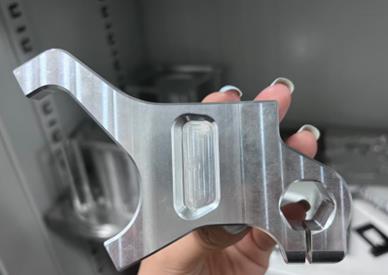
The main challenges when milling 316 stainless steel are its high stickiness, poor heat conductivity, and serious work hardening. Tool selection should focus on four key needs: wear resistance and anti-sticking, good heat dissipation, sharp and tough cutting edges, and impact resistance. You also need to consider the machining situation (roughing or finishing, batch or single part), machine rigidity, and budget to make the best choice.
Below is a structured, practical tool selection plan:
1. Core Selection Logic (Know Your Needs, Then Choose Tools)
Before choosing tools, clarify these 3 important points to avoid wrong choices:
- Machining stage: Roughing (remove large material, focus on impact resistance and high feed rate) vs Finishing (ensure accuracy and surface quality, focus on sharpness and wear resistance);
- Machine condition: Strong rigidity (can use large diameter, many teeth tools) vs Weak rigidity (need small diameter, fewer teeth, large helix angle tools to reduce vibration);
- Budget: Batch production (prioritize high-end wear-resistant tools to lower cost per part) vs Single or small batch (balance cost and performance, choose mid-level tools).
Core principle: Material > Geometry > Coating > Structural design. Material mainly determines tool life, geometry and coating are key to fit 316 stainless steel milling.
2. Step One: Choose Tool Material
For 316 stainless steel milling, carbide (hard alloy) materials are preferred. High-speed steel, ceramic, diamond, etc., don’t fit well and are rarely used except in special cases.
Recommended materials and their use:
| Material Type | Key Components / Features | Cutting Speed (Vc) | Suitable For | Advantages | Notes |
|---|---|---|---|---|---|
| Ultra-fine carbide | WC-Co (8-10% cobalt), grain 0.5-1μm | 80-120 m/min | Roughing & finishing, batch production | High hardness (HRA≥92), wear & impact resistant | Medium price, needs coating |
| Solid carbide | One-piece, no weld joints | 100-150 m/min | Finishing, thin walls, complex curves | High rigidity, precision (runout ≤0.005mm), sharp edges | Common ≤20mm diameter, large expensive |
| Carbide indexable inserts | Inserts made of ultra-fine carbide, body steel | 60-100 m/min | Roughing, heavy cuts, flat/step milling | Easy insert change, reusable body, cost controllable | Must ensure precise fit (runout ≤0.01mm) |
| TiCN-based carbide | TiCN added, improves hardness and wear | 100-130 m/min | Finishing, high-speed milling (rigid machines) | Better wear resistance than normal carbide, anti-sticking | Slightly less impact resistant, avoid heavy roughing |
| Cubic Boron Nitride (CBN) | Super-hard, second only to diamond | 150-300 m/min | Batch finishing, hardened 316 stainless (HRC≥30) | 5-10x longer life than carbide, excellent surface finish | Expensive, low impact resistance, only stable cutting |
Not recommended materials:
- High-speed steel (HSS): Low hardness (HRC ≤65), poor wear, low cutting speed (40-60 m/min), very fast wear, only for small batches or low precision (not recommended for precise foreign trade orders);
- Ceramics: Brittle, poor impact resistance, 316 work hardening causes chipping, only used for no-impact, high-speed finishing (very rare);
- Diamond: Chemically reacts with iron-group elements in 316 stainless (Fe, Ni, Cr), causing quick wear, completely unsuitable.
3. Step Two: Choose Tool Geometry (Fit 316 Stainless Steel Properties)
Geometry affects cutting force, heat dissipation, and chip removal, so optimize for 316’s stickiness, hardness, and heat:
- Rake angle (γ₀): Sharpness and cutting force
- Recommended: 15°-20° (positive rake)
- Why: Positive rake means sharp edge, reduces cutting resistance and sticking risk. 316 is sticky, dull edges press and harden material.
- Special: For weak machines or heavy roughing, 10°-15° for stronger edges.
- Avoid: Negative rake (too much cutting force and heat, fast wear).
- Helix angle (β): Chip removal, stability, heat
- Recommended: 40°-50° (large helix)
- Why: Large helix spreads cutting force, reduces vibration; longer chip flow path helps clear chips, avoids sticking.
- Special: Deep cavities or narrow slots, 55°-60° ultra-large helix to improve chip flow.
- Avoid: <30° (poor chip removal, chip clogging).
- Edge preparation: Prevent chipping and sticking
- Recommended: Sharp edge + slight chamfer (0.02-0.05mm × 10°-15°)
- Why: Pure sharp edges chip easily after hardening; small chamfer strengthens edge but keeps sharpness, reduces sticking.
- Avoid: Too blunt (>0.08mm), presses material and worsens hardening.
- Number of teeth (z): Balance efficiency and chip removal
Machining Recommended Teeth Reason Roughing (large cut) 2-4 (sparse) Large chip space, smooth chip removal, less heat, less cutting force Finishing (small cut) 4-6 (dense) More cutting points, better surface (Ra≤0.8μm), higher feed, good for batch finishing Deep cavity / narrow slot 2-3 (extra sparse) Max chip space, avoids chip buildup in tight areas - Tip radius (rε): Surface quality and edge strength
- Recommended: Finishing rε=0.2-0.5mm; Roughing rε=0.5-1.0mm
- Why: Small radius for fine finish, less marks; large radius for strength and wear resistance.
- Avoid: Finishing radius >0.8mm (leaves marks).
4. Step Three: Choose Tool Coating (Add Life by 30-50%)
Coating helps reduce friction and sticking, resists heat, and improves wear. Choose based on machining stage and material:
| Coating Type | Composition / Features | Max Temp | Use Case | Advantages | Price |
|---|---|---|---|---|---|
| TiAlN | Titanium Aluminum Nitride | 800℃ | Roughing & finishing, batch production | Good wear, heat and sticking resistance, cost-effective | Medium |
| AlCrN | Aluminum Chromium Nitride | 1100℃ | High-speed finishing, batch production | Better oxidation and wear resistance than TiAlN, lasts 30-50% longer | Medium-high |
| TiCN | Titanium Carbonitride | 700℃ | Finishing, low speed | Very hard and wear resistant, good for high surface quality | Medium |
| DLC | Diamond-like Carbon | 400℃ | Finishing, anti-sticking | Very low friction, solves 316 sticking, excellent surface finish | High |
Coating choice tips:
- Roughing: Prefer TiAlN (balance impact resistance, heat, cost)
- Finishing: Prefer AlCrN (wear + heat resistance) or DLC (anti-stick, for food/medical parts)
- Avoid no coating (only for small batch, short life, poor finish)
5. Step Four: Tool Structure & Holder (Ensure Rigidity and Accuracy)
1. Tool type:
| Tool Type | Use Case | Why Recommended |
|---|---|---|
| Solid carbide end mill | Finishing, complex curves, narrow slots | High rigidity, high precision (runout ≤0.005mm), sharp edges, great for precise foreign trade parts (medical, electronics) |
| Indexable end mill | Roughing, flat/step milling, heavy cuts | Easy to replace inserts, reusable body, lowers batch cost, flexible inserts & coatings |
| Long flute ("corn") end mill | Deep cavity, long reach milling | Long flute reduces passes, smooth chip flow |
| Helical shell mill | Deep hole, deep cavity roughing | Small cutting force, low vibration, good for weak rigidity machines |
2. Tool holder:
Recommended: HSK, shrink-fit, hydraulic holders (runout ≤0.003mm)
Not recommended: Standard ER collets (runout ≤0.01mm, less precise, uneven edge wear)
Key: High precision fit and strong clamping to avoid micro vibration, which causes edge overload (316 is sensitive to hardening).
6. Step Five: Brand Selection (Balance Quality, Cost, and Foreign Trade Acceptance)
1. High-end brands (batch precision, high-end export orders)
- Brands: Sandvik, Kennametal, Iscar, Mitsubishi Materials
- Advantages: Mature materials/coatings, high precision (runout ≤0.003mm), stable life, good for medical, aerospace, etc., recognized by customers
- Examples: Sandvik R390 solid carbide + TiAlN, Kennametal Harvi III + AlCrN large helix
2. Mid-range brands (good cost-performance, small-medium batch)
- Brands: Zhuzhou Diamond, Tungaloy, Kyocera
- Advantages: Near high-end performance, 30-40% cheaper, stable quality, good for general export parts like mechanical and marine engineering
3. Entry-level brands (small batch, low precision)
- Brands: Domestic second-tier carbide brands (e.g., HeYe, ZhangYuan Tungsten)
- Advantages: Cheap, good for prototypes and low precision parts
- Note: Test tool life carefully to avoid batch quality problems.
7. Practical Selection Examples (Ready to Use)
Example 1: Export precision medical parts (316L, finishing, Ra ≤0.4μm)
- Tool: Solid carbide end mill (4 teeth)
- Material: Ultra-fine carbide
- Geometry: Rake 18°, helix 45°, micro chamfer 0.03mm×12°, tip radius 0.3mm
- Coating: DLC (anti-stick, high surface quality)
- Holder: HSK-A63 (runout ≤0.002mm)
- Brand: Sandvik R390
Example 2: Marine engineering parts (316, roughing, 5mm allowance)
- Tool: Indexable end mill (4 teeth)
- Insert: Ultra-fine carbide + TiAlN
- Geometry: Rake 12°, helix 40°, chamfer 0.05mm×15°
- Holder: Shrink-fit (runout ≤0.005mm)
- Brand: Zhuzhou Diamond tool body + Sandvik inserts
8. Common Selection Mistakes (Avoid These)
- Thinking "more teeth = higher efficiency": In roughing, too many teeth (>4) reduce chip space, cause clogging and heat buildup.
- Chasing "super hard coatings": DLC is great but low heat resistance (≤400℃); roughing heat can reach 600-800℃ and ruin coating.
- Ignoring holder precision: Using ordinary ER collets with big runout causes uneven edge wear and poor surface quality.
- Using same tool for roughing and finishing: Roughing tools focus on impact resistance, finishing on sharpness and wear; mixing shortens tool life and lowers accuracy.
316 Stainless Steel Tool Selection Mnemonic
Material first: ultra-fine carbide, coating pick TiAlN or AlCrN; rake 15-20° positive, helix 40-50° stable; roughing sparse teeth, finishing dense teeth for precision; tool holder rigidity must be strong, runout controlled at 0.003; batch orders choose big brands, small orders mid-range; key avoid sticking and hardening, focus on heat dissipation and chip removal.
As a CNC engineer, tool choice must balance "machining needs - tool features - cost". In production, test and optimize cutting parameters (feed, speed) to get the best tool life and product quality. For export orders, highlight tool brand, material, and coating as quality proof, e.g., "Using Sandvik ultra-fine carbide tools, ensuring part tolerance ±0.005mm and surface Ra ≤0.4μm" to build customer trust.
How Tool Choice Affects Milling 316 Stainless Steel Costs
Tool choice affects total cost of ownership (TCO) in five main ways: purchase & amortization, efficiency & labor time, tool change downtime, quality loss, and auxiliary costs. Low-end tools seem cheap but wear fast, run slow, cause scrap, and raise total cost; high-quality tools cost more upfront but last longer, cut faster, and reduce cost per part in batches.
Tool purchase & amortization (direct unit cost)
Material determines price and life: HSS tools cost less (~1/3 of carbide) but last only 1/5–1/8 as long, so unit cost is higher; ultra-fine carbide + TiAlN/AlCrN coatings cost more but last longer and cut faster, lowering cost per volume (e.g., nano-multilayer coating at 0.0083 RMB/mm³ vs traditional 0.0147 RMB/mm³, 77% difference).
Indexable vs solid carbide: Indexable tools have higher initial cost, but inserts can be replaced and body reused, suitable for roughing and large cuts, reducing long-term consumable cost; solid carbide is for finishing and complex shapes, offering precision.