316 Stainless Steel Overview & Milling Guide
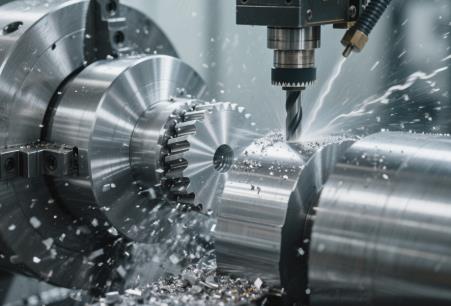
316 stainless steel is an important grade of austenitic stainless steel. Its UNS number is S31600, and it meets standards such as ASTM A240/A480 and EN 1.4401. Because it contains 2–3% molybdenum (Mo), it has better corrosion resistance and higher temperature stability than 304 stainless steel. It is widely used in CNC machining and exported mechanical parts.
1. Main Definition and Chemical Composition
1.1 Basic Properties
- Austenitic stainless steel
- Non-magnetic at room temperature (may show slight magnetism after cold work)
- Very good toughness
1.2 Key Chemical Composition (%)
| Element | C ≤ | Si ≤ | Mn ≤ | P ≤ | S ≤ | Cr | Ni | Mo | N ≤ |
|---|---|---|---|---|---|---|---|---|---|
| 316 | 0.08 | 1.00 | 2.00 | 0.045 | 0.030 | 16.0–18.0 | 10.0–14.0 | 2.0–3.0 | 0.10 |
| 316L | 0.03 | 1.00 | 2.00 | 0.045 | 0.030 | 16.0–18.0 | 10.0–14.0 | 2.0–3.0 | 0.10 |
Mo (Molybdenum): Improves resistance to pitting and crevice corrosion, especially in chloride environments (seawater, chemicals).
316L (Low Carbon): Carbon ≤0.03% to prevent intergranular corrosion after welding. Suitable for welded parts and precision components that may need heat treatment.
2. Key Performance Advantages
2.1 Corrosion Resistance
- Strong resistance to chloride corrosion – Better than 304; works well in seawater, salt spray, and chlorine-containing cleaners.
- Good resistance to both organic and inorganic acids – Works well with acetic acid, citric acid, weak sulfuric acid, phosphoric acid, alkali, and salt solutions.
- Common applications: Marine parts, chemical equipment, valves, food machinery, medical devices.
2.2 Mechanical Properties
| Property | 316 | 316L |
|---|---|---|
| Yield strength ≥ | 205 MPa | 170 MPa |
| Tensile strength | 515–690 MPa | 485–655 MPa |
| Elongation ≥ | 40% | 40% |
| Hardness (HB) ≤ | 201 | 201 |
Excellent toughness from −270°C to room temperature. Strong work hardening—cold work increases hardness and strength.
2.3 High- and Low-Temperature Performance
- High temperature: Up to 870°C continuous use, 925°C short term.
- Low temperature: Works well at −270°C without brittleness.
316 Stainless Steel Milling Guide
1. Basic Cutting Parameters
1.1 Cutting Speed (Vc)
- Carbide tools: 60–120 m/min (best range: 80–100) — Roughing: 60–80; Finishing: 100–120
- HSS tools: 40–60 m/min (not recommended)
1.2 Feed
- Feed per tooth (fz):
- Roughing: 0.05–0.15 mm/tooth
- Semi-finishing: 0.08–0.18 mm/tooth
- Finishing: 0.025–0.08 mm/tooth
- Feed rate (Vf): Vf = n × z × fz
2. Tool Material Recommendations
Carbide Tools (Recommended)
- Normal carbide: Vc = 70–100 m/min
- Ultra-fine grain carbide: +10–20% higher speed
- Coated carbide (TiAlN/TiCN): Vc = 90–120 m/min, longer tool life
Not Recommended
- Ceramic tools (easy to chip)
- Diamond tools (react with iron-based metals)
3. Milling Type Recommendations
| Milling Type | Vc (m/min) | fz (mm/tooth) | Notes |
|---|---|---|---|
| Face milling | 80–120 | 0.08–0.20 | Smooth cutting |
| Side milling | 60–100 | 0.05–0.15 | Lower speed |
| Helical milling (plunge) | 70–100 | 0.03–0.08 | Balanced cutting |
| High-speed milling | 150–200 | 0.02–0.05 | Special machines & coolant |
4. Practical Parameter Selection
Roughing
- Vc: 60–80
- fz: 0.10–0.15
- Depth of cut: 2–5 mm
Semi-Finishing
- Vc: 80–100
- fz: 0.08–0.12
- Depth of cut: 1–2 mm
Finishing
- Vc: 100–120
- fz: 0.025–0.08
- Depth of cut: 0.3–1 mm
Tool Selection: Best choice: Ultra-fine grain carbide + TiAlN coating. Large-diameter tools for roughing. Sharp cutting edges (15°–20° rake angle). Helix angle: 40°–50°.
Cutting Fluid: Use EP emulsion or sulfurized cutting oil. Do NOT dry cut — 316 overheats easily.
5. Formula Examples
Spindle Speed
n = (Vc × 1000) ÷ (π × D)
Example: Vc = 90 m/min, D = 10 mm → n ≈ 2866 rpm
Feed Rate
Vf = n × z × fz
Example: z = 4, fz = 0.1 → Vf = 2866 × 4 × 0.1 = 1146 mm/min
6. Important Tips
- Do not use very low feed (fz < 0.05 mm/tooth) — causes work hardening.
- Use strong cooling.
- Replace tool when sound or surface quality changes.
- For thin-wall parts, reduce feed 20–30%.
Summary Table
| Type | Tool | Vc (m/min) | fz (mm/tooth) | Use |
|---|---|---|---|---|
| Roughing | Carbide | 60–80 | 0.10–0.15 | Remove large stock |
| Semi-finishing | Coated carbide | 80–100 | 0.08–0.12 | Leave small allowance |
| Finishing | Ultra-fine carbide + coating | 100–120 | 0.025–0.08 | Final size |
| High-speed milling | Special coated tools | 150–200 | 0.02–0.05 | Mass production |
Key rule: Use medium speed, medium feed, and strong cooling. Avoid work hardening and overheating.
Rapid Model – Your Reliable CNC Stainless Steel Machining Partner
At Rapid Model (www.rapid-model.com), we offer:
- CNC machining for 316/316L stainless steel
- 5-axis milling, turning, and mill-turn solutions
- Fast lead time & stable quality
- Free DFM feedback
- Transparent pricing