5-Axis CNC Machining Parts: Rapid Model Customization Guide
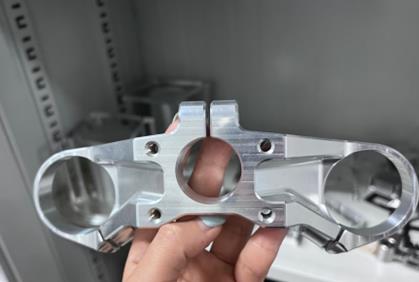
5-axis CNC machining parts are core products in the high-end precision manufacturing field, and also key high-value, highly competitive offerings in Rapid Model’s business. We provide 5-axis CNC machining services aimed at enhancing our customers’ brand development.
What Are 5-Axis Machining Parts?
5-axis CNC machining refers to the coordinated control of X, Y, Z three linear axes plus A and B two rotary axes, enabling one-time machining of complex surfaces and multi-angle feature parts. Its core advantages include:
- No need for multiple setups, reducing positioning errors;
- Capability to machine complex structures unreachable by traditional 3-axis or 4-axis;
- Significantly improved machining accuracy, surface quality, and production efficiency.
Key Specifications (Essential for Export Quotes / Technical Documents):
| Item | Typical Parameters (Adjustable by Equipment) |
|---|---|
| Machining Accuracy | ±0.005~±0.01mm |
| Repeat Positioning Accuracy | Within ±0.002mm |
| Surface Roughness | Ra≤0.8μm (up to mirror finish Ra≤0.2μm) |
| Maximum Machining Size | Common: 500×500×300mm, supports custom large sizes. |
| Number of Controlled Axes | True 5-axis simultaneous control (not pseudo 5-axis / 4.5-axis) |
Application Fields
5-axis machined parts mainly serve high-end manufacturing industries where customers demand strict precision and complexity. Key industries and representative parts include:
1. Aerospace
- Representative parts: aircraft structural components (landing gear joints, wing frames), engine blades, aerospace fasteners, navigation system precision housings;
- Customer challenges: difficult-to-machine materials (titanium alloys, high-temperature Inconel alloys), complex structures (surfaces + hollowing), extremely high precision (±0.005mm);
- Our highlight: “Achieved one-time machining of high-temperature alloy blades via 5-axis linkage, reducing setup errors and increasing pass rate to 99.5%, meeting AS9100 aerospace quality standards.”
2. Medical Equipment
- Representative parts: surgical instruments (orthopedic implants, minimally invasive tools), medical imaging equipment parts (CT machine brackets, ultrasound probe housings), rehabilitation precision components;
- Materials: medical stainless steel (316L), titanium alloy (Ti6Al4V), PEEK engineering plastics (biocompatible);
- Compliance: meeting ISO 13485 medical quality management system, providing material certification reports (e.g., FDA, CE).
3. High-end Automotive Manufacturing
- Representative parts: new energy vehicle motor rotors, precision transmission gears, sports car engine blocks, lightweight structural parts (aluminum alloy / carbon fiber composites);
- Our advantage: “5-axis machining achieves high-precision gear tooth profiling, improving transmission efficiency by 15%, shortening batch production cycle by 30%, supporting PPAP production part approval process.”
4. Precision Instruments / Electronic Equipment
- Representative parts: robotic joint arms, sensor housings, optical instrument bases, semiconductor equipment precision fixtures;
- Core requirements: high rigidity, low vibration, surface finish quality (to avoid assembly interference);
- Our advantage: “Supports small batch customization (MOQ≥5) and large batch production, fastest delivery in 7 days, supports direct machining from 3D models (STEP/IGES).”
5. Molds and Fixtures
- Representative parts: complex cavity molds (injection molds, die casting molds), multi-station fixtures, mold inserts;
- Our advantage: “5-axis machining of mold cavities eliminates EDM, cutting machining cycle by 50%, increasing mold life by 30%.”
Core Process Advantages of 5-Axis Machining Parts
1. Technical Advantages
| Comparison | 5-Axis CNC Machining | 3-Axis / 4-Axis Machining |
|---|---|---|
| Complex Structure Machining Capability | Supports one-time machining of surfaces, hollowing, multi-angle features | Requires multiple setups; complex structures not achievable |
| Machining Accuracy | Low positioning error (±0.005mm) | Accumulated error from multiple setups (±0.01~±0.02mm) |
| Production Efficiency | Shortens machining cycle by 30%~60% | Long cycles, relies on post-processing like polishing / EDM |
| Surface Quality | Ra≤0.8μm, no secondary polishing required | Prone to tool marks, requires post-processing |
| Material Compatibility | Supports difficult materials like titanium alloys, high-temp alloys, composites | Low efficiency and high scrap rate for difficult materials |
2. Cost Reduction and Efficiency Improvement
- Cost reduction: fewer setups reduce labor cost; one-time machining reduces scrap rate; overall long-term cost cut by 20%.
- Efficiency improvement: high precision and consistency meet high-end assembly needs; supports small batch (MOQ≥5) and large batch (≥1000 pcs/month); fast sample response.
3. Worry-Free Service
We provide one-stop services from design optimization → machining → inspection → packaging, supporting 3D model input and DFM (Design for Manufacturability) feedback.
4. Quality Standards
Industry certifications including medical ISO13485, automotive IATF16949, with inspection reports via CMM (Coordinate Measuring Machine).
5. Packaging and Logistics
Export packaging (rust prevention, shockproof), logistics options (DHL/FedEx/Sea freight), customs clearance support, with commercial invoice, packing list, and CO certificates provided.
Technical Evaluation and Quotation
- Feasibility analysis: DFM feedback to optimize design (e.g., simplify complex features, adjust tolerances to reduce costs);
- Process planning: determine machining strategy (tool selection, toolpath), inspection schemes (CMM, roughness meter, hardness tester);
- Quotation attachments: process flowchart, inspection report templates, material certification (e.g., ROHS, REACH).
Sample Confirmation and Mass Production
- Sampling: prioritize 1-3 sample pieces, provide CMM reports and surface roughness inspection reports; customer approval before mass production;
- Mass production: real-time production progress updates (photos/videos), batch inspection (first piece, in-process, last piece inspection);
- Delivery: complete shipping documents (commercial invoice, packing list, CO certificate, inspection reports, material certificates).
Common Customer Questions (FAQ) and Professional Answers
- Q1: 5-axis machining is more expensive than 3-axis. Why should I choose 5-axis?
- A1: Although the per-operation labor cost of 5-axis machining is higher, the overall cost benefits include: ① fewer setups and less post-processing (like polishing, EDM), shortening total cycle by 30%; ② scrap rate drops from 5%-8% in 3-axis to below 1%; ③ only 5-axis can achieve complex structures, avoiding performance loss due to process limitations. For high-end applications (aerospace, medical), 5-axis is the only way to ensure quality.
- Q2: Does my part have to be 5-axis machined?
- A2: We suggest evaluating three aspects: ① whether there are complex surfaces (e.g., spheres, helicoids) or multi-angle features (e.g., angled holes, inclined planes); ② whether tolerance is ≤±0.01mm; ③ whether the material is difficult to machine like titanium or high-temp alloys. If two or more apply, 5-axis is optimal. For simple flat/ hole parts, 3-axis machining is recommended to reduce costs and enhance cooperation goodwill.
- Q3: What quality inspection reports can you provide?
- A3: We provide comprehensive inspection reports: ① CMM reports marking key dimensional tolerances; ② surface roughness inspection reports; ③ material certificates (e.g., spectrometry reports); ④ hardness test reports (for metal parts); ⑤ industry-specific certifications (e.g., aerospace AS9100, medical ISO13485). All reports are bilingual (Chinese and English) and meet export requirements.
- Q4: Do you accept small batch orders (e.g., 10 pieces)? What is the lead time?
- A4: We support small batch customization (MOQ≥5). For 10-piece orders, lead time is 7–10 days (including design optimization, machining, and inspection). For long-term customers, we can establish stock to shorten future lead times to 3–5 days.