Optimizing CNC Lathe Cutting Conditions and Tool Life Extension Strategies
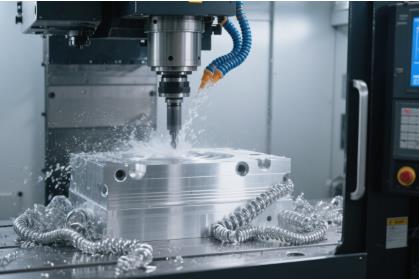
In CNC lathe metal cutting, tool life, machining time, and quality are the three key factors that affect production efficiency. Cutting conditions, as an important component, directly determine the success of the machining process. By reasonably selecting cutting speed, feed rate, and cutting depth, not only can tool life be extended, but machining efficiency and quality can also be improved. Here, we will further explore how to choose and adjust cutting conditions in actual production.
1. The Impact of Cutting Speed on Tool Life
Cutting speed is the primary factor affecting tool wear and life. As cutting speed increases, the temperature on both the front and rear faces of the tool rises sharply, which accelerates mechanical, thermal, and chemical wear. According to experience, for every 20% increase in cutting speed, tool life typically halves. This is because high temperatures cause the hardness and toughness of the tool material to decrease, leading to instability during the cutting process, even causing breakage.
However, a cutting speed that is too low leads to low machining efficiency and may result in insufficient cutting. Therefore, selecting the appropriate cutting speed is key to balancing tool life and machining efficiency. For example, harder materials such as stainless steel and heat-resistant alloys generally require lower cutting speeds to prevent premature tool wear. On the other hand, softer metals can benefit from higher cutting speeds to improve efficiency.
2. Feed Rate Adjustment and Tool Wear
The impact of feed rate on tool wear is relatively small, but it should not be overlooked. The feed rate directly influences the wear on the rear face of the tool. In certain cases, excessive feed rates can cause the cutting temperature to rise rapidly, which may result in excessive wear on the rear face of the tool, thereby shortening tool life. Therefore, controlling the feed rate reasonably is essential for maintaining tool stability and machining quality.
Moreover, an overly small feed rate, while reducing tool wear, results in lower machining efficiency and may lead to uneven wear on the tool edge, even affecting the surface quality of the workpiece. Thus, when selecting the feed rate, it is important to consider both the material properties and production efficiency needs.
3. The Relationship Between Cutting Depth and Tool Life
The impact of cutting depth on the tool is not as direct as cutting speed and feed rate, but it is still critical in actual machining. A larger cutting depth adds more load on the tool, generating greater cutting force, which can easily lead to excessive tool wear and damage. Particularly in micro-depth cuts, a hardened layer may form on the material surface, increasing tool wear.
To avoid the negative effects of large cutting depths on tool life, cutting depth should be adjusted based on the material hardness and machining requirements. For harder materials, a smaller cutting depth should be adopted to prevent excessive cutting forces and minimize material hardening, thus improving both machining precision and tool life.
4. Cutting Conditions for Special Materials
For special materials, such as stainless steel and heat-resistant alloys, selecting the appropriate cutting conditions becomes even more important. These materials have high hardness and toughness, which causes excessive tool wear during machining. Therefore, using suitable coolants and cutting fluids can effectively lower cutting temperatures, reducing thermal wear on the tool. The choice of coolant not only helps improve cutting quality but also extends tool life.
In addition, using more rigid tool materials can also be an effective way to solve problems when machining difficult materials. For example, using ceramic or cubic boron nitride (CBN) tools, which have high temperature resistance and hardness, can greatly improve the cutting capability and life of the tool.
5. Optimizing Cutting Conditions
The most appropriate cutting conditions should be based on a detailed understanding of the material being machined, taking into account material hardness, cutting status, and machining precision requirements. The ideal cutting conditions should ensure stable tool wear, without excessive temperature or cutting force causing rapid wear.
In actual operations, the optimal cutting conditions can be found by continuously testing and adjusting. For example, by combining different cutting speeds, feed rates, and cutting depths, trial cuts can be performed to observe tool wear and machining quality, and adjustments can be made based on the results. The core of this process is optimizing cutting parameters to maximize tool efficiency and machining quality.
This article is provided by Rapid Model, dedicated to offering efficient and precise CNC machining solutions for our customers.