CNC Machining Common Terms
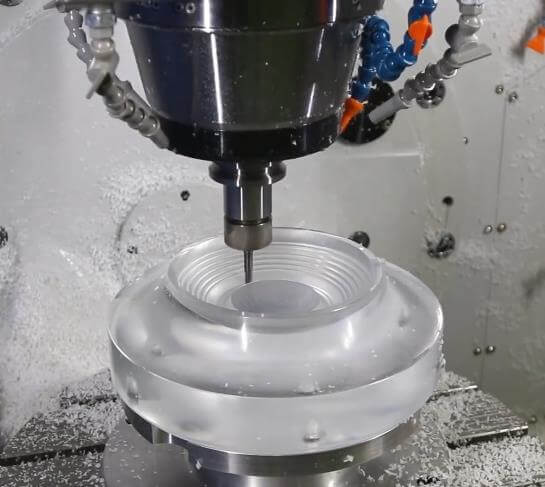
- CNC (Computer Numerical Control) - A method of automating machine tools using computer programs to control the movement and operation of the machines.
- G-code - A programming language used to control CNC machine tools, defining movement commands and other machine operations.
- M-code - Machine-specific codes used in CNC programming to control machine functions like coolant activation or spindle on/off.
- CNC Lathe - A CNC machine used for turning operations to create cylindrical parts by rotating the workpiece against a stationary cutting tool.
- CNC Milling Machine - A CNC machine used for milling operations, typically for flat, angular, and irregularly shaped parts.
- Machining Center - A CNC machine that combines several operations such as milling, drilling, turning, and grinding in one unit.
- CNC Drilling Machine - A CNC machine specifically designed for drilling holes in parts and workpieces.
- 3-axis Machining - CNC machining with movement along three axes (X, Y, Z), typically used for simple machining tasks.
- 5-axis Machining - Advanced CNC machining that allows movement along five axes (X, Y, Z, A, B), enabling the machining of more complex parts.
- Feed Rate - The rate at which the tool moves through the material during the machining process, usually measured in mm/min.
- Cutting Speed - The speed at which the cutting edge of the tool moves across the surface of the workpiece, typically measured in meters per minute (m/min).
- Cutting Depth - The depth of the cut the tool makes into the material, influencing cutting force and material removal rate.
- Tool Path - The path followed by the tool during machining, determined by the CNC program.
- Tool Radius Compensation - The adjustment made to the toolpath in CNC programming to account for the radius of the cutting tool.
- Stock - The unprocessed material or the "blank" from which a part is machined.
- Fixture - A device used to hold and position the workpiece securely during the machining process.
- Cutting Force - The force exerted on the tool during cutting, affecting machining efficiency and tool life.
- Tool Wear - The gradual loss of cutting tool material during use, which can affect the quality of the machined part.
- Surface Roughness - A measure of the texture of a surface, often described using Ra values to quantify the roughness.
- Tolerance - The acceptable deviation from the specified dimensions of a part, determining the precision required during machining.
- Machining Accuracy - The degree to which the machining process achieves the desired dimensions and features of the part.
- Repeatability - TThe accuracy or consistency that a CNC machine or other mechanical equipment can achieve when performing the same operation multiple times under the same conditions.
- CNC Programming - The process of writing and editing the instructions (G-code) that direct the CNC machine's actions.
- CAM (Computer-Aided Manufacturing) - The use of computer software to create CNC machine code, optimizing the manufacturing process.
- CIM (Computer Integrated Manufacturing) - A system that integrates computer systems into all aspects of the manufacturing process, from design to production.
- Cutting Fluid - A liquid used to cool and lubricate the tool during machining, reducing friction and tool wear.
- Heat Treatment - A process of heating and cooling metals to alter their physical properties, such as hardness and strength.
- Milling - A machining process using a rotating cutter to remove material from a workpiece, typically for flat or three-dimensional shapes.
- Turning - A machining process where the workpiece rotates while a stationary cutting tool removes material to create cylindrical shapes.
- Drilling - The process of creating holes in a workpiece by rotating a drill bit into the material.
- Tapping - The process of cutting internal threads in a hole, typically using a special tool called a tap.
- End Mill - A type of cutting tool used in milling operations, capable of cutting in multiple directions for complex shapes.
- Tool Geometry - The design features of a cutting tool, including angles and shapes, which affect the cutting process and tool performance.
- Tool Offset - A method used in CNC programming to adjust the position of the tool to compensate for tool wear or size variations.
- CNC Test Piece - A part made to test and validate the accuracy of the CNC machine setup and programming.
- Part Design - The process of defining the shape, dimensions, and features of a part to be machined, affecting the choice of materials and machining methods.
- Polishing - The process of refining the surface finish of a part to improve its appearance or performance.
- CNC Control System - The computer system used to control the operation of a CNC machine, including programming, execution, and monitoring.
- Error - The deviation from the intended result due to factors such as machine inaccuracies, program mistakes, or tool wear.
- Rapid Prototyping - The use of CNC machining to quickly produce prototypes of parts for design validation and testing.