CNC Precision Machining Technology Guide
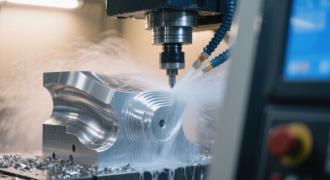
CNC precision machining technology is a highly efficient manufacturing method widely used in modern industries, especially in sectors such as aerospace, automotive, electronics, and mold-making. Precision machining not only requires the equipment itself to have high accuracy, but also imposes strict demands on machining processes, tool selection, material properties, and other factors. Therefore, how to achieve precision control, reduce errors, and ensure high-quality part production is a key task for every CNC machining engineer in their daily work.
We can understand at a general level that CNC precision machining technology involves multiple stages and factors. Among these, some are external factors, difficult to directly control, while others are internal factors, which can be adjusted through reasonable design and operation. Our goal is to minimize the impact of these external and internal factors by scientific process design, proper equipment selection, and precise parameter adjustments, thus achieving high-precision machining results.
1. Uncontrollable External Factors and Control
In CNC precision machining, external factors inevitably affect machining accuracy, especially the stability of the machine tool and variations in the machining environment. The precision, rigidity, wear condition of the machine tool, as well as factors such as temperature and humidity in the working environment, all influence the final part dimensions and surface quality to varying degrees.
Firstly, the stability of the machine tool is the cornerstone of precision machining. If the machine tool has not been properly maintained and calibrated over time, issues such as servo system deviation and rail wear may occur, leading to a decrease in machining precision. As engineers, we cannot control the natural wear of the machine tool, but we can ensure that the machine tool is in good working condition through regular maintenance and calibration. This is particularly important in mass production, as small errors may accumulate across multiple parts and affect overall precision.
Secondly, changes in the machining environment are also an important factor affecting precision. Fluctuations in temperature and humidity can cause material expansion or contraction, thus impacting the dimensional stability of the parts. Although we cannot control the changes in the external environment, we can minimize their impact on machining results by conducting machining in a temperature-controlled workshop. Maintaining stable temperature and humidity conditions is crucial for precision machining, especially when working with temperature-sensitive materials such as aluminum alloys.
2. Internal Factors: Process Design and Tool Selection
Compared to external factors, internal factors in CNC precision machining can be controlled and adjusted with precision. The machining process design, tool selection and adjustment, cutting parameters optimization, and other factors all have a crucial impact on machining accuracy.
Process Design: The process design of CNC machining must follow the fundamental principle of "roughing first, then finishing." In the machining of aluminum alloy parts, roughing is performed first to remove most of the material, followed by finishing to ensure dimensional accuracy. For complex parts, it is also critical to arrange the machining sequence properly, prioritizing large surfaces and key holes to avoid interference with previous machining steps. The details in the process design will directly determine the final machining accuracy and efficiency of the parts.
Tool Selection and Cutting Parameters: The choice of tools not only affects machining efficiency but also directly impacts cutting accuracy and surface quality. In aluminum alloy machining, selecting tools with good wear resistance and coating can effectively improve cutting efficiency and extend tool life. At the same time, selecting reasonable cutting speeds, feed rates, and cutting depths is also an essential method for controlling machining accuracy. For example, excessively high cutting speeds may lead to excessive heat generation, causing part deformation, while overly low cutting speeds may result in rough surface finishes, affecting the part’s quality. Therefore, fine-tuning the tools and cutting parameters during operation is essential for ensuring high precision.
3. Controllable Technologies: Fixture and Tool Alignment
Although both external and internal factors influence precision, some advanced technologies can further enhance the controllability of CNC precision machining and ensure high-precision machining results.
Fixture Design and Adjustment: The role of fixtures in CNC machining is to ensure that the workpiece does not shift, deform, or loosen during machining, thus maintaining machining accuracy. Designing reasonable fixtures should not only consider the stability of the workpiece but also reduce stress concentration caused by clamping. For complex parts, combination fixtures can be used to reduce the number of clamping operations, preventing error accumulation during each clamping process. The accuracy of fixture design directly affects part machining precision, especially when multiple clamping operations are involved. Maintaining consistency during these operations is crucial for ensuring accuracy.
Tool Alignment Technology: Accurate tool alignment is essential for high-precision machining. Traditional tool alignment methods, while sufficient for general machining needs, often require more precise tool alignment technologies for high-precision work. For example, using a laser tool setter can significantly improve alignment accuracy, minimizing errors caused by manual operation. Through high-precision tool alignment technology, we can ensure the accuracy of each machining step, thus reducing cumulative errors.
4. Technical Optimization in Engineering Practice
Although we can optimize the machining process using the above methods, in actual production, we often encounter some unforeseen technical problems. For example, during aluminum alloy machining, the cutting heat may cause slight deformation of the part, leading to machining errors. In such cases, the experience and technical intuition of the engineer become particularly important. We can address these problems by increasing measurement frequency and conducting real-time monitoring, while adjusting cutting parameters flexibly to ensure the dimensional stability of the workpiece.
Continuous Optimization: From Uncontrollable to Controllable
As we have seen, the core of CNC precision machining technology lies in identifying controllable factors from a range of uncontrollable factors, and minimizing errors to ensure machining precision through process optimization, design adjustments, and the use of advanced equipment. From machine tool maintenance to process design, tool selection, and the application of tool alignment technology, every stage requires careful thought and operation.
In this process, we need not only deep professional knowledge but also keen practical insight. Through continuous technical optimization, experience accumulation, and innovation, we can improve the precision and quality of CNC machining, ensuring high-performance parts for our clients.