dvantages and Common Faults of CNC Machining
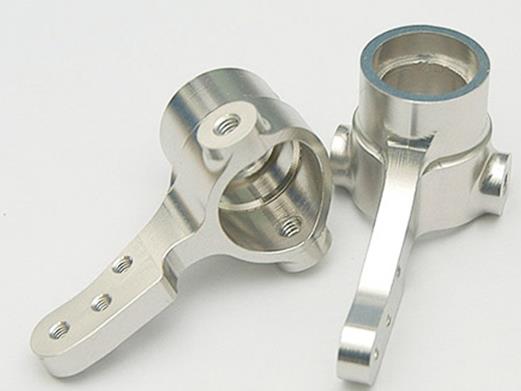
CNC, also called "computerized milling" or CNCCH, is a term originated from Hong Kong and later introduced to mainland China’s Pearl River Delta region. Essentially, it refers to CNC milling machines. It is a new type of machining technology focused on programming, converting manual operations into computer programming, though experience in manual machining is still required. CNC is also known as machining centers, widely used beyond furniture manufacturing, and the experience from various industries is worth learning from.
Advantages of CNC Machining
- Greatly reduces the number of fixtures required. Complex parts can be machined without complicated tooling. To change the shape or size of a part, only the machining program needs to be modified, making it suitable for new product development and redesign.
- Stable machining quality with high accuracy and excellent repeatability, meeting the processing requirements of aerospace components.
- Higher production efficiency in multi-variety, small-batch production by reducing setup, machine adjustment, and inspection time, and shortening cutting time by using optimal cutting parameters.
- Capable of machining complex surfaces that are difficult with conventional methods, even some unobservable machining areas.
Practical CNC Machining Tips
- Do not run high-speed steel (HSS) tools at excessively high speeds.
- For rough machining copper parts, avoid HSS tools; prefer fly cutters or carbide tools.
- If the workpiece is too tall, perform roughing in layers using tools of different lengths.
- After roughing with large tools, use smaller tools to remove remaining material, ensuring consistent stock allowance before finishing.
- Use flat-bottom tools for machining flat surfaces and avoid ball-end mills to reduce machining time.
- When finishing copper corners, first check the radius (R) of the corner and select the ball-end mill size accordingly.
- Ensure the edges and corners of the gauge calibration surface are milled flat.
- For integer tapers, use taper tools, such as for pipe seats.
- Before each operation, consider the leftover stock from the previous operation to avoid air cuts or over-machining.
- Use simple toolpaths when possible, such as contouring, slotting, and single-surface machining; avoid complex multi-level or high-step paths.
- When using WCUT, if finishing passes are possible, skip roughing passes.
- For contour finishing, first perform rough finishing, then fine finishing. For tall workpieces, finish edges before the bottom.
Note: This article was compiled based on CNC machining experience and does not represent the views of this website.
Common Faults in CNC Machining
As is well known, the CNC system provides power to the machine tool. Without the servo system, the machining center cannot process the workpiece. Therefore, the servo system is very important in machining centers.
Common CNC faults include alarm indicator lights on the CNC drive unit, fuse blowouts, and alarms from maintenance safety switches. The meanings of alarm lights vary depending on the drive unit design but generally include:
- Overcurrent alarms: Usually caused by damage or short circuits in the power drive components of the CNC servo drive unit.
- Overvoltage alarms: May occur if the CNC input voltage exceeds the rated value by more than 10%, insulation degradation inside the servo motor, or issues in the drive unit circuitry.
- Undervoltage alarms: Rare; possibly caused by input voltage dropping below 85% of the rated value or poor power connections.
- Speed detection line disconnection alarms: Usually false alarms caused by broken or poorly connected speed feedback wires from the CNC servo motor.
- Maintenance switch alarms: The maintenance switch acts as a protective device that triggers during abnormal conditions (e.g., high voltage) to prevent damage by safely stopping the machine.
- Overload alarms: Caused by abnormal mechanical load on the machining center or the motor current upper limit set too low. Permanent magnet loss inside the motor may also cause overload; if a brake-less motor cannot be turned by hand or is difficult to rotate, it indicates magnet failure.
- Blown fuses or tripped circuit breakers: Occur on the CNC servo drive unit, indicating electrical faults or overload conditions.